
Government assures safety of shrimp and spices exported to the US
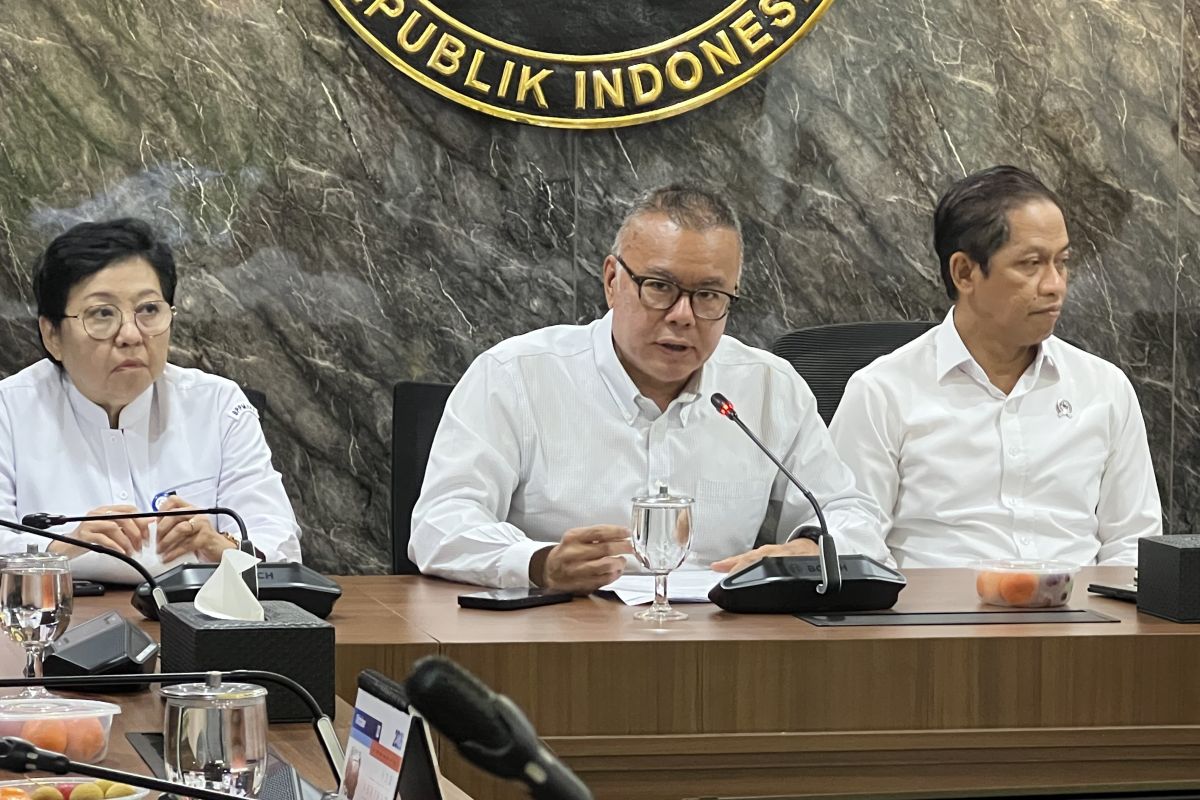
Jakarta (ANTARA) – The Coordinating Ministry for Food Affairs has assured the safety of shrimp and spices exported to the United States through testing and the issuance of Shipment-Specific Certificates (SSC).
The certificates are issued by the Ministry of Marine Affairs and Fisheries’ Agency for Quality Control and Inspection of Marine and Fishery Products (BPPMHKP), and the National Agency of Drug and Food Control (BPOM), as certification bodies designated by the US Food and Drug Administration (US FDA).
“This mechanism has become the new norm for meeting export requirements for the United States,” said Bara Krishna Hasibuan, an expert staff member to the Coordinating Minister for Food Affairs on Digital Transformation and Inter-Agency Relations, at the ministry’s office in Jakarta on Monday.
Bara said that in November 2025, the Task Force for Handling Cs-137 conducted diplomatic efforts to convince the US FDA, the Department of Energy (DoE), US Customs, as well as buyers and importer associations, that Indonesian shrimp and spices were safe to consume.
Bara, who is also head of the task force’s diplomacy and communications division, said it facilitated a visit to Indonesia by the US FDA in May 2026. The agency conducted an in-country assessment of two certification bodies, shrimp and spice processing facilities, and three laboratories.
“The assessment found that BPPMHKP, the Ministry of Marine Affairs and Fisheries, and BPOM substantially met the certification requirements,” Bara said.
On the basis of the assessment, the US FDA decided to maintain the designation of BPPMHKP, the ministry and BPOM as official certification bodies.
Bara said that from October 2025 to September 2026, the Ministry of Marine Affairs and Fisheries issued Cs-137-free certification for 6,291 containers of shrimp, totalling 95,438 tonnes and worth Rp16 trillion, or about US$933 million.
From November 2025 to September 2026, BPOM issued Cs-137-free certification for 835 spice shipments, equivalent to 1,235 containers, valued at Rp48 trillion, or about US$2.7 billion.
Bara said all these products, accompanied by Cs-137-free certificates, entered the US market, with none rejected by the US government.
“This underscores the task force’s commitment and the effectiveness of our certification system in ensuring food safety and sustaining our export access to the United States,” Bara said.
The Cs-137 contamination originated at the smelting facility of PT Peter Metal Technology (PMT).
The exposure came from scrap metal that was found to contain radioactive material. During the smelting process, the radioactive material evaporated and was carried through the air. The airflow then transported the radioactive particles to other parts of the industrial area.
On 19 October 2026, the Coordinating Ministry for Food Affairs officially declared that the emergency response phase for the Cesium-137 contamination in the Modern Cikande industrial area in Serang, Banten, had ended.
Although the emergency phase is over, Bara said the Cs-137 task force would ensure that follow-up measures continued within the respective authorities of each agency.