
Government and Parliament Agree on Civil Servant Management Aligned with Regional Fiscal Capacity
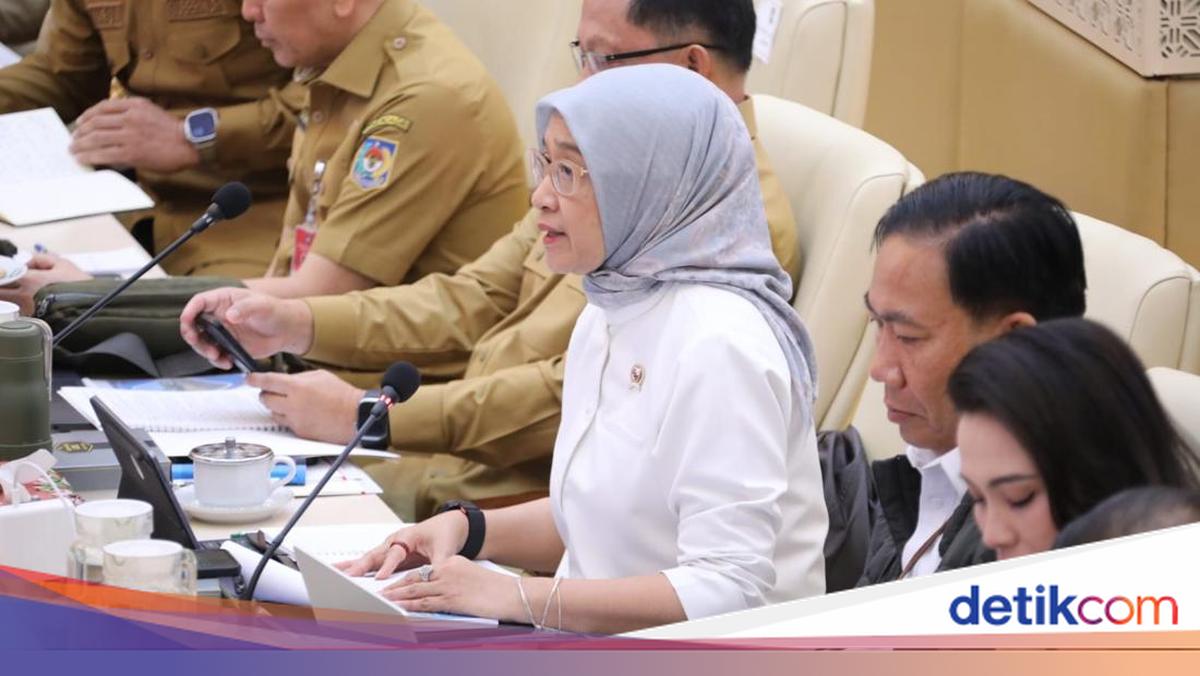
The Government and Commission II of the House of Representatives (DPR) RI share a commitment to maintaining a balance between ensuring certainty in Civil Servant (ASN) management, the sustainability of public services, and the fiscal capacity of both central and regional governments.
The Minister of State Apparatus Empowerment and Bureaucratic Reform (PANRB), Rini Widyantini, stated that the government is committed to strengthening professional, adaptive, and sustainable ASN management while maintaining public service quality and respecting regional fiscal capacities. She expressed gratitude for the support of Commission II of the DPR RI in overseeing various ASN management policies.
Speaking during a working meeting in Jakarta involving the Ministry of Home Affairs, regional governors, regents, and mayors, Rini noted that since the majority of civil servants are employed by regional governments, policy implementation is heavily influenced by regional fiscal conditions. To address this, the government proposes that regional management must be more planned and sustainable through four key steps: strengthening ASN needs planning based on real requirements, implementing precise organisational rightsizing based on the ‘structure follows strategy’ principle, strengthening performance-based management, and enhancing talent management to ensure competency alignment with strategic goals.
In alignment with this, the Minister of Home Affairs, Muhammad Tito Karnavian, emphasised the need for balanced personnel and regional financial management, asserting that personnel expenditure must not exceed 30 per cent of the Regional Budget (APBD). He suggested that one option for regional governments is to halt the recruitment of new non-permanent staff (honorer), noting that a moratorium is already in place and that regional heads must be firm to avoid creating future financial burdens.
The Chairman of Commission II of the DPR RI, Muhammad Rifqinizamy Karsayuda, explained that the meeting was held to follow up on proposed solutions regarding the relaxation of the 30% APBD cap for personnel expenditure. He noted that the meeting brought good news regarding the relaxation of these spending rules, with the aim of adjusting the proportion of the APBD by 202_7.
Commission II of the DPR RI supports the agreement between the Ministry of Home Affairs, the Ministry of PANRB, and the Ministry of Finance to implement a transition period for the 30% personnel expenditure limit, as stipulated in Law No. 1 of 2022 concerning the Financial Relations between the Central Government and Regional Governments, to be regulated via the State Budget (APBN) Law. Furthermore, the Commission requested the Ministry of PANRB to coordinate the issuance of Government Regulations on ASN Management to guarantee certainty regarding tenure, career progression, welfare, and social protection for civil servants.