
Government and Labour Unions Strengthen Efforts to Mitigate Layoffs Amid Global Economic Pressures
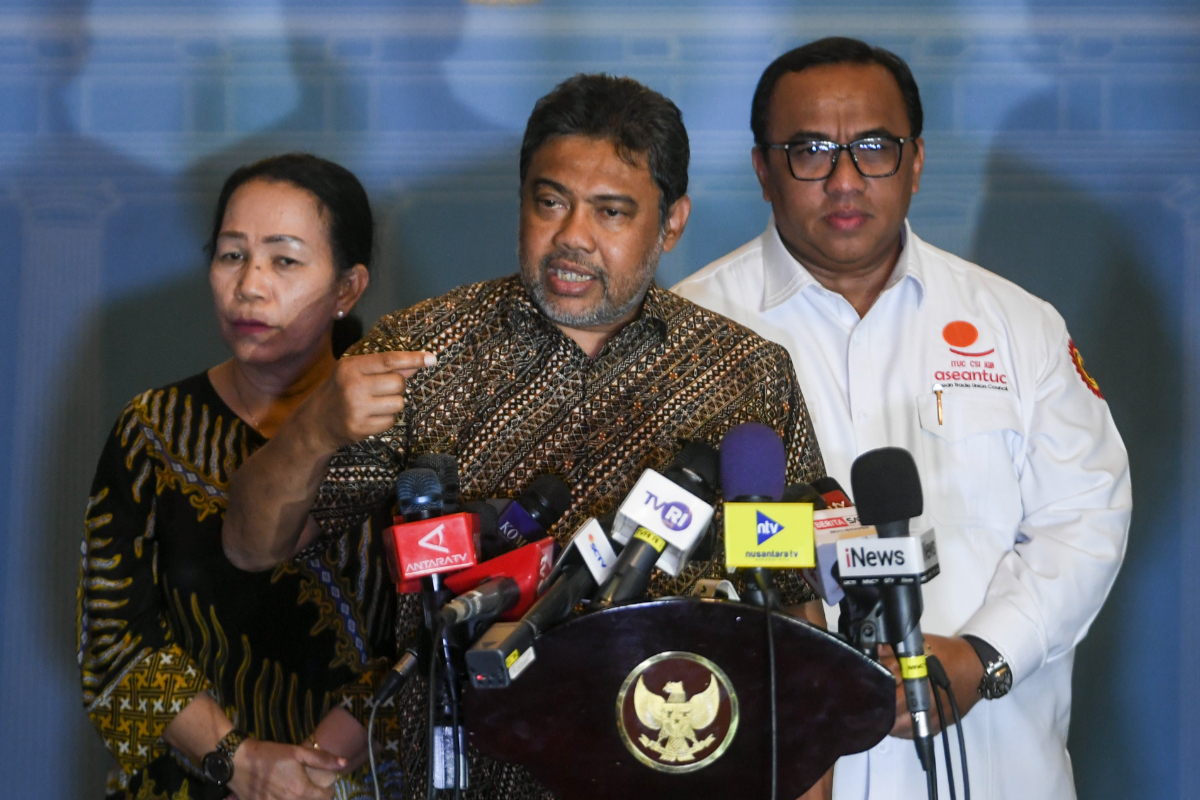
The government and the labour union movement are strengthening mitigation efforts against layoffs to protect workers amid economic pressures and global uncertainty. Special Advisor to the President on Employment and Labour Welfare, who is also President of the Confederation of Indonesian Trade Unions (KSPI), Said Iqbal, stated that the threat of layoffs still looms over various industrial sectors, necessitating concrete steps to prevent a wave of job losses.
“The threat of layoffs is indeed still before our eyes. But the government and labour unions are not standing idly by. We choose to go directly into the field to carry out mitigation so that layoffs can be prevented,” said Said Iqbal in an official statement on Sunday (28/6).
According to him, the global economic slowdown, weakening public purchasing power, high industrial gas prices due to geopolitical conflicts, and production relocation by multinational companies are among the factors increasing the potential for layoffs across various sectors. Therefore, he said, the government is not only trying to prevent layoffs but also ensuring that the rights of affected workers are fulfilled, strengthening protections for outsourced workers, and pushing for the abolition of taxes on Old-Age Security (JHT) benefits.
“Even if layoffs cannot be avoided, workers’ rights must be ensured to be paid in accordance with the provisions,” he stressed. Iqbal explained that a direct approach to companies, or going into the field, is considered more effective than merely receiving reports. In recent weeks, he has visited a number of companies in West Java, East Java, and DKI Jakarta. These visits will continue to Tangerang Regency on Monday (29/6).
One result of these mitigation steps, he revealed, was the success in reducing the production relocation plan at PT JAI Pasuruan and PT SAI Mojokerto, which are part of the Yazaki Group. Through dialogue between management and labour unions, the plan to move about 50 percent of production lines to Vietnam was successfully reduced to only about three to five production lines. He added that, based on the company’s business plan until 2030, workforce adjustments will be made naturally through the non-renewal of some expiring work contracts, rather than through mass layoffs.
The government is also carrying out mitigation for the ceramics, granite, and textile industries by pushing for a reduction in non-subsidised industrial gas prices so that companies remain competitive and able to retain jobs. “The reduction in industrial gas prices is one of the government’s concrete steps to prevent a wave of layoffs. With more competitive production costs, companies have room to retain their workers,” Iqbal explained.
Meanwhile, Iqbal mentioned that the layoffs of around 2,500 workers at PT Pakerin in Mojokerto are expected to be unavoidable. However, the government is seeking to ensure that liquidation funds held at the Deposit Insurance Corporation (LPS) can be used to pay workers’ severance as well as serve as capital. “This is so the company can resume operations and re-employ its workers,” he said.
On Monday (29/6), Said Iqbal is also scheduled to inspect PT Molex Ayus in Cikupa, Tangerang Regency, which is facing a dispute over alleged wage payments below the Tangerang Regency Sectoral Minimum Wage. The dispute has triggered a strike since 8 June 2026. According to him, the visit aims to prevent layoffs of more than 120 workers while encouraging the resolution of the dispute through dialogue. “We want to ensure workers still obtain their right to wages according to the provisions, the company can continue to operate, and no layoffs occur. Dialogue is the best path for all parties,” he said.
In addition to handling the PT Molex Ayus case, Iqbal will also push for the resolution of issues at PT Master in Cilincing, North Jakarta, to ensure the company fulfils its obligations to pay workers’ rights that have not yet been settled. In the regulatory field, he confirmed that the revision of Minister of Manpower Regulation Number 7 of 2026 concerning outsourced workers is targeted for completion by early to mid-July 2026. The revision carries the principle of prohibiting the use of outsourced workers, with limited exceptions only for four types of support jobs: cleaning services, security, drivers, and catering.
For certain sectors in state-owned enterprises (BUMN) that require national support services, Said Iqbal proposed the use of subsidiaries as labour providers on the condition that workers receive full protection, from clear employment relationships and equal wages to complete social security and the right to severance pay. “Outsourced workers must receive the same protection. There must no longer be outsourcing that only serves as a means to reduce workers’ rights,” he stressed.
Furthermore, Iqbal also proposed a fiscal policy in the form of abolishing taxes on JHT benefits, severance pay, pension guarantees, and holiday allowances (THR). According to him, JHT benefits come from contributions deducted from workers’ income, which has previously been subject to Income Tax (PPh) Article 21, so tax deductions when funds are disbursed constitute double taxation. “Workers’ wages have already been deducted for PPh 21 when received. Therefore, when JHT is paid to workers, it should no longer be taxed. I propose that the JHT tax be zero percent as a form of the state’s partiality towards workers,” he explained. He added that he will soon send an official letter to the Minister of Finance to discuss the proposal as part of the reform of worker protection and welfare improvement policies.