
Government and DPR Agree on 2027 State Budget Draft Results
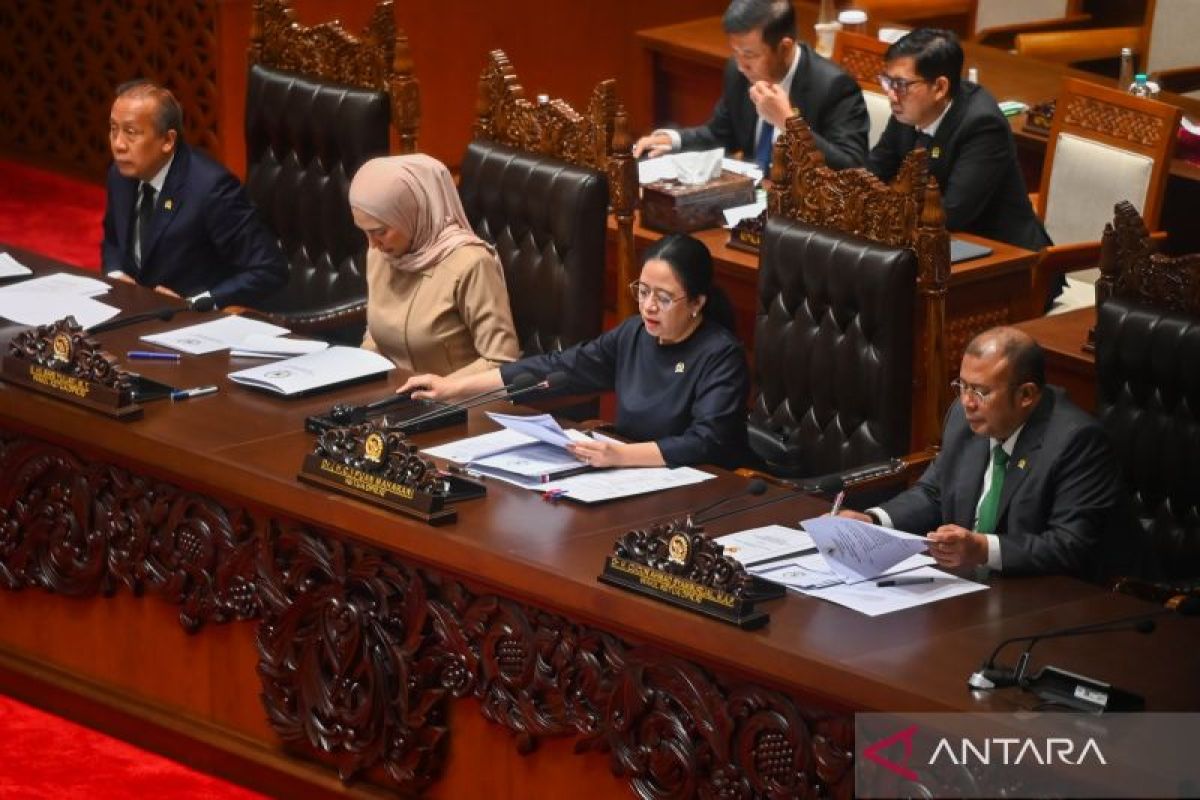
The government and the Indonesian House of Representatives (DPR) have agreed on the results of the discussion on the 2027 Draft State Revenue and Expenditure Budget (RAPBN) and Government Work Plan (RKP).
Deputy Chairman of the DPR Budget Committee, Wihadi Wijanto, stated during the 23rd DPR Plenary Meeting of the Fifth Session Period in Jakarta on Thursday that the results of the discussion will serve as the basis for the government in drafting the 2027 State Budget Bill along with its financial notes.
“The direction of national development policy focuses on accelerating inclusive economic growth and improving public welfare,” he said.
The formulation of the basic macroeconomic assumptions took into account various global challenges, ranging from geopolitical developments and international economic conditions to domestic economic dynamics.
Based on these considerations, the government and DPR agreed on the following basic macroeconomic assumptions:
Economic growth: 5.86–6.5 percent
Inflation: 1.5–3.5 percent
Rupiah exchange rate: Rp16,800–Rp17,500 per US dollar
Indonesian Crude Price (ICP): 70–95 US dollars per barrel
Oil lifting: 605–620 thousand barrels per day
Gas lifting: 951–990 thousand barrels of oil equivalent per day
“The more optimistic economic growth projection is supported by structural economic transformation as the foundation for achieving higher economic growth,” Wihadi said.
Meanwhile, the agreed fiscal policy is expansive yet measured and prudential amidst global economic uncertainty. On the revenue side, the Budget Committee encourages a gradual increase in the state revenue ratio through the optimisation of tax administration, improved taxpayer compliance, and expansion of the tax base. This also includes optimising state revenue from natural resources and adjusting the taxation system to digital economic developments.
The policy direction also aims to improve the quality of human resources and strengthen national research as the foundation for downstreaming and industrialisation. For Regional Transfers (TKD), the policy is directed at encouraging more effective and efficient regional spending to support economic growth while improving public welfare in the regions.
State revenue: 12.01–12.40 percent of gross domestic product (GDP)
State expenditure: 13.81–14.80 percent of GDP
Primary balance: 0.45–(0.14) percent
Deficit: 1.80–2.40 percent of GDP
Investment financing: 0.50–0.90 percent
Debt-to-GDP ratio: 40.31–40.64 percent