
Government Allocates Rp 100.1 Trillion for Post-Disaster Rehabilitation in Sumatra
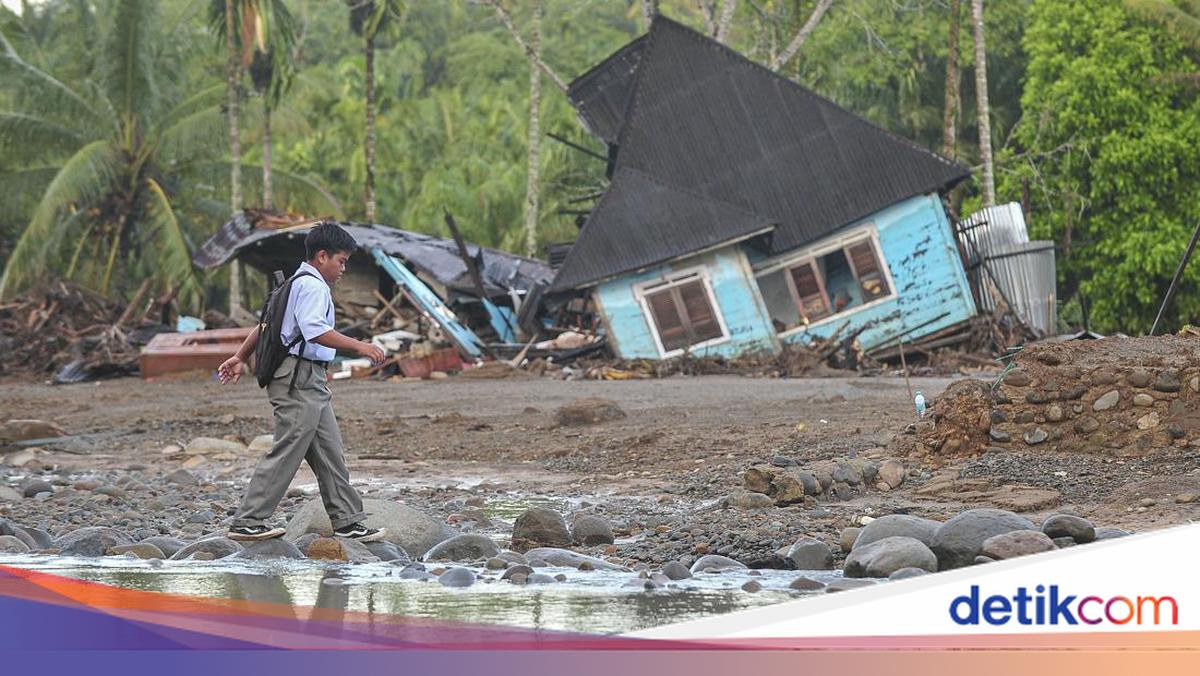
The government has allocated a budget of Rp 100.1 trillion for a post-disaster rehabilitation and reconstruction programme in Aceh, North Sumatra, and West Sumatra through to 2028. The budget has received approval from President Prabowo Subianto and will be disbursed in stages over three years. This was conveyed by Minister of Home Affairs Tito Karnavian following a meeting of the Steering Committee for the Task Force on Accelerating Post-Disaster Rehabilitation and Reconstruction in Sumatra, chaired by Coordinating Minister for Human Development and Culture Pratikno in Jakarta on Thursday (18/6/2026). “The President has issued a directive approving a total three-year budget of Rp 100.1 trillion, divided into three phases,” Tito said. Tito detailed that in 2026 the government is allocating Rp 38.9 trillion, followed by Rp 32.9 trillion in 2027, and Rp 28.2 trillion in 2028. The funds will be used to support the recovery of various sectors affected by disasters in the three provinces. According to Tito, the budget involves 33 ministries and agencies. A total of 23 primary ministries and agencies will handle sectors directly felt by the public, such as infrastructure, education, health, housing, transportation, agriculture, and fisheries. Meanwhile, 10 other ministries and agencies play a supporting role. He said most ministries and agencies have submitted their budget requirements to the Ministry of Finance. Some have even received disbursements and begun implementing programmes in the field. “Once the funds are transferred, the pace will accelerate rapidly,” he noted. In addition to support from the central government, regions have also received additional regional transfer funds amounting to Rp 10.6 trillion to accelerate post-disaster recovery. The breakdown is Aceh receiving Rp 1.6 trillion, West Sumatra Rp 2.3 trillion, and North Sumatra Rp 6.1 trillion. Tito revealed that recovery progress in Aceh, North Sumatra, and West Sumatra has been relatively good so far. A number of basic services, such as hospitals, community health centres, schools, markets, petrol stations, and electricity networks, have resumed operations. In the education sector, 4,922 affected schools have begun to be addressed. However, there are still some schools that must conduct teaching and learning activities in emergency locations because the school buildings are severely damaged or need to be relocated. Meanwhile, for temporary housing for disaster victims, the government notes that around 97 per cent has been built. In fact, based on the latest reports from local governments, almost no residents are still living in refugee tents. “Our main priority going forward is infrastructure, making permanent the roads and bridges in areas that have not yet been reached,” Tito stated. Coordinating Minister for Human Development and Culture Pratikno added that the government is not only focused on budget disbursement, but also ensuring that recovery programmes can be implemented promptly on the ground. His office is also strengthening supervision and monitoring so that the rehabilitation and reconstruction implementation runs effectively and there is no overlap of programmes. “We discussed how to improve supervision, monitoring, and reporting to ensure nothing is missed and to guarantee synergy between agencies runs well,” he added.