
Government Aims to Bring South Papua's Modern Agriculture on Par with Japan and the US
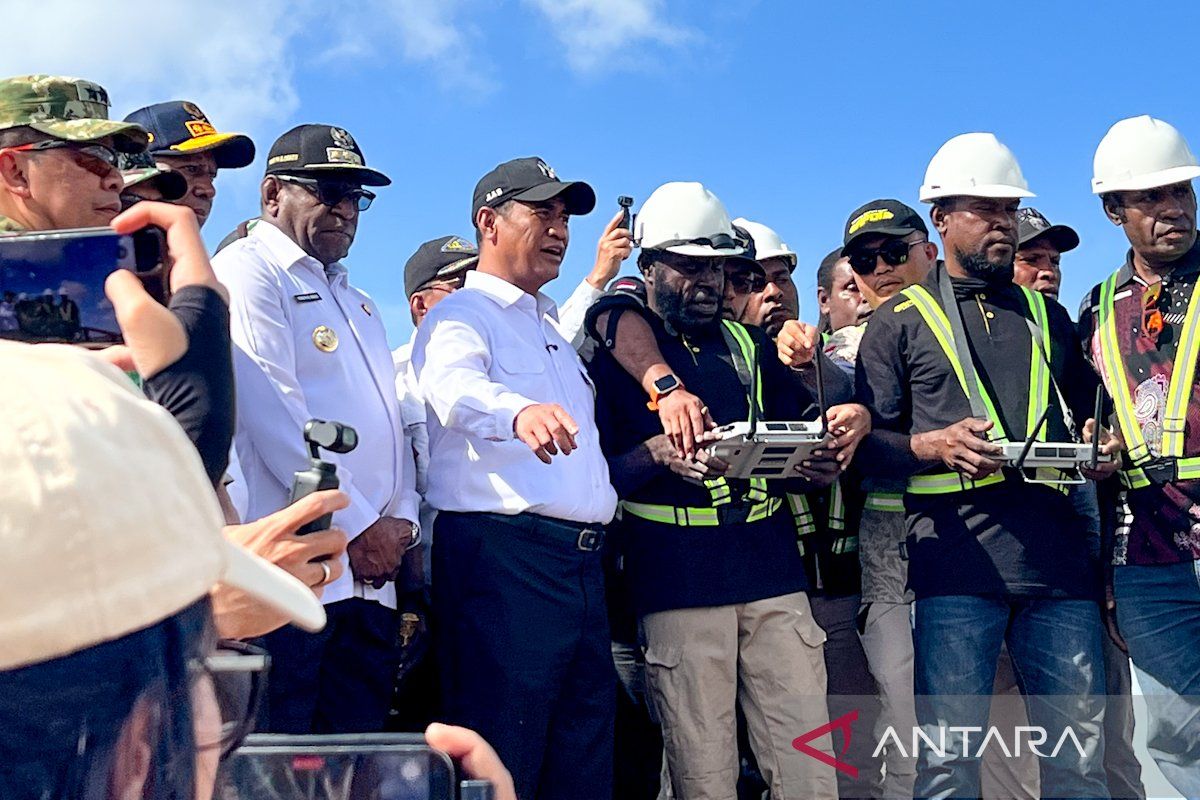
The government, via the Ministry of Agriculture, is developing modern agriculture in Merauke Regency, South Papua, to bring it on par with Japan and the United States through mechanisation and technological mastery, aiming to strengthen sustainable national food self-sufficiency.
“The technology used in Merauke, South Papua, is on par with Japan, and what is used in America and other countries,” said Minister of Agriculture Andi Amran Sulaiman while leading the implementation of a 137,000-hectare rice field printing and land optimisation programme in Waninggap Kai Village, Semangga District, Merauke Regency, South Papua, on Saturday.
The minister made the statement after witnessing young people from Merauke operating drones and various modern agricultural machinery. This serves as proof that agriculture in Merauke has reached parity with farming practices in developed nations. The mastery of technology by Papua’s younger generation forms a crucial foundation for accelerating national food self-sufficiency while improving the welfare of the Papuan people.
“This is our goal, technology transfer to the best sons and daughters of this region,” Amran said. He noted that the successful mastery of this technology proves that modern agriculture in Merauke is now on a level with advanced countries.
The minister stated that mechanisation is the key to increasing agricultural productivity in South Papua. Farmers are no longer dependent on conventional methods, as all cultivation stages, from planting to harvesting, are now carried out using modern technology. “That is why they use drones, plant using rice transplanters, and harvest using combine harvesters. It is extraordinary,” he said.
The minister revealed that his visit to Merauke was a deeply memorable moment after a packed state agenda accompanying President Prabowo Subianto on overseas trips. “But today my fatigue is paid off because I heard good news of the success of the region’s sons,” he remarked.
According to Amran, the application of modern technology has had a tangible impact on increasing planting intensity and agricultural productivity in Merauke. “The tools used and the increase in the cropping index are no longer just rhetoric. They spoke about it themselves. The national cropping index is around 1.6 to 1.7. In Merauke, it is already at 2, meaning two plantings per year. If possible, make it three,” the minister urged.
Besides the increased planting frequency, rice productivity has also continued to rise. Where previously harvests yielded only around three tonnes of grain per hectare, many farmers are now able to produce four to seven tonnes per hectare. “Previously production was three tonnes, now there are four tonnes, five tonnes, six tonnes, and seven tonnes. This is for all the people, for the welfare of our society. Their income has risen. The Regent mentioned up to 300 per cent. This is extraordinary,” he said.
The minister stressed that all agricultural tools and machinery distributed by the government are assets intended for the Papuan people to improve their welfare. “All this equipment is for the people here,” he added. While at the location, the minister even tried operating a modern tractor alongside a local operator. He admitted to being impressed by the ability of the young Papuan operators who have mastered the technology. “What is interesting is, I opened his bag, and there was a mobile phone. It looked like an iPhone. It means their welfare has increased because they have mastered technology,” Amran said.
Going forward, the Ministry of Agriculture will continue to strengthen assistance in Merauke so that the entire cultivation process is carried out with modern technology, from seeding to post-harvest using grain drying machines. This modern agricultural transformation runs in parallel with the large-scale development of food estates in Tanah Papua. By 2026, the government has developed 83,030 hectares of new rice fields and optimised 54,399 hectares of land, with South Papua serving as the largest development centre through 48,934 hectares of new rice fields and 53,499 hectares of land optimisation. The programme has also driven an increase in the cropping index from 1.05 to around 1.82–2.00, accompanied by increased productivity, harvest area, rice production, and farmers’ incomes, which are reported to have risen by up to 300 per cent.