
Government Accelerates Standardisation of Air Cargo Tariffs to Lower Logistics Costs
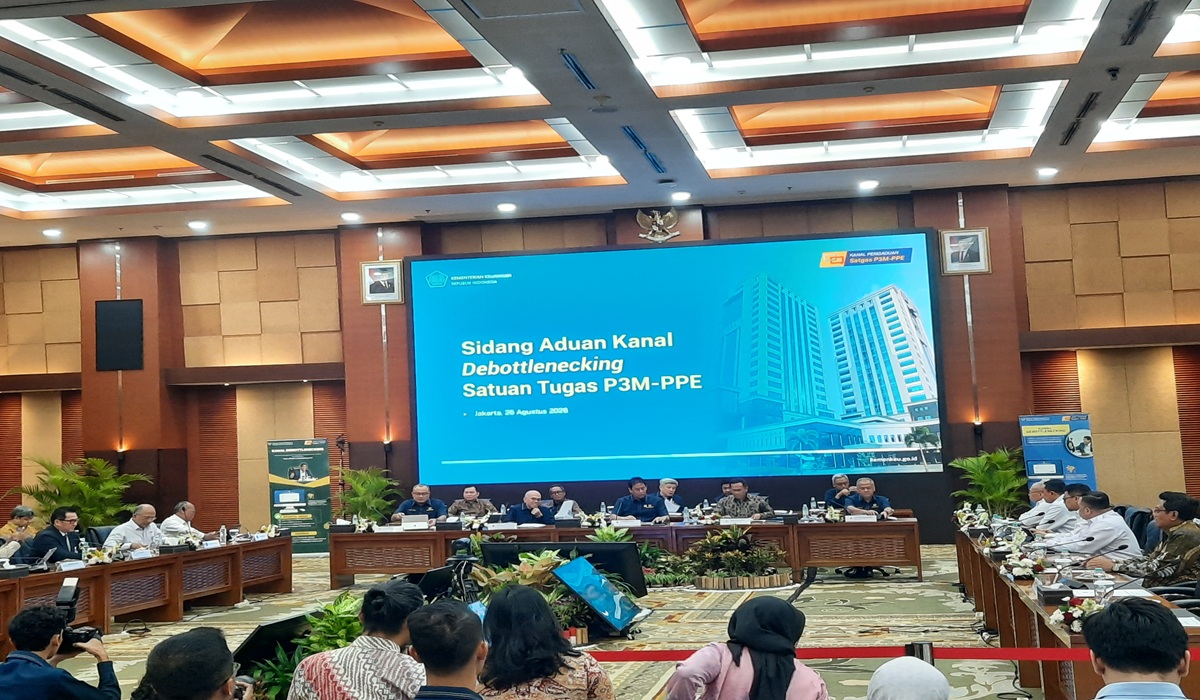
The government will accelerate the standardisation of air cargo tariff components and the synchronisation of business processes. Finance Minister Purbaya Yudhi Sadewa discussed the resolution of complaints from the Indonesian Express, Postal and Logistics Service Companies Association (Asperindo). The complaints cover two problems in the air cargo logistics chain.
During the 14th Debottlenecking Channel Session at the Ministry of Finance office in Central Jakarta on Wednesday (26/8), various issues emerged, including those related to the Cargo and Postal Security Inspection Service (Jasper) fee, Airport Related Services (Jaster), and the Standard Ground Handling Agreement (SGHA) in the air cargo delivery chain.
Asperindo stated that the imposition of these fees sits on top of an already layered cargo terminal cost structure. Asperindo considers that the Jasper and Jaster fees have the potential to duplicate functions and costs previously carried out by the RA, thereby adding to the burden on the national logistics supply chain.
The second problem relates to the lack of uniformity in the standard for calculating volumetric weight of cargo between airlines. In its complaint, Asperindo stated that since 16 June 2025, one airline has set a divisor of 5,000. Previously, the industry generally referred to a divisor of 6,000.
This has caused an increase in chargeable weight for light but bulky goods of up to around 20%. Asperindo considers that this difference does not refer to a single standard guideline and has the potential to drive up shipping costs that burden business operators, particularly MSMEs and the e-commerce sector, as well as widening price disparities in the outermost, frontier, and disadvantaged (3T) regions.
Responding to this, Finance Minister Purbaya assessed that both problems are important for inter-island goods transport.
“So this should be important because it is one of the processes for controlling logistics costs. Moreover, we have many inter-island routes, otherwise, as was said earlier by Asperindo members, inter-island goods transport becomes expensive,” said Purbaya.
As a follow-up to these problems, the Ministry of Transportation will accelerate the completion of a Minister of Transportation Regulation regarding the standardisation of air cargo tariff components and the synchronisation of business processes.
The regulation is expected to provide clarity regarding air cargo tariff components, so that the cost structure becomes more transparent and supports logistics cost efficiency.