
Government Accelerates River Normalisation After Sumatra Disasters
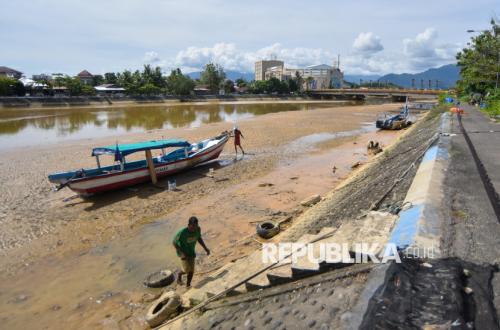
The government is accelerating river normalisation and infrastructure recovery in Aceh, North Sumatra, and West Sumatra as part of post-disaster rehabilitation and reconstruction. To date, 104 rivers are still being handled out of a total of 137 rivers affected by the disasters in the three provinces.
Minister of Public Works Dody Hanggodo stated that accelerating river normalisation requires cross-ministerial support, particularly regarding the management of excavated material, which has become one of the obstacles in the field.
‘The Ministry of Public Works can issue permits and carry out river normalisation according to existing authority. However, for the management of the excavated material, the involvement of the Ministry of Energy and Mineral Resources is needed to ensure regulatory certainty and a material management mechanism so that the river normalisation process can proceed more quickly and effectively,’ Dody said during a Ministerial-Level Coordination Meeting on accelerating post-disaster rehabilitation and reconstruction in Sumatra on Thursday (18/6/2026).
Dody explained that of the 137 affected rivers, 33 have been fully normalised, while 104 others are still in the process of being handled.
In addition to river management, the Ministry of Public Works also reported progress on the restoration of basic infrastructure in the affected areas. As of 17 June 2026, all 107 affected national road sections and 43 national bridges have been restored to functionality.
For regional infrastructure, 2,270 out of 2,421 affected regional road sections are operational again. Meanwhile, 796 out of 1,181 affected regional bridges have been fully handled.
In the water resources and settlements sector, 178 Drinking Water Supply Systems affected by the disasters have resumed operations. The government has also built 1,554 post-disaster housing units across 18 designated locations.
The restoration of public facilities is also underway through the handling of 429 affected schools, madrasahs, and Islamic boarding schools. Additionally, the government is rehabilitating health facilities, places of worship, government offices, and sports facilities.
To strengthen future disaster mitigation, the Ministry of Public Works is constructing 111 sediment control structures, or sabo dams, in the affected regions. This infrastructure consists of 97 sabo dams, including 12 bridge-approach sabo dams, and 14 sand pockets.
Dody said a Cash-for-Work programme is also being implemented to help restore the economy of affected communities. To date, the programme has absorbed 6,165 workers with a budget realisation of Rp37.77 billion.
Coordinating Minister for Human Development and Culture Pratikno stressed the importance of regulatory certainty in managing post-disaster resources so that the rehabilitation and reconstruction process can run more effectively.
‘We need to ensure there is no doubt or regulatory obstacle that could hinder the acceleration of rehabilitation and reconstruction measures in the affected areas,’ Pratikno said.
Meanwhile, Minister of Home Affairs Tito Karnavian appreciated the swift action of the Ministry of Public Works in restoring post-disaster infrastructure. He urged all ministries, agencies, and regional governments that have received budget allocations for disaster management to accelerate the implementation of rehabilitation and reconstruction programmes.
‘We hope the implementation of planned rehabilitation and reconstruction activities can be accelerated so that community activities in the affected areas can recover immediately,’ Tito said.