
Government accelerates electricity capacity to support AI development
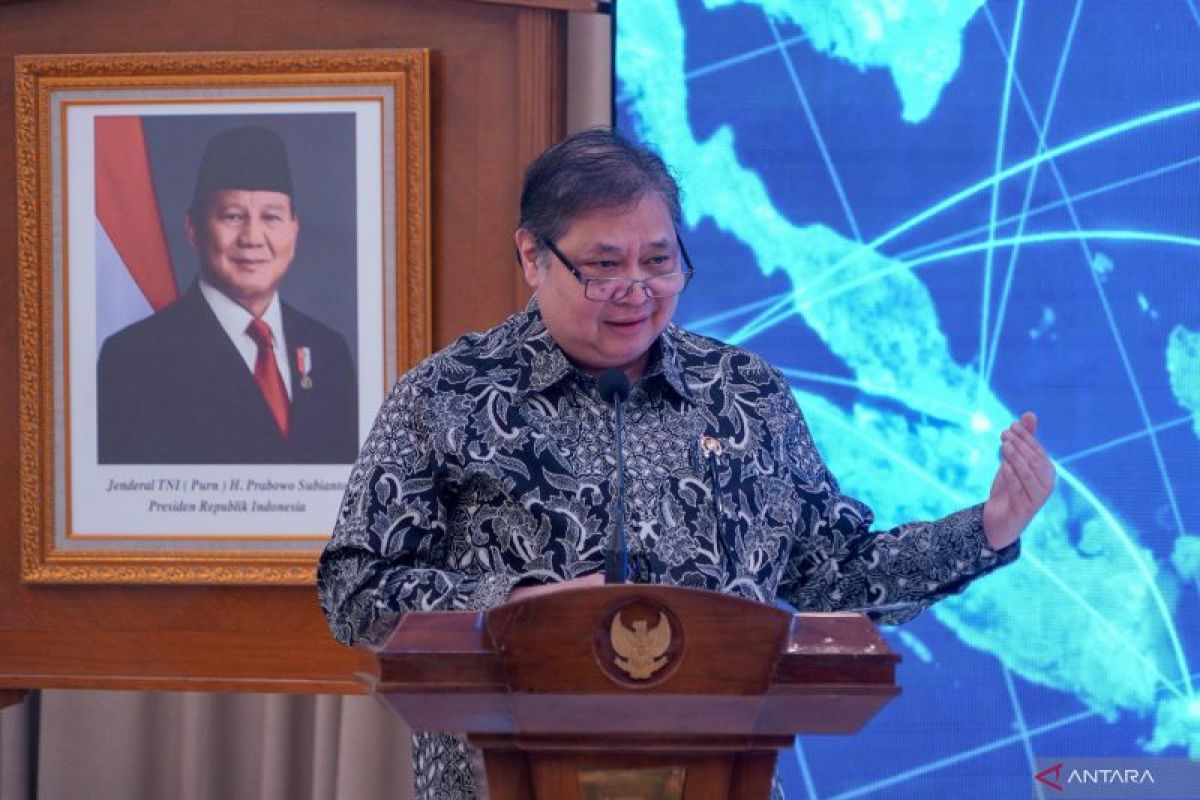
Jakarta (ANTARA) – The government is accelerating efforts to strengthen national electricity capacity to support the development of artificial intelligence (AI).
Coordinating Minister for Economic Affairs Airlangga Hartarto said that strengthening digital infrastructure and energy resilience was among the government’s priorities in achieving AI sovereignty.
“Indonesia needs more than just talk about AI; it needs concrete action, from strategy to direct impact. AI must act as a catalyst for productivity, industrial competitiveness, stronger micro, small and medium-sized enterprises (MSMEs), higher-value jobs and better public services,” Airlangga said in a virtual keynote address at the Artificial Intelligence Impact Summit 2026 in Jakarta on Wednesday.
The government is preparing to add up to 70 gigawatts (GW) of electricity capacity under PLN’s 2025–2034 Electricity Supply Business Plan (RUPTL).
It is also promoting a solar power plant programme with a capacity of 100 gigawatt-peak (GWp).
These measures are intended to support increasing energy demand as national data centres are developed. Indonesia’s current data centre capacity is estimated at 0.45–0.58 GW.
Alongside energy infrastructure, Airlangga said the government was preparing to strengthen the workforce to support AI adoption across sectors.
The government is targeting nine million digital professionals by 2030.
Measures include the Digital Talent Scholarship programme, super tax deductions of up to 200 per cent for vocational training, and a partnership between Danantara and Arm to train 15,000 semiconductor chip-design engineers over three years.
AI adoption is also being directed towards manufacturing, supply chains and public services, including business licensing through the Online Single Submission (OSS) system, logistics, taxation and healthcare.
Airlangga said Indonesia had a strong digital economy foundation, with 229 million internet users and 22 million micro, small and medium-sized enterprises (MSMEs) already digitised.
Indonesia’s digital economy is projected to reach US$100–130 billion in 2026. AI’s potential contribution, meanwhile, is estimated to exceed US$360–400 billion by 2030.
Nevertheless, Airlangga said AI development must also be supported by governance that prioritises security, accountability, public protection and regulatory certainty, so that the technology can deliver broad benefits to the national economy.
“Let us join forces to make AI a driving force for Indonesia’s economic transformation. Through technological sovereignty and collective action, we can build an Indonesia that is productive, innovative, inclusive and globally competitive,” Airlangga said.