
Governance Development Drives Independence of Art Studios
Strengthening organisational governance is considered one of the main challenges facing art studios in sustaining their activities whilst broadening their contribution to the creative economy. Beyond the quality of their works, organisational management, funding, and human resource development are decisive factors in the competitiveness of artistic communities.
A number of initiatives have begun to be developed to address these challenges through mentoring programmes focused on strengthening the organisational capacity of art studios. One such effort is being carried out by PT Bank Central Asia Tbk (BCA) through the Sanggar Bakti BCA programme, which covers governance coaching, performance management, documentation of works, and human resource development.
Hera F. Haryn, Executive Vice President of Corporate Communication & Social Responsibility at BCA, said the programme was designed to address the various challenges still faced by art studios, from limited funding and weak organisational management to minimal access to mentoring and networks.
“We hope the selected studios can make use of this programme to develop their potential, broaden their opportunities, and strengthen their sustainability. The mentoring we provide is expected to equip them to keep growing and reach a wider audience,” Hera said on Thursday (23/7/2026).
The Sanggar Bakti BCA programme is implemented in two stages: an assessment and mapping of artistic communities to identify promising studios, followed by intensive mentoring covering artistic quality, organisational capacity, performance management, documentation of works, and human resource development.
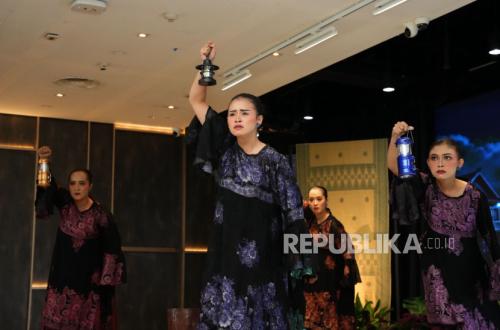
Ten studios took part in the selection process before five presented their programmes before a panel of arts practitioners and academics. Citra Art Studio became the first studio chosen to join the programme.
In its implementation, BCA has partnered with Titimangsa as programme partner. Titimangsa founder Happy Salma said the collaboration is expected to strengthen the management capacity of artistic communities whilst broadening the space for knowledge exchange among arts practitioners.
“This collaboration has been an immensely valuable experience for Titimangsa. We have met many arts workers who operate with great consistency and love for tradition. We hope the selected studios can use this programme as an opportunity to exchange knowledge, develop new ideas, and become ever more confident in their artistic journeys,” said Happy Salma.
Through strengthened organisational governance and institutional capacity, art studios are expected not only to produce performance works but also to adopt more professional management models, thereby sustaining their activities and broadening their contribution to the creative economy.