
Google Takes AI Chips into Space, Aiming to Build Orbital Data Centres
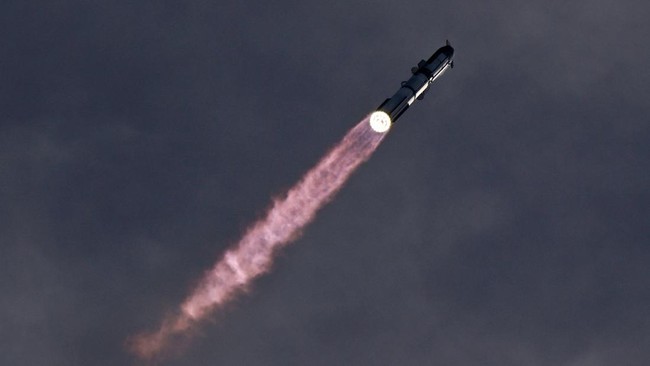
Google has begun testing the possibility of building data centres in outer space by launching a satellite carrying artificial intelligence (AI) chips into orbit. The prototype satellite carries four of Google’s AI chips, known as Tensor Processing Units (TPUs). The satellite was launched using a SpaceX rocket from California on Thursday local time, alongside several other payloads.
This launch marks the beginning of an experiment lasting approximately one year to determine whether Google’s TPU chips can survive the conditions of space. The project, named Suncatcher, is part of Google’s ambition to establish data centres in Earth’s orbit. In a future scenario, Google envisions thousands of interconnected satellites using solar energy to run AI computations. Google designed the prototype satellite in collaboration with Planet Labs, and the craft is powered by solar panels.
Moving forward, Google hopes to utilise satellites placed in sun-synchronous orbit, allowing them to be continuously exposed to sunlight. Solar panels used to supply energy to the TPU chips are expected to generate up to eight times more energy than solar panels installed on Earth. This is because solar power generation on Earth faces limitations due to the atmosphere, weather conditions, and nighttime, which prevent panels from receiving sunlight constantly.
“The Sun is the largest energy source in our solar system, far greater than any other source,” said Travis Beals, Senior Director of Paradigms of Intelligence within Google’s AI research team, part of Alphabet, as reported by the WSJ.
Google is among the first companies to send AI chips into space. Several other firms, including SpaceX and Blue Origin, are also preparing similar projects. The concept of space-based data centres is considered useful for specific needs. Val Elbert, Global Leader for technology, media, and telecommunications practice at Boston Consulting Group, noted that governments, for instance, could use such data centres for sovereign data storage.
Companies could also use them to process satellite imagery in real-time, meaning data collected from space would not always need to be transmitted to Earth-based data centres first. Proponents of orbital data centres also suggest this technology could avoid several issues faced by terrestrial data centres, such as local community opposition, land scarcity, and energy constraints.
However, building data centres in space faces significant challenges, ranging from costs to radiation exposure. Google stated that AI chips can experience forces up to 100 times Earth’s gravity during rocket launches, which could potentially damage the chips. Once in orbit, the chips must also withstand cosmic rays and solar events that can affect electronic devices.
Heat management is another issue. John Abraham, a professor of mechanical engineering at the University of St. Thomas, noted that AI chips generate heat when processing computational requests. The cooling systems used in Earth-based data centres cannot be directly applied in space. Orbital data centres would need to use radiators to dissipate heat, converting it into infrared light waves that are then radiated into space.
“These chips could also experience overheating,” said Abraham.
Google’s prototype satellite is roughly the size of a refrigerator. However, next-generation satellites are expected to carry dozens of TPUs in a single unit. The scale of the solar panels and radiators required will be far larger than the AI chips they carry. For context, a single TPU chip is only a few inches wide, whereas the radiators needed for future satellites could be as large as a Boeing 747, according to Elbert.
Beals estimates that approximately 10,000 satellites would be required to build a single 1-gigawatt capacity data centre in space. The cost is a major concern. Elbert estimates that currently, building and launching a 1-gigawatt capacity data centre in orbit would cost around US$30 billion. According to Elbert, advancements in rocket launch technology may eventually reduce these costs, though it is unlikely to fully eliminate the cost difference compared to Earth-based data centres.
“Cost parity will always favour data centres located on Earth,” said Elbert. Nevertheless, Beals stated that Google expects that one day, space-based data centres could be built at costs comparable to those on Earth, though this technology may still be years away from reaching that stage.
For now, Google is awaiting the results of the experiment on the four recently sent TPUs. Beals noted that it would take several weeks to determine if the chips can survive without damage. “We want to see if behaviour in space matches what we see on Earth,” said Beals.
Google has already prepared its next steps. In 2027, the company plans to launch more TPUs into space, this time using two interconnected satellites. Google’s Suncatcher project remains in the experimental stage; the company must first prove that AI chips can operate in a space environment over the long term before the orbital data centre concept can be realised.