
Good News at the Start of November: Indonesia’s Manufacturing PMI Hits an Eight-Month High
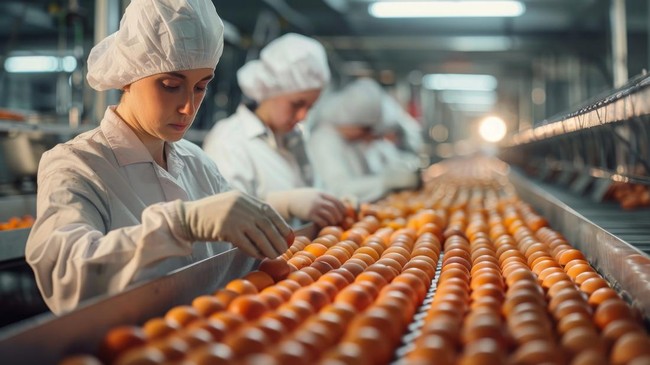
Indonesia’s manufacturing activity surged in October 2026.
Data from the Purchasing Managers’ Index (PMI), released by S&P Global on Monday (2 November 2026), showed Indonesia’s PMI at 54.0 in October. This was its highest level since February 2026, or in the past eight months.
The PMI uses 50 as the threshold. A reading above 50 indicates that businesses are expanding, while a reading below it signals contraction.
Indonesia’s manufacturing sector accelerated at the start of the fourth quarter of 2026. New orders surged to their highest level in five years, driving output to its fastest growth since March 2024.
The rise in the manufacturing PMI was supported by stronger domestic demand and record growth in exports. New export orders increased at the fastest pace since the survey began in April 2011.
Usamah Bhatti, an economist at S&P Global Market Intelligence, said Indonesian manufacturing conditions had improved for two consecutive months. Strong demand had prompted companies to raise production sharply.
“Expansion was solid and the strongest since March 2024, driven by one of the strongest increases in new orders in the survey’s history,” he said, as quoted on S&P’s official website.
Exports Set a Record as Production Accelerates
Demand for Indonesian manufactured products strengthened significantly in October. New orders rose for the third consecutive month, at their fastest pace since October 2021.
Businesses attributed the increase to stronger customer confidence and new product launches. Sales growth was also supported by international markets, with export orders recording the fastest growth in the survey’s history.
Manufacturers responded to the surge in demand by increasing production for the second month in a row. Output growth was the sharpest since March 2024.
However, the surge in orders began to deplete stocks of finished goods. Companies used available inventories to meet demand, resulting in the steepest fall in stocks since August 2020.
Capacity pressures also persisted. Backlogs of work rose for the fourth consecutive month, indicating that strong demand was beginning to strain companies’ production capabilities.
Production Costs Rise as Job Creation Stays Weak
Despite the rapid pace of manufacturing activity, several challenges remained.
Companies increased their purchases of raw materials and added to inventories in anticipation of production needs. Improvements in supply chains also helped, with raw-material delivery times shortening again for the first time in more than a year.
However, the increase in activity was not accompanied by a substantial rise in recruitment. Employment edged up in October, while the pace of job creation slowed compared with the previous month.
Production costs also came under pressure. Higher raw-material prices, particularly for fuel, and unfavourable exchange-rate movements pushed up input-cost inflation.
Manufacturers responded by raising selling prices more quickly in October. This means the strengthening of manufacturing demand coincided with mounting cost pressures that could affect product prices.
Despite cost pressures and capacity constraints, manufacturers remained optimistic about business prospects over the next 12 months.
Businesses hope strong demand will persist, expansion plans will proceed, and price pressures and supply constraints will continue to ease.
S&P Global said strong demand provided a positive foundation for manufacturing activity in the coming months. However, employment trends and production costs will be important factors to watch as expansion gathers pace.