
Gontor, Ronggowarsito, and the Values of Pesantren
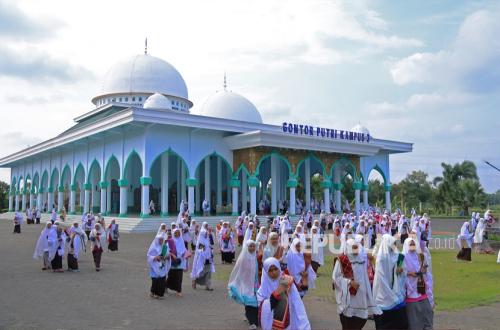
The Gontor Islamic boarding school, founded on 20 September 1926, is approaching its centenary. Established by the Trimurti—KH Ahmad Sahal, KH Zainuddin Fannanie, and KH Imam Zarkasyi—Gontor has become one of the most influential Islamic educational institutions in Indonesia. It is no surprise that Gontor is part of the long journey of the pesantren tradition, intellectualism, and the moral formation of society in Java and Indonesia at large.
A historical connection emerges as Pondok Modern Darussalam Gontor, Ponorogo, enters its hundredth year: the link between Gontor and the poet Ronggowarsito, as both share the same roots in the Tegalsari pesantren. Looking further back, Gontor is a continuation of the legendary Tegalsari lineage, located just three kilometres from Gontor. In the 19th century, Tegalsari was a major centre of Islamic education with significant influence on Javanese Islamic and cultural history.
From the traditions of Tegalsari, the name Raden Ngabehi Ronggowarsito, a student of Tegalsari, is frequently cited in the intellectual history of Javanese society. Ronggowarsito is recognised as one of the greatest poets in Javanese history, later serving as a poet for the Kasunanan Surakarta Palace in the 19th century. He lived during a period when Javanese kingdoms faced immense social and political pressure due to the strengthening of colonial power. In such times, the role of a poet was not merely to produce literature, but to interpret the changing times, record societal anxieties, and provide moral guidance to those in power.
Several of Ronggowarsito’s works demonstrate this breadth of concern, including Serat Kalatidha, Serat Jaka Lodhang, Serat Sabdajati, and Serat Wirid Hidayat Jati. His works address not only spirituality but also humanity, social life, leadership, morality, and the future of society. Consequently, Ronggowarsito is viewed not just as a palace poet, but as an intellectual striving to maintain the moral consciousness of society amidst changing eras.
Serat Kalatidha is perhaps his most famous work in this context. The term ‘zaman edan’ (an era of madness), frequently quoted from this work, describes a situation where value systems collapse and humans lose their bearings. Ronggowarsito’s critique was not directed solely at the common people; there was an anxiety regarding an era where individuals find it easier to follow the currents of interest rather than uphold truth and morality. This message remains relevant, as every era possesses its own form of ‘zaman edan’.
Interestingly, while Ronggowarsito was situated within the palace environment near the centre of power, this proximity did not diminish his critical function as an intellectual. Being close to power actually provided him the opportunity to observe from within how changing times affected the lives of the people and the kingdom. From this, we learn an important lesson: an intellectual may be close to power, but they must never lose their moral distance from it.
In the post-independence era, specifically during the New Order, Gontor has produced numerous figures who have significantly shaped Indonesia’s intellectual and cultural landscape. One of the most prominent is Nurcholish Madjid, known as Cak Nur. Born in Jombang and educated at Gontor, he became one of Indonesia’s most influential Islamic thinkers through his ideas on Islamic renewal, democracy, pluralism, civil society, and the relationship between religion and the state.
Another notable figure is Emha Ainun Nadjib, or Cak Nun, also from Jombang and a former student of Gontor. While Cak Nur operated primarily through academic and intellectual spheres, Cak Nun chose the cultural path through poetry, essays, theatre, music, and community forums. Both demonstrate that a ‘santri’ (student of an Islamic school) does not need to hold office or occupy structures of power to influence the nation’s journey. Indeed, the leaders of Gontor highly appreciate students who serve as religious teachers in remote villages, valuing them equally to those in urban centres of power.
During the 1998 Reformation era, Gontor played a role in the country’s democratic transition through alumni like Cak Nur and Cak Nun. These figures became focal points of public attention and political movement that contributed to the end of the New Order. The fall of Suharto in 1998 resulted from many factors: economic crisis, student movements, civil society pressure, political shifts, elite conflicts, and weakening legitimacy. However, the critical voices of intellectuals and cultural figures, including Cak Nur and Cak Nun, helped build an atmosphere where the public felt empowered to question authority and demand change.
Here, we see the connection between education, morality, and political change. While pesantren may not directly influence the rise and fall of power, they educate individuals who are not afraid to question authority when it deviates from its path. Pesantren can foster the moral courage that serves as the energy for social change. Thus, the influence of pesantren on the nation is not measured solely by the number of alumni in government, but by how far they can uphold pesantren values when entering the realm of public policy.
Source: jawawa.id (https://jawawa.id/newsitem/gontor-ronggowarsito-and-the-values-of-pesantren-1789811579)
Originally published by Republika (https://analisis.republika.co.id/berita/tllspc282/gontor-ronggowarsito-dan-nilainilai-pesantren), translated from Indonesian