
Golkar's Misbakhun Urges Political Elite to Maintain Stability, Addresses PDIP
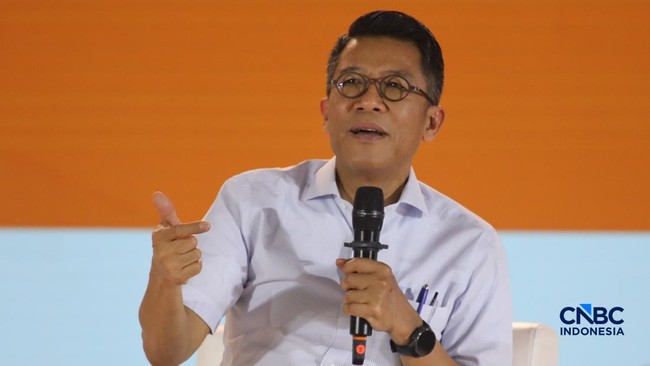
Amid rising national political dynamics and challenges facing Indonesia due to the global geopolitical situation, Mukhamad Misbakhun, Head of the Economic Division of the Golkar Party’s Central Executive Board, has urged all political elites to prioritise mature, consistent, and responsible conduct when conveying views to the public. According to Misbakhun, space for criticism of the government must be preserved as part of democratic life. However, he cautioned that criticism should not be delivered in ways that could inflame the atmosphere or trigger greater public tension. “Criticism is important in a democracy so the government continues to hear public aspirations. But in a situation where the nation is under pressure from current geopolitical conditions, criticism should be conveyed with full responsibility, not in a manner that heats things up further. We need calls that cool the atmosphere so it subsides,” Misbakhun said in a statement on Sunday. The Chairman of the National Leadership Council of the Central Organisation of Independent Indonesian Employees (Depinas SOKSI) assessed that criticism from various elements—whether the public, students, national figures, or political parties—is an essential part of the control mechanism over governance. Therefore, he said, every piece of input must be respected as a form of concern for the direction of development and state management. Misbakhun also believes the administration of President Prabowo Subianto is not closed to criticism. In fact, he noted, several public inputs have been concretely addressed by the government. As an example, he cited various criticisms regarding alleged irregularities in the implementation of the Free Nutritious Meal Programme (MBG), which were subsequently followed up through law enforcement processes. “The government listens to much criticism and input; the proof is that law enforcement efforts were undertaken for MBG,” he added. On the occasion, the Chairman of Commission XI of the Indonesian House of Representatives also responded to the stance of several elites from the Indonesian Democratic Party of Struggle (PDIP), who have recently been active in voicing criticism of the government amid political developments and waves of public protest. Misbakhun stressed that he respects PDIP’s right to convey views and criticism to the government. However, he assessed that much of the emerging criticism has yet to offer concrete solutions. In his view, as a party with long experience leading the national government, PDIP should be able to present more substantive and constructive criticism. “PDI Perjuangan has had long experience in operating government and state policy. Therefore, the criticism delivered should be more mature, proportional, and solution-oriented, not adding heat to the situation,” Misbakhun stated. Furthermore, the legislator from the East Java II electoral district also highlighted the importance of consistency in political party stances within Indonesia’s democratic system. Although Indonesia does not recognise a formal opposition like several other countries, Misbakhun believes every political party must still have a clear political position—whether inside the government or choosing to be outside of power. He criticised political practices he deemed ambiguous, where a party enjoys political benefits when government policies receive public appreciation but quickly distances itself when the government faces problems or unpopular policies. According to Misbakhun, such a pattern does not reflect good political ethics. “Do not position yourself as a balancer, but when a good government programme is appreciated, you also want to score points. Conversely, you immediately criticise harshly when a government programme is in trouble. That two-footed political position is not elegant,” Misbakhun added. He asserted that the public needs firmness of stance from political parties. Clarity of position, he continued, is an important part of political education and democratic maturation. “Please have differing views and offer criticism, but do not let the public perceive an ambiguity of political stance. Consistency is far more educational for the people than a stance that changes with the situation,” Misbakhun said. Despite offering several notes on the evolving political dynamics, Misbakhun emphasised that all political parties should prioritise a spirit of cooperation to solve the nation’s various problems. According to him, the challenges Indonesia currently faces cannot be resolved merely by blaming one another or sharpening political differences. Instead, contributions of ideas and solutions from all political elements are needed. He therefore invited all political elites to jointly maintain a conducive atmosphere and place national interests above short-term political interests. “Let us together cool the atmosphere. The task of all political elites is to set an example, present solutions, and place the interests of the nation and state above momentary political interests. Politics with a national outlook where national interest values must be prioritised over practical populist political interests,” Misbakhun concluded.