
Golkar’s Doli Calls for Parliamentary Right to Express an Opinion in Response to Gibran Case
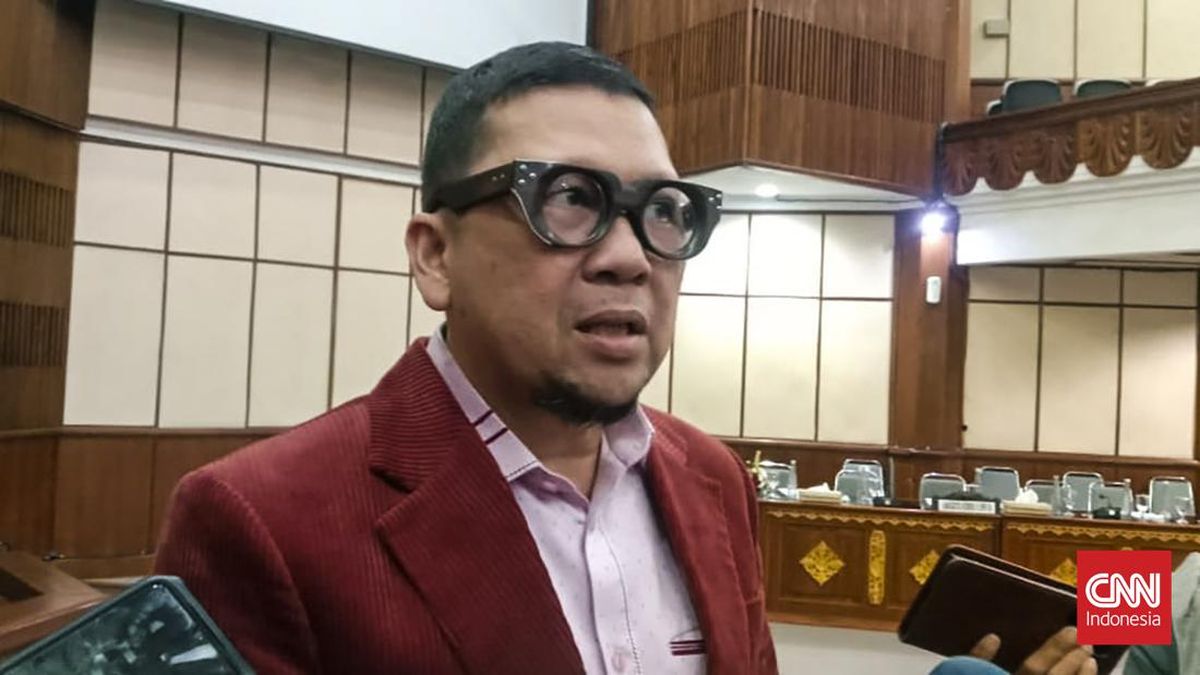
Golkar Party lawmaker Ahmad Doli Kurnia has proposed that the House of Representatives (DPR) use its right to express an opinion to follow up on a Supreme Court ruling that annulled the equivalency certificate for Vice-President Gibran Rakabuming’s senior high-school diploma.
Doli said he preferred the right to express an opinion to an inquiry, whose process could take longer.
“I have been urging the DPR not to go through other rights. The DPR has three rights: the right of interpellation, the right of inquiry, and the right to express an opinion,” Doli said at the parliamentary complex on Monday (9 November).
The Golkar deputy chairman explained the differences between the three rights. The right of interpellation is the right to ask questions; in the controversy over Gibran’s certificate, he said, there was nothing that needed to be asked.
The right of inquiry, meanwhile, is the right to investigate. But the Supreme Court ruling had already established clear legal facts, he said, so the DPR only needed to exercise its right to express an opinion.
“That is why, from the outset, I said the relevant right for the DPR to use in relation to the Constitutional Court ruling at the time—and especially now that there is also a Supreme Court ruling—is the right to express an opinion,” Doli said.
He said he had also discussed the proposal with other parliamentary factions.
“My position is that, if we use a parliamentary right, it should be the right to express an opinion, not the right of inquiry,” Doli said.
PDIP Secretary-General Hasto Kristiyanto has also proposed that the DPR use its right to express an opinion in response to the Gibran case. Hasto said his party had received many calls from community groups to pursue the motion, which they considered the most rational option.
“As a result, many have suggested that the right to express an opinion is the most rational option at this time,” Hasto said at the party’s school in Jakarta on Monday (9 November).
The DPR’s right to express an opinion is provided for in Article 20A(2) of the 1945 Constitution and further set out in Article 79(1) and (4) of Law No. 17 of 2014 on the MPR, DPR, Regional Representative Council and Regional Legislative Councils (MD3 Law).
Article 79(4) of the MD3 Law says the DPR may exercise this right in relation to three matters, including suspected legal violations by the president and/or vice-president. These include treason, corruption, bribery, other serious crimes, disgraceful conduct, or no longer meeting the requirements to serve as president or vice-president.
A motion to exercise the right may be initiated by at least 25 DPR members. To become an official position, it must be approved at a plenary session attended by at least two-thirds of all members.
Separately, DPR Deputy Speaker Sufmi Dasco Ahmad said the House would soon process proposals to follow up on the Supreme Court ruling that annulled Gibran’s certificate of equivalency.
Dasco said the proposal would be processed on Tuesday (10 November), after the DPR resumes its sitting following the recess.
He acknowledged that the House had received many proposals from various parties to address the controversy, including civil society organisations and DPR members from different factions. As parliament was still in recess, discussions had so far been informal; the formal process would begin when the sitting opened the following day.
“We will therefore probably wait until the sitting begins tomorrow. The House of Representatives of the Republic of Indonesia will respond to what is happening at the appropriate time,” Dasco said.
Source: jawawa.id (https://jawawa.id/newsitem/golkars-doli-calls-for-parliamentary-right-to-express-an-opinion-in-response-to-gibran-case-1794243073)
Originally published by CNN Indonesia (https://www.cnnindonesia.com/nasional/20261109213937-32-1425157/doli-golkar-serukan-hak-menyatakan-pendapat-respons-kasus-gibran), translated from Indonesian