
Golkar Welcomes US-Iran Peace Deal: A Momentum for Government to Improve Fiscal Health
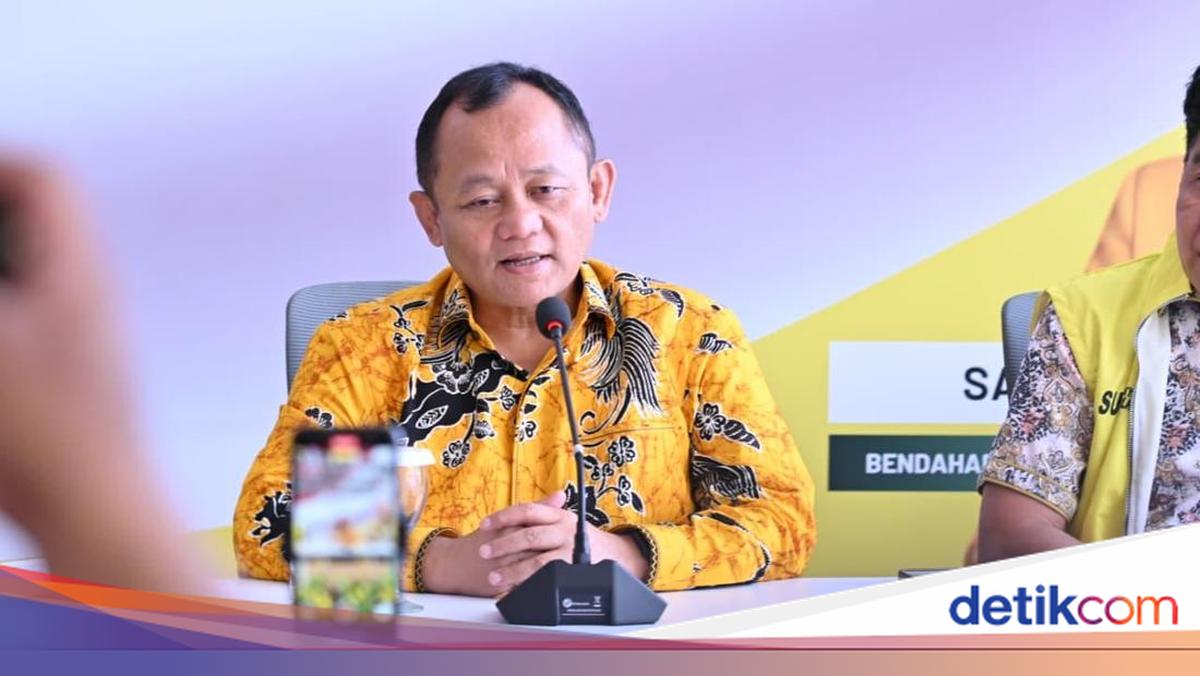
The Chairman of the Golkar Party Faction in the Indonesian House of Representatives (DPR RI), Muhammad Sarmuji, has welcomed the peace agreement between the United States and Iran. He called on the Indonesian government to utilise this momentum for the benefit of the people.
“This is a momentum that must not be wasted. The government must move quickly and measuredly to convert this peace into tangible benefits for the Indonesian people,” Sarmuji stated in a written statement on Wednesday (17/6/2026).
Sarmuji noted that market signals are already reacting faster than any calculations. Brent crude oil prices dropped nearly 4 per cent to approximately $83.92 per barrel in Monday morning trading, down from Friday’s close of around $87.33 per barrel.
He detailed several urgent concrete steps that need to be taken. Firstly, the government needs to implement fiscal improvements by evaluating and gradually adjusting energy subsidies in line with the normalisation of global oil prices.
The Secretary-General of the Golkar Party emphasised that the fiscal space, which has been eroded by swelling fuel subsidies, is now reopening and must be utilised effectively.
“Budgets that were previously forced to be allocated to cover the surge in subsidies can be redirected and focused on strategic and priority sectors, such as infrastructure, education, and social protection, where the benefits are more directly felt by the people,” he said.
Secondly, the easing of geopolitical risk premiums allows for more efficient oil and gas import costs, which will directly impact the reduction of domestic production costs and inflationary pressures.
Thirdly, the full reopening of the Strait of Hormuz should be immediately utilised to smooth export-import supply chains that have been disrupted for months, while simultaneously cutting international logistics costs that burden businesses.
Fourthly, Indonesia needs to boost non-oil and gas exports to the Middle East and countries previously affected by the conflict, including re-establishing trade agreements with Iran in the agricultural and manufacturing sectors that had been delayed.
Sarmermuji emphasised that this agreement is not only a victory for the two warring nations but also a victory for the multilateral order and the active role of diplomacy by developing nations. Pakistan, along with Turkey, Qatar, and Saudi Arabia, played key roles as facilitators in this long and exhausting negotiation process.
“This proves that the diplomatic path, even if difficult and winding, is always more dignified than war,” he asserted.
Sarmuji stressed that peace on paper must be immediately translated into real economic recovery. According to him, the US-Iran war has left deep economic scars, not only for the Middle East region but for the entire world, including Indonesia.
“We hope this peace agreement will soon impact the decline in global oil prices, which have been affected by conflict escalation and the closure of the Strait of Hormuz. High oil prices burden our state budget through swelling fuel subsidies, pressuring public purchasing power and adding to inflationary pressure. The normalisation of global energy prices is in the direct interest of the Indonesian people,” said Sarmuji.
He added that the ripple effects of this conflict do not stop at oil prices. Global supply chain disruptions triggered by the closure of the Strait of Hormuz have driven up international logistics and shipping costs, which are ultimately felt by consumers and businesses in Indonesia.
Beyond the short-term agenda, Sarmuji emphasised a structural lesson that must not be forgotten even as the situation improves. The Strait of Hormuz crisis has exposed gaps in Indonesia’s energy security when a strategic point is blocked.
“This peace does not erase that vulnerability. Rather, now, in a calmer situation, is the right time to build true resilience. We must diversify our energy sources and must not rely too heavily on only one or two supplying countries. The government needs to explore alternative energy sources from various regions and various partners so that such an event does not recur and leave us powerless,” said Sarmuji.
He encouraged the government to strengthen bilateral cooperation with Middle Eastern countries more broadly, including Iran, to build long-term partnerships in energy and non-oil trade.
“Golkar hopes this agreement serves as a starting point for a more stable, just, and peaceful regional reconstruction, rather than just a ceasefire on paper,” he added.
Source: jawawa.id (https://jawawa.id/newsitem/golkar-welcomes-us-iran-peace-deal-a-momentum-for-government-to-improve-fiscal-health-1781639415)
Originally published by detikcom (https://news.detik.com/berita/d-8534766/golkar-sambut-kesepakatan-damai-as-iran-momentum-pemerintah-perbaiki-fiskal), translated from Indonesian