
Golkar Secretary General: LPDP Scholarships Must Be Accessible to All Social Classes
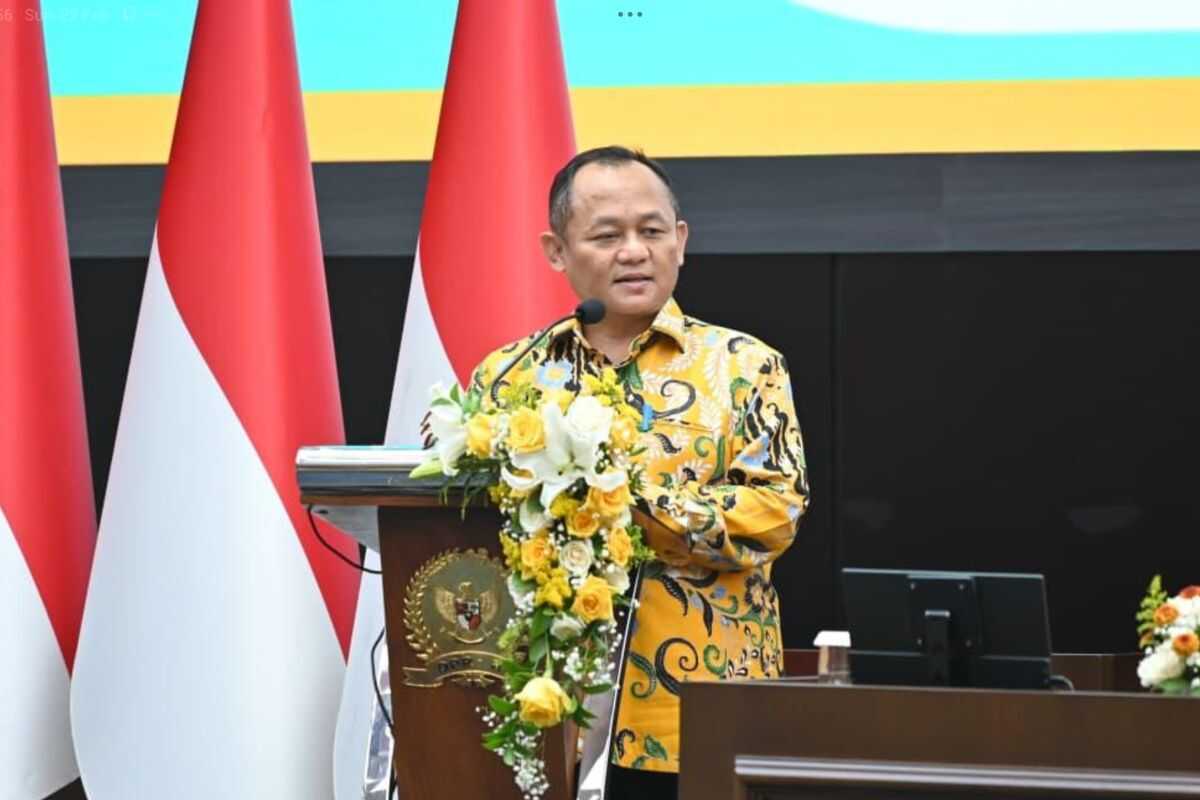
Jakarta (ANTARA) - Golkar Party Secretary General and Chairman of the Golkar Faction in the House of Representatives Muhammad Sarmuji has stressed that the Indonesia Endowment Fund for Education (LPDP) must be accessible to all social classes and should not become a programme enjoyed solely by the wealthy.
“I myself raised this issue during a working meeting between Commission XI of the House of Representatives and the Ministry of Finance at the beginning of 2022. I conveyed that if there is no clear emphasis and affirmative action, LPDP will become a cycle enjoyed only by the rich,” Sarmuji said in a statement in Jakarta on Sunday.
His remarks were made in response to public scrutiny of an Indonesian LPDP scholarship recipient, Dwi Sasetyaningtyas, who drew widespread criticism from netizens after uploading a video expressing her joy at her second child officially becoming a British citizen through naturalisation.
Dwi Sasetyaningtyas is an alumna of a master’s programme at Delft University of Technology in the Netherlands, graduating in 2017. Her husband, Arya Iwantoro, pursued master’s and doctoral studies at Utrecht University in the Netherlands from 2017 to 2022, also through the LPDP scholarship scheme funded by the education endowment and Indonesian taxpayers’ money.
Sarmuji emphasised that the issue is not merely about personal choices but about policy design that must uphold social justice.
According to him, the core problem lies in the eligibility requirements, which are factually easier to meet for those who are already socio-economically advantaged.
“Without affirmative action, only the wealthy will benefit, because the requirements are extremely demanding. The TOEFL English score must be such and such. And those who can meet these criteria are, on average, certainly wealthy people,” he said.
The Golkar Secretary General argued that the most important aspect of a state scholarship programme is the academic potential of recipients to cope with rigorous learning at world-class universities.
Academic standards must indeed be maintained, but language barriers, particularly for those from disadvantaged families, should be addressed and improved through adequate preparatory or affirmative programmes.
“The primary consideration should be academic potential — whether the person is capable of handling rigorous coursework. Language skills can be upgraded. The state can step in to help. But if from the outset only those who have been facilitated with the best schools and courses since childhood can qualify, then the same people will keep benefiting,” Sarmuji said.
He added that the ability to meet academic and foreign language standards is heavily influenced by socio-economic background. Children from affluent families have access to quality schools and adequate English language courses, whilst children from disadvantaged families face significant limitations.
“It is the wealthy who can send their children to good schools. It is the wealthy who can enrol their children in quality English courses. Poor people cannot. How can someone who has to sell meatballs whilst studying manage? It is extremely difficult if you are studying whilst selling meatballs — you simply cannot find time to study intensively,” he said.
He also highlighted that affluent social groups fundamentally have more alternatives. When one option is unavailable, they can relatively easily seek other avenues, including education or career opportunities abroad without having to return to Indonesia.
“This is different for children from disadvantaged families. For them, an opportunity like LPDP could be the only ladder to change their fate,” he said.
He therefore stressed that what is more urgent is the state’s courage to provide affirmative action for structurally disadvantaged groups without lowering academic quality standards.
“This is not about lowering standards. Academic standards must remain high. But the state must pay attention to disadvantaged groups who cannot meet the established criteria due to structural limitations,” said the legislator from East Java.
Sarmuji also specifically highlighted the access of Islamic boarding school (pesantren) alumni to LPDP scholarships. Without affirmative policies, he argued, the chances of pesantren alumni passing LPDP selection would be very slim.
“Take Islamic boarding schools, for instance. Without attention from the state, pesantren alumni will find it difficult to obtain LPDP scholarships. Pesantren where the curriculum must be divided between religious studies and general subjects will struggle to secure LPDP places without affirmative action,” he said.
He added that even though some modern pesantren have well-established curricula, their numbers remain limited. If pesantren alumni do manage to obtain LPDP scholarships, he considers it an extraordinary achievement.
“Even if there are some, those are pesantren with very well-established curricula. But if they succeed, that is already extraordinary in my view,” he said.
Sarmuji expressed hope that the public polemic would not end with personal condemnation but would instead become a catalyst for policy evaluation, ensuring the education endowment fund truly benefits the nation’s children from diverse social backgrounds.
“The education endowment fund comes from the people’s taxes. Therefore, its spirit must be social justice. We must not unwittingly allow only certain social groups to benefit repeatedly. The state must step in with affirmative action so that the disadvantaged also have a ladder to climb,” Sarmuji said.