
Golkar Secretary General Believes Mbah Wahab's Thoughts Remain Relevant Today
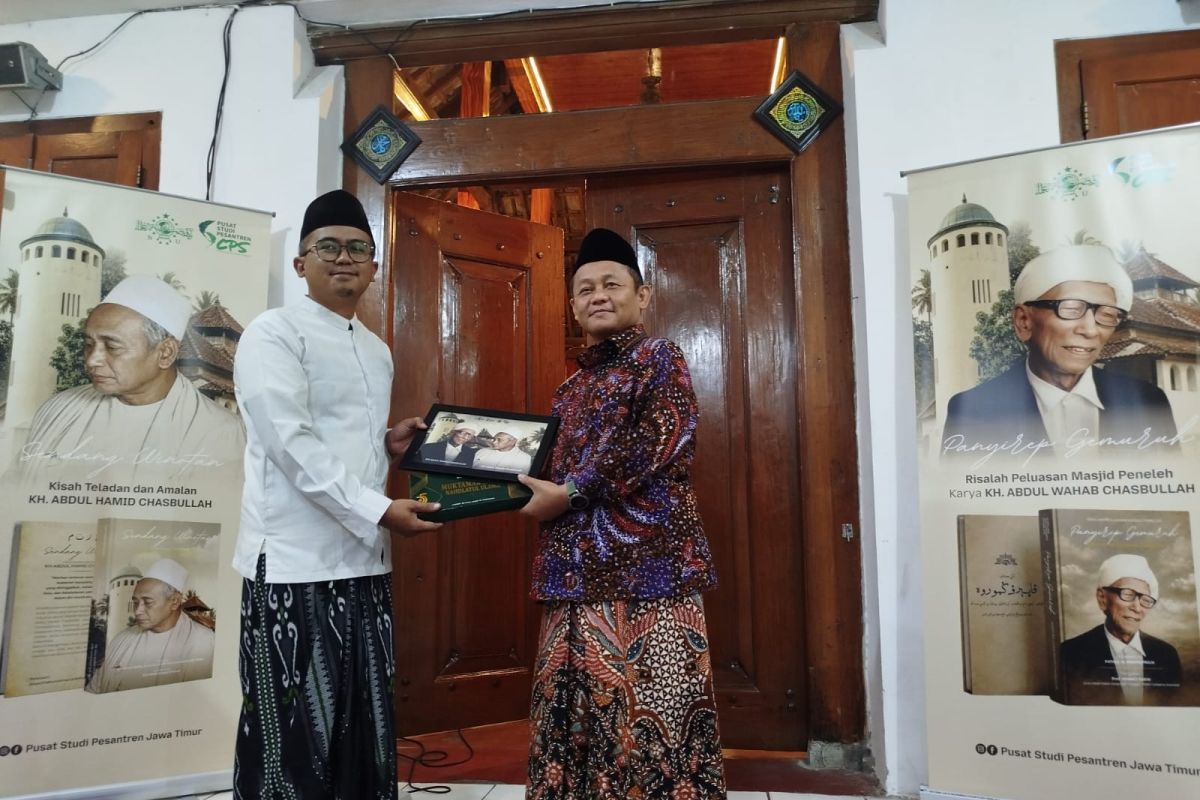
Jakarta (ANTARA) - The Secretary General of the Golkar Party, Muhammad Sarmuji, stated that the thoughts of National Hero and co-founder of Nahdlatul Ulama (NU), KH Abdul Wahab Chasbullah (Mbah Wahab), as presented in the book ‘Penyirep Gemuruh’, remain relevant in addressing various social issues in today’s society.
One example, according to Sarmuji, is how Mbah Wahab successfully resolved the conflict regarding the expansion of the Peneleh Mosque in Surabaya using methods that reflect the core values of NU: tawassuth (moderation), tawazun (balance), tasamuh (tolerance), and i’tidal (justice).
“The character of NU that we understand is tawassuth, tawazun, tasamuh, and i’tidal. That is, moderate, tolerant, balanced, and just,” Sarmuji said in a written statement in Jakarta on Sunday.
Sarmuji shared these views as a speaker during a book review of ‘Penyirep Gemuruh’ by KH Abdul Wahab Chasbullah at the Masjid Gedang PPBU (Bahrul Ulum Islamic Boarding School) in Tambakberas, Jombang, on Saturday night.
Sarmuji attended wearing traditional Nahdliyin attire, consisting of a batik shirt, sarong, and a black songkok. During the event, he was seen closely examining the thick volume of ‘Penyirep Gemuruh’, which features a photograph of NU founder KH Wahab Chasbullah on its cover.
The event, organised by the East Java Pesantren Study Centre (PSP), is part of a series of activities to celebrate the 35th NU National Congress (Muktamar).
In his presentation, Sarmuji revealed that the stories within ‘Penyirep Gemuruh’ demonstrate the NU character in resolving problems, particularly through a moderate stance and prioritising deliberation (musyawarah).
Sarmuji explained that one of Mbah Wahab’s exemplary traits was his ability to accommodate various opinions to find solutions. He did not only consider the views of Islamic jurisprudence (fiqh) experts but also listened to perspectives from other parties with specific expertise.
For Sarmuji, KH Wahab Hasbullah’s method of resolving conflict serves as an example of how issues can be settled through a peaceful approach that avoids confrontation and seeks common ground.
He assessed that Mbah Wahab’s thoughts possess strong relevance to current societal conditions, which face various forms of turbulence and differing viewpoints.
According to Sarmuji, Mbah Wahab’s philosophy teaches that conflict does not always have to be resolved by magnifying differences, but rather through dialogue, balance, and the pursuit of collective solutions.
Alongside Sarmuji, the book review featured two other speakers: Ayung Notonegoro from the Pegon Community of Banyuwangi, and Fathul H. Panatapraja, the translator and author of the ‘Penyirep Gemuruh’ edition.
Ayung explained that the ‘Penyirep Gemuruh’ manuscript was discovered around 2016 or 2018 during his historical research on NU in Banyuwangi, commissioned by the local PCNU.
During the research, Ayung visited the Lateng Pesantren in Banyuwangi, where he found two cupboards belonging to Kiai Saleh containing ancient manuscripts. However, the cupboards had been locked for decades and had never been opened.
According to Ayung, there were rumours in the community that anyone who opened the cupboards would experience misfortune, which deterred many from accessing the collection.
Ayung subsequently approached the heirs to seek permission to open the cupboards. The process required time and the building of trust with the pesantren family.
“From there, trust was established. Eventually, we were entrusted to open the cupboards that had been locked for decades. I thought, if I fall ill for the sake of knowledge, so be it,” said Ayung.
Once opened, Ayung discovered various ancient manuscripts of high historical value, including ‘Penyirep Gemuruh’ by KH Wahab Hasbullah, which became the subject of the book review.
Ayung also noted that the manuscript was not exclusively stored in the Lateng Pesantren in Banyuwangi. He mentioned that similar manuscripts had been held at the Surabaya PCNU office on Jalan Bubutan, but had not received much attention.
He noted that the Pegon Community was among the first to publish the book, bringing ‘Penyirep Gemuruh’ to wider public recognition.
The translator, Fathul H. Panatapraja, explained that the book reviews KH Abdul Wahab Hasbullah’s role in defusing the conflict regarding the expansion of the Peneleh Mosque in Surabaya.
The mosque’s history, as detailed in the book, is linked to Sunan Ampel. In resolving the issue, KH Wahab Hasbullah utilised a religious approach, specifically through the perspective of Islamic jurisprudence.
“The conflict resolution process undertaken by Mbah Wahab was achieved not only through dialogue but through finding solutions from the viewpoint of fiqh law,” said Fathul.
According to Fathul, KH Wahab Hasbullah’s approach demonstrates that conflict resolution can be achieved by combining religious understanding, dialogue, and the ability to read the social conditions of the community.
He believes Mbah Wahab’s methods remain relevant for study, particularly in the context of resolving various social issues currently facing society.
Initially, the book review was planned to take place at the PP Al-Mubtadi-ien Bahrul Ulum in Tambakberas, Jombang. However, the committee relocated the event to Masjid Mbah Ustman (Masjid Gedang), a site of significant historical value to the Bahrul Ulum pesantren environment.