
Golkar Faction and Muhammadiyah Discuss Education and Election Law Revision
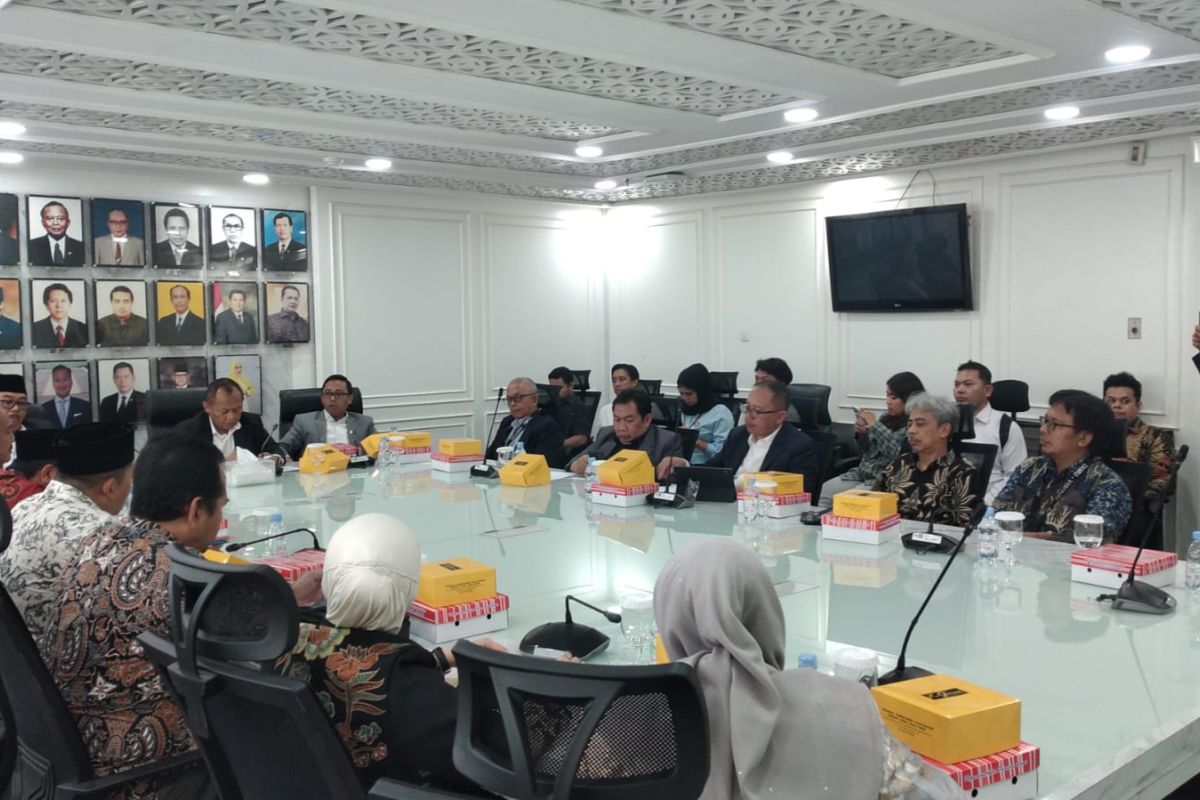
The Golkar Party faction of the Indonesian House of Representatives (DPR RI) held a meeting with the Forum of Rectors of Muhammadiyah-’Aisyiyah Universities (FR PTMA) to discuss several strategic issues, ranging from the revision of the Election Law to the disparity in the higher education ecosystem between state and private universities.
The meeting took place at the parliamentary complex in Senayan, Jakarta, on Tuesday.
The Chairman of the Golkar Party faction in the DPR RI, M. Sarmuji, stated the importance of creating a fair higher education ecosystem between state and private campuses. He also expressed hope that the Muhammadiyah Rector Forum could provide substantive input for the discussion of the National Education System Bill (Sisdiknas), given that Muhammadiyah has a direct interest in the conceptual direction of the Bill.
“We hope that Muhammadiyah can also contribute to the drafting of the Sisdiknas Bill,” said Sarmuji.
The Secretary-General of the Golkar Party also shared his views on Muhammadiyah’s role in education. “The state owes a debt to Muhammadiyah, particularly in education, where Muhammadiyah’s contribution covers areas that the state cannot manage alone, necessitating public participation,” he said.
Sarmuji shared his experience during a visit to West Papua. “We even know that in regions with Muslim minorities, there are Muhammadiyah educational institutions. I visited West Papua, specifically Bintuni, in 2005. I had to undertake an eight-hour land journey. However, what amazed me there was the presence of a Muhammadiyah high school,” Sarmuji recounted.
Meanwhile, the leader of FR PTMA, Prof. Ma’mun Murod, emphasised that politics plays a vital role in the development and progress of democracy in Indonesia. However, he noted that despite the approaching elections, discussions on the revision of the Election Law have not yet commenced.
Regarding the proposed revision, the forum of Muhammadiyah university rectors believes that the idea for revising the Election Law needs to be studied more deeply and comprehensively to produce regulations that are precise and meet the needs of conducting high-integrity elections.
Ma’mun also highlighted the high cost of higher education in Indonesia and the need for a clearer division of responsibilities between state and private universities. Regarding student recruitment in state universities, he touched upon the status of Legal Entity State Universities (PTNBH), which he believes allows these institutions to secure large amounts of funding with minimal control.
“Because when a campus is labelled as a PTNBH, it makes things very difficult for private campuses, especially regarding student admission quotas,” said Ma’im.
He explained that the number of universities in Indonesia has reached 4,400, making it the second largest in the world, a figure he considers excessive relative to the population. According to him, the ideal number of universities in Indonesia should be around 2,200, and this surplus has direct consequences for the allocation of the education budget.
As institutions oriented towards religious and social values rather than profit, Ma’mun expressed the concerns of Muhammadiyah universities amidst the high public demand for higher education. He emphasised that Muhammadiyah remains consistent in providing scholarships and tuition reductions for the community.
“Muhammadiyah is also striving to improve the quality of educational services with affordable costs, targeting underprivileged children. We are also paying attention to Muhammadiyah campuses that are still in the process of improving their educational quality,” said Ma’mun.
Source: jawawa.id (https://jawawa.id/newsitem/golkar-faction-and-muhammadiyah-discuss-education-and-election-law-revision-1790085671)
Originally published by Antara (Indonesian) (https://www.antaranews.com/berita/5753459/fraksi-golkar-muhammadiyah-bahas-pendidikan-dan-revisi-uu-pemilu), translated from Indonesian