
Golf Ball-Sized Blue Octopus in Galapagos Officially Recognised as New Species
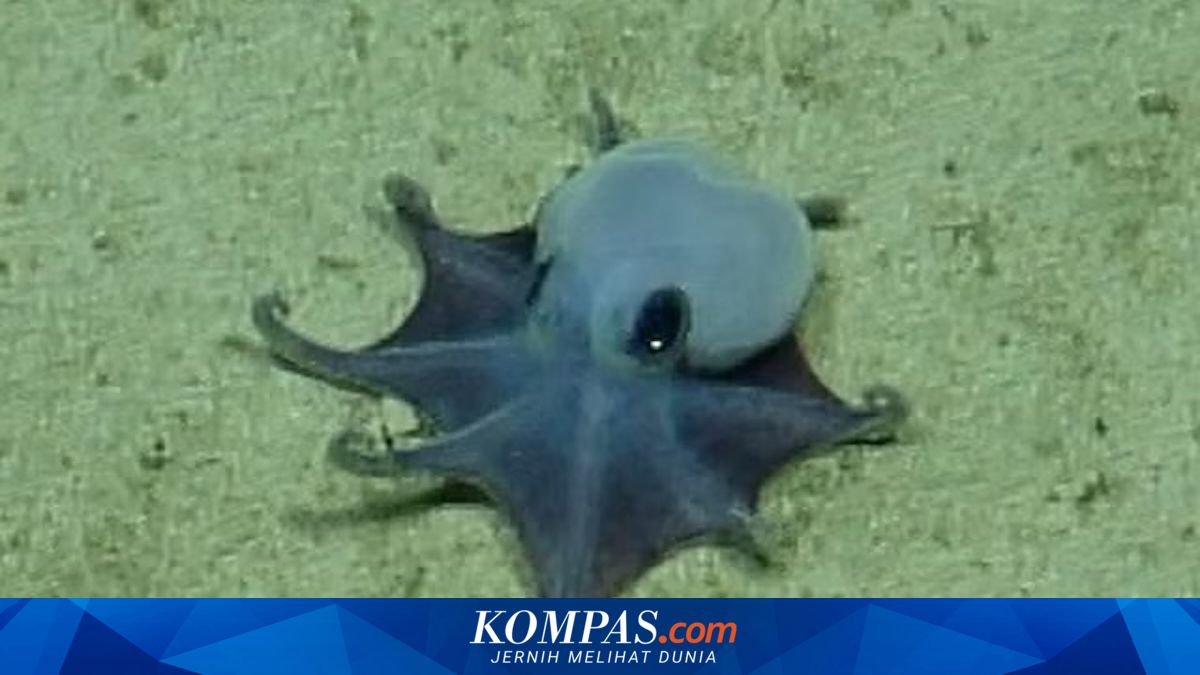
A palm-sized bright blue octopus, first discovered off the Galapagos Islands in 2015, has now been officially identified as a new deep-sea species. The significant discovery has been published in the latest issue of the scientific journal Zootaxa. The tiny octopus, now named Microeledone galapagensis, was first observed during a deep-sea expedition aboard the research vessel EV Nautilus. As the robot approached an underwater mountain, its camera unexpectedly captured the unusual octopus at a depth of approximately 5,800 feet (1,760 metres) below sea level. The ship’s crew managed to collect one specimen and document two other octopuses with similar features. Although researchers gathered several specimens during the expedition, the golf ball-sized blue octopus was the most remarkable. ‘I immediately knew it was something extraordinary. I had never seen anything like it before,’ said Janet Voight, a co-author of the study from the Chicago Field Museum, where the octopus was preserved in alcohol and formalin for research, according to The Independent. During analysis, Chicago-based scientists faced a major challenge as they had only one physical specimen to examine. ‘When describing a new octopus species, you must examine the entire body, including the mouth, beak, and teeth,’ explained Dr Voight. ‘To see these features, you have to cut and dissect the specimen. Since we only have one specimen, I didn’t want to damage or dismember it.’ To overcome this, the research team used CT scanning technology to conduct detailed analysis without damaging the octopus’s external structure. ‘CT imaging is non-destructive, making it essential for examining such type specimens,’ said Stephanie Smith, another study author. ‘It’s incredible to work with these rare and beautiful specimens, giving me the privilege to ’open them up’ virtually,’ she added. The scans revealed intricate details of the octopus’s internal organs, including its mouth structure. These anatomical findings were crucial in confirming it as a previously undocumented new species. The discovery of this miniature blue octopus serves as a valuable reminder that much of the Earth’s oceans remain uncharted and mysterious. ‘These small deep-sea octopuses are rarely seen by humans. I feel incredibly fortunate to study them,’ Dr Voight concluded. ‘If you combined all the land on Earth, it still wouldn’t cover the Pacific Ocean’s expanse. Our oceans are vast, with much left to explore.’