
Goldnomics: Repositioning Gold in the Architecture of Digital Islamic Finance
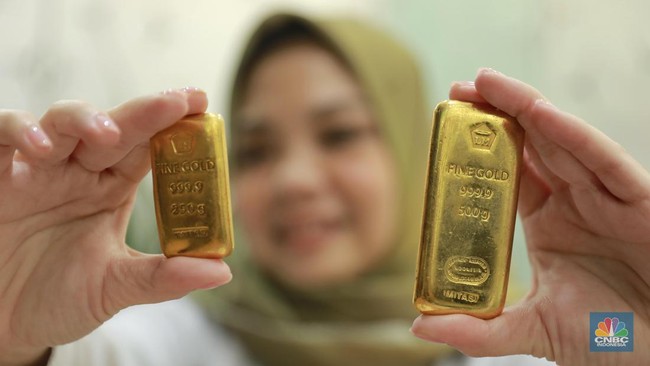
There is one question that has stayed with me since I returned from the National Sharia Council of the Indonesian Ulema Council (DSN-MUI) plenary meeting on 29 September 2026. One of the more interesting topics that day was a fatwa on the digital sale and purchase of physical gold. The discussion touched on issues that might at first seem highly technical: the existence of physical gold, ownership, qabdh (possession), digital records and the owner’s right to take delivery of the gold.
Yet the longer the discussion went on, the clearer it became that the subject was bigger than buying gold through an app. Behind the jurisprudential questions about transactions lay a more fundamental economic question: where is gold heading amid the transformation of digital finance?
The question is compelling because gold is experiencing a historical paradox. The more digital the world becomes, the more this oldest of assets is sought after. As money moves in seconds, assets are tokenised and financial transactions become increasingly intangible, people are returning to something very tangible: gold.
2025 was a notable year. Global gold demand exceeded 5,000 tonnes for the first time, with a value of around US$555 billion. Investment demand reached 2,175 tonnes, up 84 per cent. Indonesia moved with the same trend: demand for bars and coins reached 31.6 tonnes, a 29 per cent increase. The trend continued into 2026, when Indonesian gold demand rose strongly again in the first half of the year.
The issue, then, can no longer be understood simply as an investment trend. Gold appears to be seeking a new place in the modern financial system. It is from this reflection that I see the relevance of an idea that might be called Goldnomics.
Goldnomics is not a proposal to return the economy to the gold standard. It is a way of reconsidering gold’s role in the contemporary economy: moving it from an asset held primarily to protect wealth towards a component of an ecosystem encompassing investment, trade, financing, liquidity, digital technology and, ultimately, productive economic activity.
From safe haven to productive asset
Indonesia is at an interesting juncture. The Law on the Development and Strengthening of the Financial Sector provides a basis for bullion-business activities, which were subsequently given an operational framework through Financial Services Authority Regulation (POJK) No. 17 of 2024. Gold deposits, gold financing, gold trading and gold safekeeping are beginning to be placed within a more structured financial-services ecosystem.
Developments are moving quickly. After bullion-business activities began in 2025, their sharia foundations were strengthened by DSN-MUI Fatwa No. 166 of 2026 on bullion-business activities based on sharia principles. The fatwa adds to the long evolution of sharia rules on gold, from rahn (pledging) and gold rahn to deferred gold sales and bullion activities.
At the same time, the capital market is opening up more space for gold-based instruments, while tokenisation experiments show that the boundary between gold as a physical object and gold as a digital financial asset is becoming increasingly blurred. What is emerging, then, is not merely a “gold bank” service. Indonesia is gradually building a new architecture for the gold economy.
There has long been a paradox in the way we treat gold. People buy it to preserve their wealth, but much of it then remains passive wealth. It is kept at home, in a safe or in storage, with relatively little connection to subsequent economic activity.
Goldnomics offers a repositioning. Gold retains its traditional role as a store of value and protector of wealth, but can take on a wider economic function. Through a sound bullion ecosystem, gold can interact with investment, financing, liquidity management and productive activity without losing its essential character as a real asset. The aim is not to make gold more abstract as a financial product, but to move it from passive wealth to a more productive strategic asset.
When a gram of gold becomes data
This brings me back to the plenary discussion on digital gold. Digitalisation allows someone to buy a fraction of a gram without ever holding a gold bar. Ownership appears as a number on a phone screen. Transactions can take place in seconds, while the physical gold is held in a storage facility its owner may never have seen.
That convenience raises a simple but fundamental question: when an app shows a balance of one gram of gold, what do we actually own? This is where Islamic commercial jurisprudence meets the question of ownership in the digital era.
An electronic record does not, by itself, create full ownership. Behind the number on the screen there must be real gold. The owner’s rights must be provable, recognised and transferable, and, under the agreed conditions, exercisable through physical delivery.
This is why the concept of qabdh hukmi (constructive possession) has renewed relevance. Technology may change how people demonstrate control over an asset, but it must not remove the substance of that control.
The discussion of digital physical gold shows how important it is to ensure that gold is available to meet customers’ entitlements; that their holdings are segregated from a business’s unallocated inventory; that records are final and verifiable; that owners have the authority to dispose of their gold; and that systems prevent the same gold from being transferred to more than one party.
The sharia question, therefore, is not simply whether a transaction takes place through an app or across the counter at a gold shop. The more fundamental issue is whether digital gold genuinely represents real gold and genuine ownership.
From transaction jurisprudence to ecosystem jurisprudence
This journey demonstrates an interesting evolution in the jurisprudence of gold. Rahn and gold rahn established a framework for using gold as collateral. DSN-MUI Fatwa No. 77 of 2010 opened the way for deferred gold sales.
Bullion-business activities then brought gold into an ecosystem of safekeeping, deposits, trading and financing. Now, digital trading in physical gold is taking the discussion towards increasingly complex questions of ownership and control.
The sharia questions have therefore evolved too. It is no longer enough to ask which contract is being used. We must also establish who actually owns the gold, where it is stored, who bears the risk, how the owner can exercise their rights and whether the same gold is supporting another party’s claim. This is an important shift from transaction jurisprudence to ecosystem jurisprudence.
Islamic finance should not wait until a product has been designed before deciding whether it is permissible. Sharia principles should be applied from the outset, as the product architecture is built, to ensure that the relationships between assets, ownership, risk, rights and responsibilities remain clear. In this way, sharia does not stop at being a compliance instrument. It becomes an architecture of trust.
Do not create a new generation of paper gold
Goldnomics brings opportunities, but also risks that must be managed. Digitalisation makes gold ownership more inclusive. People can start investing with small sums, trading can become more efficient, and tokenisation could eventually make transfers of ownership even faster.
But the easier an asset is to represent digitally, the easier it becomes for financial claims to grow faster than the underlying asset.
Digitalisation must not create a new generation of paper gold, in which one gram of gold is, in effect, owned, pledged or accounted for multiple times by different parties.
Customers’ gold must therefore be traceable and distinguishable from a business’s unallocated inventory. Gold serving as collateral should not, without a sound basis, be reused to create further claims. Custody, audits, reconciliation and technology must ensure that digital records always correspond to physical reality.
This is where the language of modern regulation and classical Islamic jurisprudence meet. Asset segregation, custody, traceability and the prevention of double counting are fundamentally connected to milkiyyah (ownership), qabdh (possession), amanah (trust) and dhaman (liability). Both frameworks ultimately serve the same goals: certainty of rights, transaction integrity and the protection of trust.
Building Indonesia’s Goldnomics
Goldnomics cannot be built simply by multiplying gold products. Its foundation must remain real gold. From that must follow clear and verifiable ownership. Technology can then make that ownership easier to record, transfer and trade.
Once the asset and rights are secure, the financial industry can extend its benefits through safekeeping, trading, investment and financing. The end goal should not be limited to growth in financial transactions, but should be a greater contribution by gold to productive economic activity.
Indonesia has almost all the necessary components: gold resources, refining capacity, physical and digital trading, financial institutions, bullion businesses, capital markets, a large retail investor base and an Islamic finance ecosystem. The challenge is to connect them.
Mining and refining must not operate in isolation, with digital trading building its own channels, bullion businesses growing separately, and capital markets and the financial industry developing distinct ecosystems. Goldnomics requires a connected value chain running from mining and refining to storage and trading, then to bullion activities, investment and financing, before ultimately flowing back into the productive economy.
If this integration succeeds, Indonesia will be more than a gold-producing country and consumer. It will have the opportunity to become a hub for an integrated, credible, digital and productive gold ecosystem grounded in sharia principles.
Perhaps that is the most important reflection I took away from the discussion on digital gold at the end of September. Gold’s future is not a return to being money. Its future lies in becoming a strategic asset in the architecture of modern finance.
Success should not be measured by how many apps can sell gold, how quickly transactions are completed or how many new products are launched. The test is whether every gram displayed on a screen is backed by real gold, legitimate ownership, protected rights, trustworthy governance and value that flows back into the economy.
That is where Goldnomics finds its meaning: when real gold gives rise to real ownership, real trust and, ultimately, real benefits for the economy.