
Golden Shield: Changan's Technology to Enhance Battery Safety
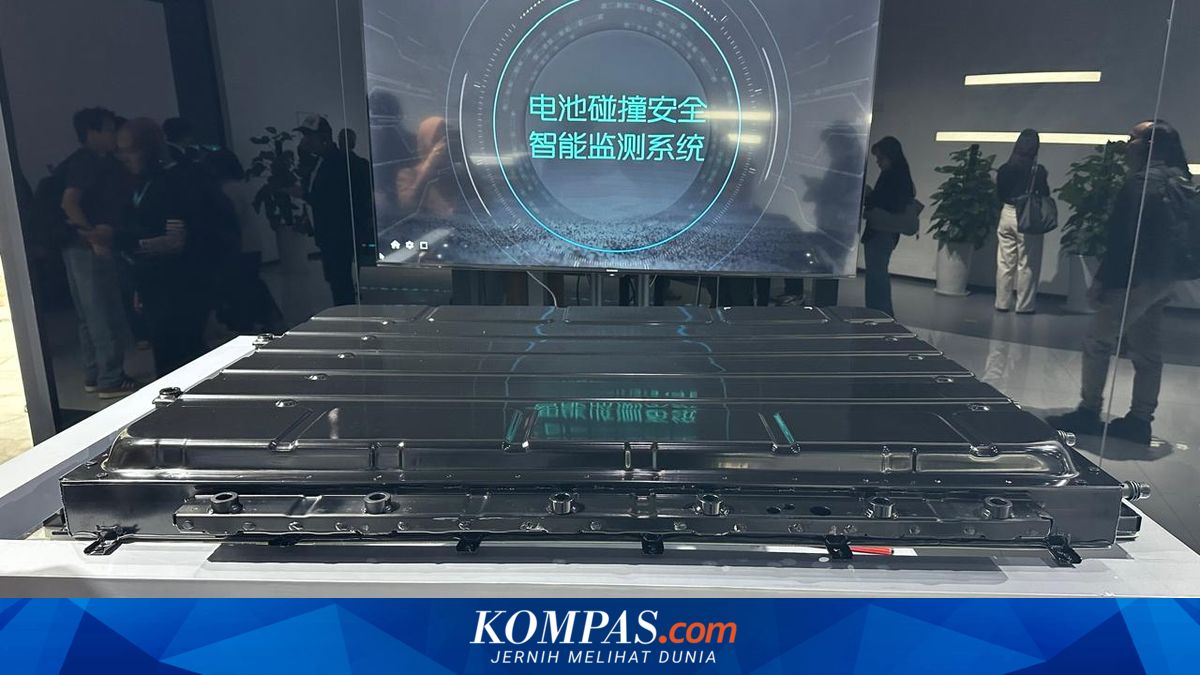
CHONGQING, KOMPAS.com - Changan Automobile boasts an advanced research and development (R&D) centre. This Chinese manufacturer focuses not only on vehicles but also on battery technology.
For battery cells, Changan collaborates with CATL, which has high credibility. However, for the packaging, Changan has successfully developed a technology called “Golden Shield”.
The technology was first introduced at the 21st Guangzhou International Auto Show, held in November 2023.
Changan optimises the synergy between battery design and vehicle to effectively address user concerns regarding energy density, charging efficiency, cycle durability, and performance in low temperatures.
Ridjal Mulyadi, Head of Marketing for Changan Indonesia, stated that Changan’s batteries do not experience significant degradation. In fact, even after travelling 600,000 km.
“The battery cell lifespan exceeds 5,000 cycles, using High Stability Standard Cathode Cell Coating Technology. AI-based life cycle control, with a prediction error rate in battery health monitoring of less than 3 percent,” said Ridjal, during a visit on Tuesday (21/4/2026).
Regarding safety, Ridjal added that no overheating incidents have been found in batteries installed and tested in over 1 million vehicles. The defect rate has been reduced to PPB (parts per billion) levels.
A dual system designed specifically to prevent thermal runaway in the battery is also incorporated, significantly mitigating risks related to extreme temperatures.
Shifting to technical aspects and efficiency, Changan applies Cell-to-Vehicle (CTV) technology. By integrating the battery directly into the vehicle platform, the resulting energy efficiency is claimed to reach 86 percent. The advantage of this construction focuses not only on performance but also on durability.
The battery structure is protected by the Honeycomb Aluminium Shield, which has three times the safety level compared to the C-IASI underbody protection standard.
Interestingly, this integrated design also contributes to cabin comfort, providing an additional 11.9 mm of headroom.
Finally, the charging sector is a primary focus. This vehicle is recorded as the first in the world to adopt high-frequency pulse heating technology for battery warming. This innovation ensures that the fast charging process remains optimal and efficient, even in challenging ambient temperature conditions.
“Charging from 30% to 80% takes only 10 minutes. Fast charging also remains optimal in very cold temperatures, from 0% to 80% at -30°C with charging time reduced to 40 minutes,” said Ridjal.