
Gold Treasure Found on Hajj Route, Believed to Have Belonged to a Pilgrim
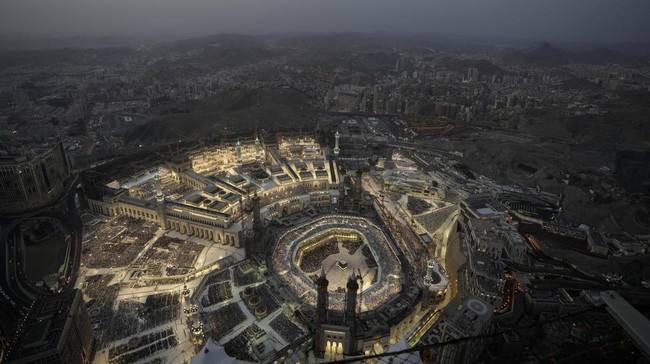
Jakarta, CNBC Indonesia — A treasure comprising gold, silver and jewellery set with precious stones has been found in Saudi Arabia. The cache, believed to have been buried for more than 1,200 years, is thought to have belonged to a pilgrim sometime between 743 and 753 AD.
Researchers have dubbed the find the “Dhariyah Treasure” because it was discovered in an area that was once an important stop for Hajj pilgrims. Saudi Arabia’s Heritage Commission says Dhariyah was a major station on the pilgrimage route connecting Basra in Iraq with the holy city of Mecca.
During the latest excavation season, archaeologists found several gypsum water reservoirs, walls of residential buildings and artefacts including pottery and glass fragments. The most striking discovery, however, was a ceramic jar buried inside a building and containing more than 100 pieces of jewellery.
“One of the most important discoveries of this sixth excavation season is the unearthing of the Dhariyah Treasure, comprising a collection of gold, gemstones and oxidised copper fragments,” a laboratory specialist from Saudi Arabia’s Heritage Commission said, according to Live Science.
Researchers estimate that the treasure was buried in the early Abbasid Caliphate, which came to power in 750 AD. The Abbasid Caliphate is known as one of the most illustrious periods in Islamic history.
During that era, science, culture and trade flourished in what is known as the Islamic Golden Age. Abbasid territory then stretched from North Africa to Iran, with its government based in Baghdad, Iraq.
Experts still do not know why the jewellery was buried in Dhariyah or who owned it. One theory is that it belonged to a pilgrim travelling to Mecca who deliberately concealed it at the site.
That possibility is considered plausible because Dhariyah was an important stopping point for pilgrims travelling from Basra to Mecca during the Abbasid period.
The jewellery features floral motifs and intricate geometric patterns. Experts believe the pieces were made by skilled metalworkers using techniques including the shaping of gold sheets, repoussé engraving and the setting of semi-precious stones.
Saudi Arabia’s Heritage Commission said excavations at the Dhariyah site would continue to uncover more information about the area’s history and the possible origins of the treasure.
Source: jawawa.id (https://jawawa.id/newsitem/gold-treasure-found-on-hajj-route-believed-to-have-belonged-to-a-pilgrim-1792489893)
Originally published by CNBC Indonesia (https://www.cnbcindonesia.com/lifestyle/20261020144324-33-777873/harta-karun-emas-ditemukan-di-jalur-haji-diduga-milik-jamaah), translated from Indonesian