
Gold Traceability System Needs Improvement, Here's Why
The Ministry of Energy and Mineral Resources (ESDM) has stressed the need to improve the traceability system for gold to curb illegal mining practices. This is to ensure that all gold circulating in the jewellery and investment markets has a clear and accountable source.
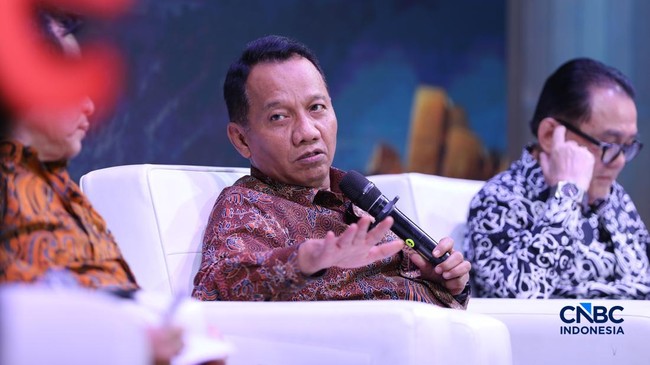
Director General of Minerals and Coal, Tri Winarno, stated that improved governance is crucial following indications that illegally mined gold is entering jewellery shops. He emphasised that supervision must be strengthened from upstream to downstream to safeguard the country’s foreign exchange sovereignty.
“So, the traceability of gold must be obtained. Starting from where the gold came from and so on. There are indications that in some regions, the traceability in gold shops might originate from illegal miners, for example. That should not be the case,” he said at the Mindialogue 2026 event in Jakarta, Wednesday (12/8/2026).
According to ministry records, Indonesia has gold reserves of 3,600 tonnes with an average annual production of 100 tonnes. However, the ministry noted that national production realisation up to the first semester of 2026 only reached 17 tonnes due to several obstacles faced by one of the gold-producing companies operating in the country.
“So, currently, up to Semester 1 2026, our production is only around 17 tonnes. There are some notes for gold, which are identified as some ‘illegal’ sales,” he explained.
To minimise illegal practices, the ministry is facilitating the legalisation of artisanal miners through the People’s Mining Permit (IPR) mechanism. The government is encouraging a nucleus-plasma partnership model between state-owned enterprises and local communities to better control mining output and eliminate the use of mercury, which is hazardous to the environment.
“The Minister, after coordinating with the House of Representatives, will designate the People’s Mining Areas (WPR). Currently, in 2026, there are about 313 locations for gold WPRs. It will then be followed up with the issuance of IPRs, which is the authority of the Governor,” he added.
His party is also closely monitoring the realisation of Work Plans and Budgets (RKAB) from major mining companies to maximise foreign exchange earnings. However, Tri projected that the annual targets of several key producers will be difficult to achieve due to various technical operational constraints in the field.
“For example, Freeport was expected to produce around 40 to 60 tonnes per year, but currently, with the constraints at the Manyar smelter, it will not achieve that figure. Then Amman, which should be around 16 to 18 tonnes, also looks like it will be difficult to achieve,” he concluded.