
Gold Records Best Weekly Gain in Seven Months as Investors Return
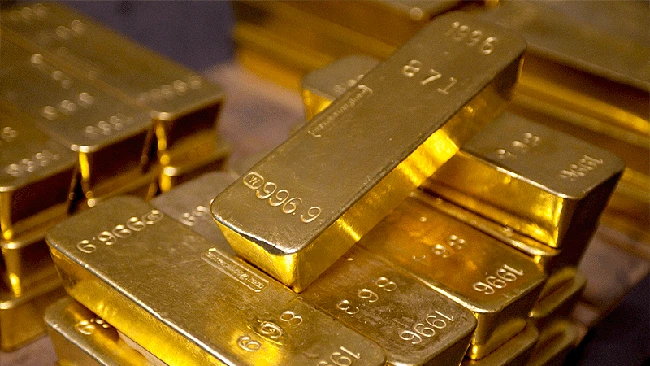
Gold recorded its best weekly performance in seven months. The precious metal surged around 7% over the week.
This was driven by a weakening US dollar, a decline in Treasury yields, and US labour data that came in weaker than expected. The rise was the highest since January.
Citing CNBC International on Tuesday (11/8/2026), gold’s movement has once again attracted investor attention as a number of macroeconomic factors began to support the safe-haven asset. US labour data that was softer than expected indicated signs of cooling in the labour market.
Revisions to previous data also reinforced expectations that pressure on the labour market is beginning to mount. These conditions then prompted investors to scale back expectations of a more aggressive Federal Reserve interest rate policy.
On the other hand, the decline in Treasury yields and the weakening US dollar made gold relatively more attractive. Gold does not offer a yield or interest, so the opportunity cost of holding the precious metal falls when bond yields decline.
Gold Returns as a Safe-Haven Asset
Beyond interest rates and the dollar, concerns about the direction of US monetary policy also underpinned demand for gold as a hedging asset. Gains were also seen in other precious metals markets.
Silver, platinum, and palladium prices also rose. Meanwhile, copper remained near its highest level.
Analyst Michael Khouw assessed that gold’s upward momentum still has the potential to continue. According to him, still citing CNBC International, gold is indeed still below its 150-day moving average.
However, a number of instruments linked to gold are beginning to show signs of strengthening. One of them is the share price of gold mining company Newmont Mining.
The company is one of the largest components in gold mining ETFs and has broken above its 150-day moving average. That movement is seen as a signal that other instruments such as the VanEck Gold Miners ETF (GDX) and SPDR Gold Shares (GLD) could follow.
China Adds Gold Reserves in Hong Kong
Gold demand from China has also been a focus of the market. The People’s Bank of China (PBOC) has expanded its gold storage facilities in Hong Kong.
The move was made amid Hong Kong’s ambition to strengthen its position as an international gold trading hub. The expansion of storage facilities is also part of a broader trend, namely the return of sovereign gold reserves to Asia from London.
The PBOC itself has recorded gold purchases for 21 consecutive months. In July 2026 alone, China’s central bank added around 20 tonnes of gold to its reserves. The move shows that central bank demand remains one of the important pillars of the global gold market.
Investors Begin to Target Further Gains
In the options market, gold’s volatility structure also points to greater upside potential. According to Khouw, out-of-the-money call options have higher implied volatility than options near the current market price.
That condition makes call spread strategies more attractive for investors looking to position for a potential rise in gold prices. One example used is a call spread strategy on the SPDR Gold Shares (GLD) ETF with strike prices of US$400 and US$460 for November.
The strategy costs around US$16.15 per share, or about US$1,615 per contract, with a potential return of nearly three times if GLD rallies again by around 15% over the next 100 days.
With the combination of a weaker dollar, falling Treasury yields, expectations of a more accommodative Fed policy, and gold purchases by central banks, gold is once again receiving strong support from the market. However, the next price movement will still depend heavily on US economic data and the direction of the Fed’s monetary policy.