
Gold Prices Soar to 3-Month High, Approaching US$4,700
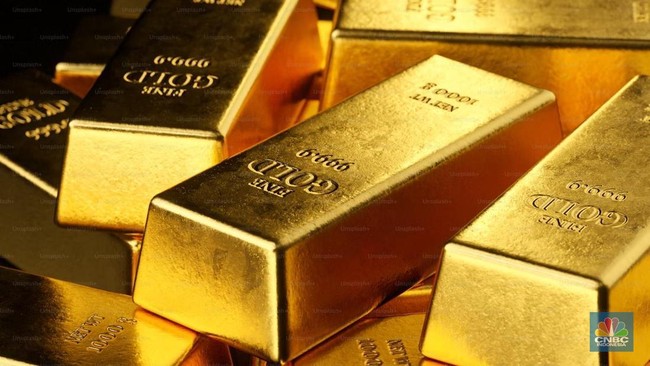
Gold prices soared to their highest level in more than three months, driven by technical buying, a weaker US dollar, and positive sentiment after the US Treasury Department announced a bond buyback plan.
According to Refinitiv data, gold closed at US$4,651.27 per troy ounce on Monday (24/8/2026), surging 1.06%. The increase extended gold’s positive trend, with the metal strengthening 2.95% over the past two days. Yesterday’s closing price was also the highest since 13 May 2026, or more than three months.
Gold prices continued to strengthen today. On Tuesday (25/8/2026) at 06:46 WIB, gold rose 0.51% to US$4,675.1 per troy ounce, now approaching the US$4,700 level.
American Gold Exchange analyst Jim Wyckoff assessed that gold’s fundamentals and technicals are both supporting the upward trend. “Gold’s fundamentals and technicals are both showing bullish signals to start this week’s trading,” Wyckoff told Reuters.
He also noted that bond yields have stabilised, even slightly declining today, which has helped support gold prices. With the continued upward price trend, Wyckoff expects gold’s movement over the coming weeks to be sideways to higher, unless a technical reversal signal emerges.
Technically, gold broke through its 200-day moving average last week, reinforcing the bullish momentum. Support also came from fund flows into gold-backed ETFs. The World Gold Council recorded inflows of 46.7 tonnes, or approximately US$6.4 billion, last week — the largest in 10 months.
Meanwhile, the US dollar remains near its lowest level in several months. The weaker dollar makes gold, which is priced in dollars, cheaper for investors outside the US.
The market is now awaiting US inflation data and the Jackson Hole symposium scheduled for this week. Investors are also monitoring developments regarding US sanctions on Iran as well as the direction of US and Japanese monetary policy.