
Gold Prices Drop to 2-Month Low as Persistent Pressures Return
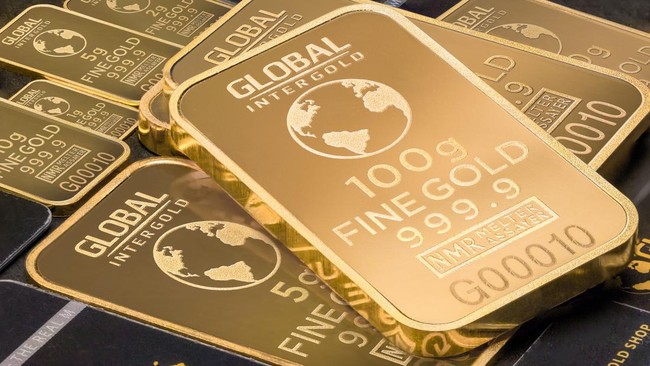
Gold and silver prices have declined under the pressure of a strengthening US dollar and rising US Treasury yields. The dollar and yields have climbed, driven by expectations that war-induced inflation will keep interest rates elevated. Investors are also closely watching developments in the Middle East conflict and the latest economic data.
According to Refinitiv, gold prices closed at US$ 4,431.77 per troy ounce (XAU/USD) on Wednesday (3/6/2026), marking a 1.18% drop. This position represents the lowest level since 26 March 2026, or more than two months ago. As of Thursday (4/6/2026) at 06:38 WIB, gold prices saw a slight recovery, rising 0.40% to US$ 4,449.59 per troy ounce.
The decline in gold prices is attributed to the resurgence of two primary pressures: the US dollar and US Treasury yields. The US dollar index rose sharply to 99.529 during Wednesday’s trading, reaching its highest position since 7 April 2026. Since global gold purchases are denominated in US dollars, a stronger dollar suppresses demand.
Furthermore, the 10-year US Treasury yield is approaching 4.5%, while the 30-year yield is nearing 5%. As gold does not offer a yield, rising US Treasury yields make the precious metal less attractive to investors.
Geopolitical tensions in the Gulf region have also resurfaced following an Iranian attack on Kuwait that damaged an airport and injured dozens of people. Simultaneously, US military operations near the Strait of Hormuz have intensified, while diplomatic efforts to halt the conflict have shown little progress. David Meger, Director of Metal Trading at High Ridge Futures, noted that gold activity is currently heavily influenced by the escalating tensions between the United States and Iran.
Meger suggested that the escalation of conflict is driving up energy prices, which could increase inflation expectations. Such conditions could trigger higher interest rates, strengthening the US dollar and further weighing on gold prices. While gold is traditionally viewed as an inflation hedge, it becomes less attractive in a high-interest-rate environment because it provides no yield.
As oil prices rose, the US dollar index strengthened for its third consecutive day. A stronger dollar makes dollar-denominated metals more expensive for holders of other currencies. New York Federal Reserve President John Williams stated there is no immediate need for changes to short-term interest rates, but Cleveland Fed President Beth Hammack suggested the central bank might need to raise rates again if inflationary pressures persist.
Market participants are now awaiting the US May non-farm payrolls data, due this Friday, to determine the direction of the Fed’s monetary policy. Previously, ADP employment reports showed that US private sector hiring in May exceeded expectations, with 122,000 jobs added—the highest since January 2025 and surpassing market projections of 117,000. The largest gains were seen in the healthcare and education sectors (57,000 jobs) and trade and transportation (36,000 jobs), with small businesses contributing the most to recruitment.