
Gold Prices Battered by Fed Interest Rate Expectations
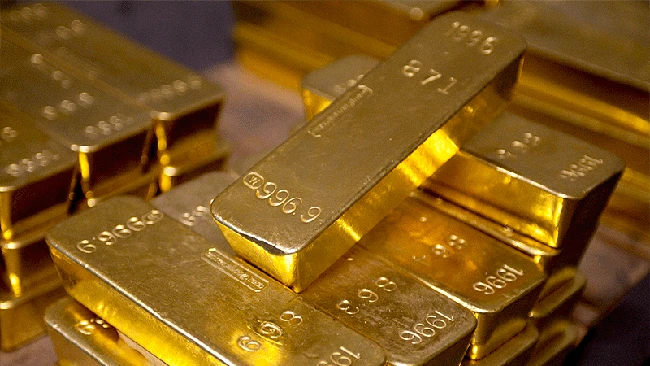
Global gold prices closed the end of the week with a gain of nearly 2 percent, continuing a positive trend from the previous day. Based on Refinitiv data, gold closed on Friday at US$4,088.23 per troy ounce, surging 1.55% from the previous day’s position. However, on a weekly basis, gold’s performance was still recorded as weakening by 1.73% compared to last week.
Global gold prices were in a downward trend throughout the week, even touching a low of US$3,958 per troy ounce on Wednesday, the lowest position since November 2026. The bearish trend for gold this week, which dragged it to a seven-month low, was driven by the strengthening of the United States dollar and rising expectations that the US central bank will raise interest rates again.
The strengthening US dollar makes gold, which is traded in that currency, more expensive for holders of other currencies, thus suppressing demand. Market participants are also increasingly convinced that the Federal Reserve will raise interest rates again this year after the central bank adopted a more hawkish tone in its latest policy meeting. Inflation concerns stemming from the Iran war also reinforced these expectations.
‘The market is now beginning to price in a rate hike as early as September. The Fed’s hawkish stance, the surge in the US dollar to a 13-month high, and declining inflation expectations are putting significant pressure on the precious metal,’ said Tai Wong, an independent metals trader. He added that gold has a support level below US$3,900 per troy ounce, while buying by central banks is still ongoing, making the chance of a deeper price collapse relatively small. ‘However, gold is likely to enter a fairly long period of consolidation because the asset is currently starting to lose its appeal in the eyes of investors,’ he said.
Gold tends to be less attractive when interest rates rise because it does not offer a yield. Gold prices began to recover in the last two trading days of the week, driven by United States inflation data released in line with market expectations. This condition eased some concerns that the Federal Reserve would soon raise interest rates, while also encouraging a weakening of the US dollar and US government bond yields.
‘The PCE data appears to be largely in line with expectations. That is one of the reasons why gold prices are relatively stable today,’ said David Meger, Director of Metals Trading at High Ridge Futures. The US Personal Consumption Expenditures price index surged 4.1% in the 12 months to May. This figure was the largest increase and the first time PCE inflation breached the 4% level since April 2023. The result was in line with projections by economists surveyed by Reuters.
After the data was released, the US dollar began to weaken, making dollar-priced gold cheaper for overseas buyers. US government bond yields also edged lower. Based on CME FedWatch data, market participants now see an 80% chance that the Fed will raise interest rates in December. This figure is down from 85% before the PCE data was released, but still higher than the 61% before the Fed’s policy statement last week. ‘The market’s main focus will remain on future inflationary pressures. That is one of the reasons why gold prices have continued to weaken in recent trading sessions,’ added Meger.