
Gold Price Rises Today, Annual Return Hits 43.22%: Opportunity to Accumulate Treasury Gold at Bareksa
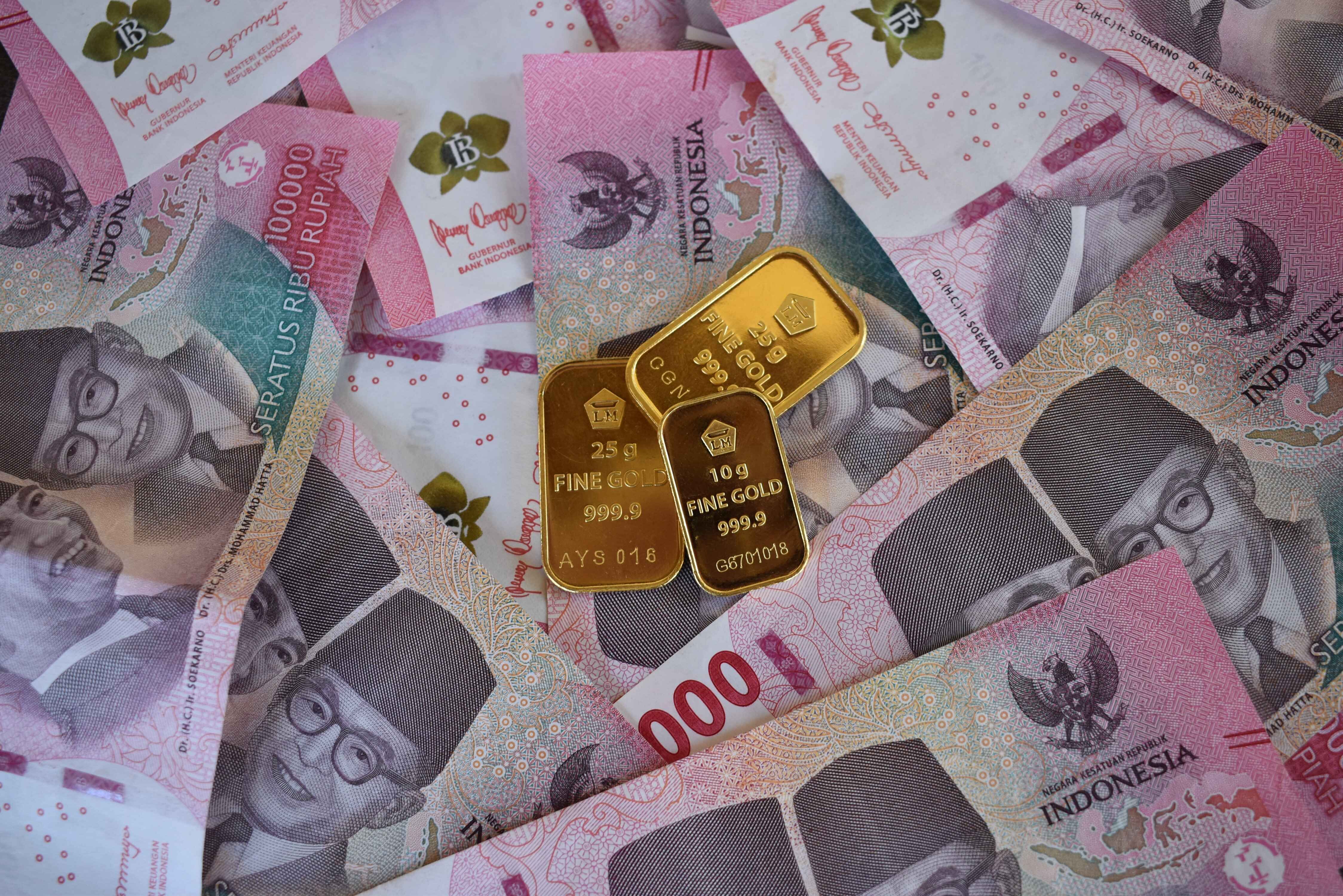
The price of gold has risen again. In rupiah terms, as reflected by the Treasury Gold purchase price on Bareksa, the gold price has climbed 4.89% in just the past week and 43.22% over the year, reaching Rp2,608,533 per gram on 11 August 2026. This increase occurred after prices had moved relatively flat for several months and was triggered by a weakening US dollar in global markets. However, for most investors, the more important question is not how long this rally will continue, but rather: what is gold’s role in my portfolio?
Gold is measured in grams, not just rupiah. Most people judge gold solely by its price. When the price falls, the urge to sell arises. When the price rises, regret emerges for not buying earlier. Yet there is one characteristic of gold that is often overlooked. If you buy 1 gram of gold today, you will still own 1 gram next year. Ten years from now, it remains 1 gram. Gold is not issued by any institution, so it carries no default risk, cannot be printed in greater quantities, and has no maturity date. It is important to underline that what remains constant is the quantity — not the value. The rupiah value of 1 gram of gold fluctuates daily, rising and falling. However, gold is not a risk-free instrument. The difference is that its risk lies in the price, not in the existence of the asset itself.
What is gold’s role in a portfolio? Every instrument has a different function. Deposits offer nominal certainty, but their returns can be eroded by inflation. Bonds and fixed-income mutual funds provide relatively regular income, but their value is tied to the issuer’s creditworthiness. Equity mutual funds offer long-term growth potential but follow economic cycles and the performance of the underlying companies. Gold is not designed to outperform everything. Its role is different: it tends not to move in the same direction as other assets within the same portfolio. When global uncertainty rises and risk assets come under pressure, gold often becomes a destination for investor funds. This is why gold is known as a balancing asset. Consequently, the allocation to gold is generally modest. Many financial planners recommend a gold allocation in the range of 5%–15% of the total portfolio, adjusted according to individual risk profiles and investment goals. Gold complements core instruments; it does not replace them.
Throughout 2026, the gold price has indeed been volatile. The price briefly touched around Rp3.1 million per gram in late January 2026, then corrected to approximately Rp2.4 million mid-year, before strengthening again to current levels. This correction was influenced by global conditions, particularly the direction of US central bank interest rate policy and the movement of the US dollar. Despite this, the Treasury Gold purchase price on Bareksa Emas recorded a 43.22% increase over the one-year period to 11 August 2026. A note of caution is warranted so this figure is not misinterpreted. Part of the increase stems from rupiah exchange rate movements against the US dollar, as the global gold price is transacted in dollars, meaning the rupiah price is influenced by two factors simultaneously. One year’s performance also cannot be used as a projection for the following year. Interestingly, investors who measure their holdings in grams navigated all this volatility without needing to make a single decision. Their gram quantity remained unchanged.
How to invest in gold gradually: First, determine the gold allocation before deciding when to buy. With a clear target allocation, for example, 10% of the portfolio, the buying decision is no longer dependent on guessing the price direction. Second, buy in stages with small, regular amounts rather than a lump sum when the price is deemed ‘right’. This approach naturally averages out the purchase price. Third, measure holdings in grams. This simple habit helps investors avoid emotional decisions when prices correct. Fourth, pay attention to the spread between the buy and sell price. On 11 August 2026, the Treasury Gold purchase price on Bareksa Emas (after discount) was Rp2,595,491 per gram, while the selling price was Rp2,518,668 per gram, a spread of approximately 3%. This means the price must rise beyond this spread before an investor breaks even. The implication is clear: gold is more suitable for medium to long-term goals, not daily transactions. This principle is also evident when the same amount of funds is spent at different price levels. For example, an investor buying with the same nominal amount, Rp1 million per transaction, will acquire more grams during price corrections, making gradual purchases more sensible than waiting for a single, supposedly perfect moment.
If the goal is to accumulate grams gradually, the method and venue for buying gold also determine how easily this strategy can be executed. Treasury, or PT Indonesia Logam Pratama, is the first physical digital gold trader in Indonesia to obtain official licensing from the Commodity Futures Trading Regulatory Agency (BAPPEBTI) of the Ministry of Trade, with licence number 001/BAPPEBTI/P-ED/12/2021 dated 13 December 2021. This licensing status is relevant because digital gold involves the custody of physical assets, not merely exposure to price movements. The minimum purchase and sale is Rp50,000, with a minimum balance of zero, making the strategy of gradually accumulating grams straightforward to implement.
Source: jawawa.id (https://jawawa.id/newsitem/gold-price-rises-today-annual-return-hits-43-22-opportunity-to-accumulate-treasury-gold-at-bareksa-1786636216)
Originally published by bareksa.com (https://www.bareksa.com/berita/emas/2026-08-13/harga-emas-hari-ini-naik-setahun-cuan-4322-peluang-akumulasi-emas-treasury-di-bareksa), translated from Indonesian