
Gold Mine vs Ivory Tower: Why MotoGP Indonesia Holds Far Greater Appeal for Business
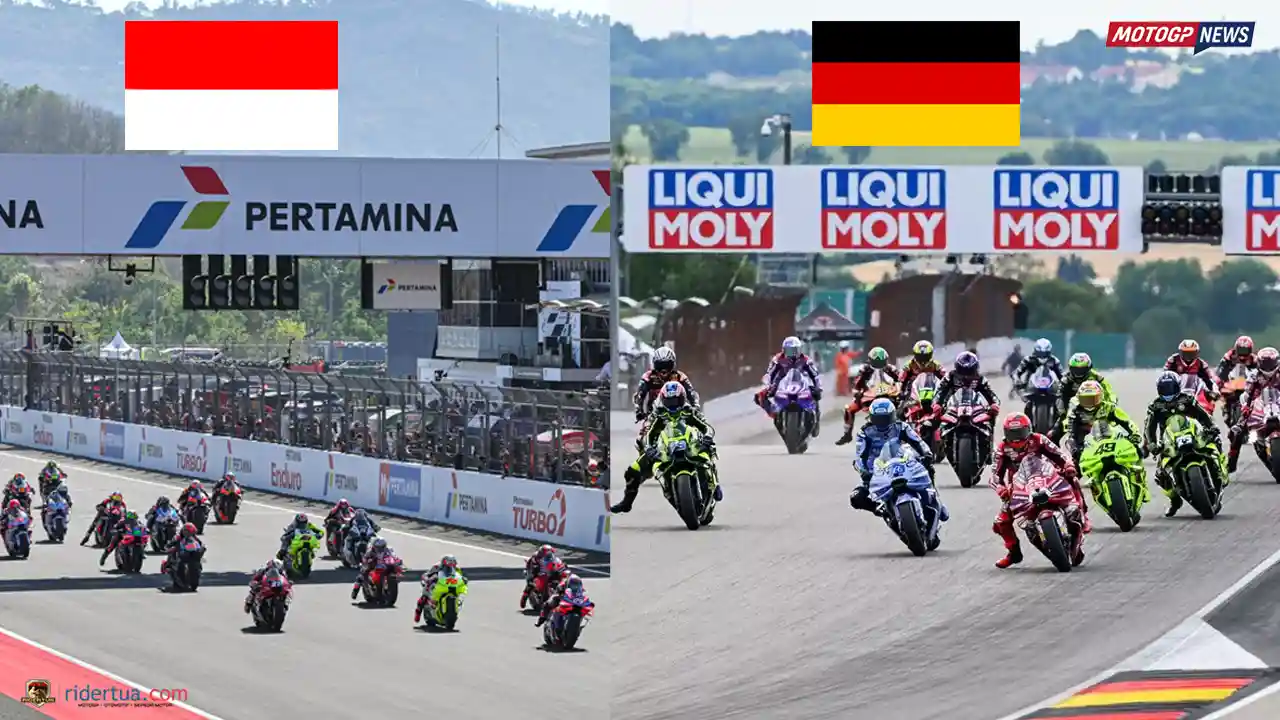
MotoGP has just completed the German round at the Sachsenring on 12 July, whilst the Indonesian round is scheduled to take place on 11 October. These two rounds bring the world motorcycle racing championship to countries with vastly different market characteristics and automotive cultures. The difference is intriguing to observe. Germany can attract an extraordinarily large number of spectators, whilst Indonesia possesses a massive daily motorcycle ecosystem and much broader public engagement. From this arises an interesting question: why can MotoGP hold such different economic value and business appeal in the two countries?
There is an interesting paradox highlighting the contrasting faces of MotoGP in Germany and Indonesia. At the Sachsenring, MotoGP managed to break attendance records. However, beyond the circuit fences, the sport still struggles to penetrate public consciousness and attract investment from large corporations outside the automotive industry. Conversely, Indonesia presents a nearly opposite situation. MotoGP is not merely a spectacle for racing fan communities but has evolved into a part of popular culture. This is where the major difference between the two countries becomes apparent: Germany has highly loyal spectators, whilst Indonesia has a much broader market ecosystem.
As reported by German media Speedweek, Tech3 KTM boss Günther Steiner described the immense potential of MotoGP at the Sachsenring. A total of 261,831 spectators attended over the four-day event. That figure even made MotoGP the second-largest single sporting event in Germany after the 24-hour Nürburgring race. The grandstands on Saturday and Sunday were also completely full. However, the large spectator numbers do not automatically make MotoGP a national phenomenon in Germany. According to Steiner, the event remains too strong as a regional attraction. National media do not give it the expected level of attention, and many large companies outside the automotive industry have yet to realise its potential as a vehicle for investment and promotion. This situation complicates the issue of sponsorship. MotoGP certainly has fans, but the sport still struggles to bring in ‘new money’ from non-automotive sectors. For some companies, motorcycle racing is still perceived as a relatively closed world, too closely associated with a specific community.
In Indonesia, the situation is vastly different. MotoGP does not stop at being a weekend hobby for a specific fan group. Thanks to national television broadcasts and very high digital engagement, MotoGP is able to reach the public on a much wider scale. Moreover, Indonesian netizens are known to be highly active in building interactions on social media. World teams and riders receive significant attention from Indonesian fans, whilst various local brands use the MotoGP stage to reach consumers in massive numbers. Consequently, large corporations from the banking, consumer goods, and even state-owned enterprise sectors view MotoGP as a promotional medium far greater than just a sporting event.
The root of this difference can be traced to the character of the motorcycle market in both countries. Germany indeed has a strong automotive culture, but its motorcycle market volume is relatively small. Annual sales hover around 150,000 to 180,000 units, dominated by large and premium motorcycles like BMW Motorrad and Ducati. Enthusiasts in Germany generally see motorcycles as part of a hobby and lifestyle. Meanwhile, MotoGP race bikes are highly advanced technological products with no direct connection to the vehicles used by the majority of the public for daily activities.
Indonesia has a different foundation. The motorcycle is not just a hobby vehicle but the primary mode of transport for millions of people. National sales reach around 6.4 million units per year. Because of this, large corporations from the banking, consumer goods, and state-owned enterprise sectors see MotoGP as a promotional medium far greater than just a sporting event. The effect even extends beyond new motorcycle sales. The lubricant and spare parts sectors also benefit, as they generate recurring revenue. Daily motorcycles require regular maintenance, including oil changes. Therefore, the emotional connection to the world of racing can influence consumer choices for supporting products, such as Pertamina Enduro lubricants, which are the main sponsor of the VR46 world racing team.
Source: jawawa.id (https://jawawa.id/newsitem/gold-mine-vs-ivory-tower-why-motogp-indonesia-holds-far-greater-appeal-for-business-1784566219)
Originally published by ridertua.com (https://ridertua.com/2026/07/20/motogp-indonesia-lebih-menarik-sponsor/), translated from Indonesian