
Gold Leakage in a Mining Nation
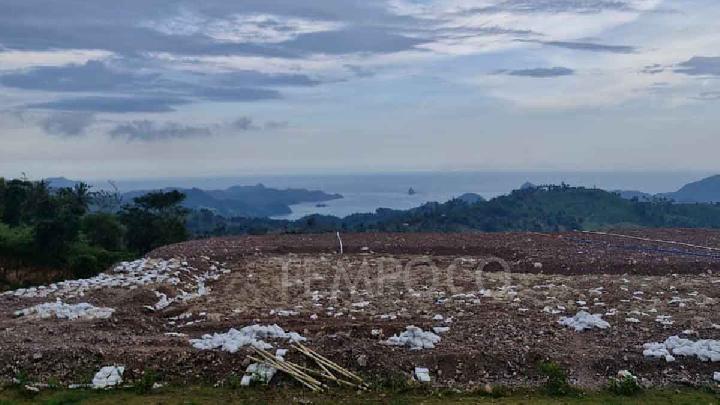
Gold from illegal mining flows as far as overseas markets. The tap remains open.
THIS country has abundant gold mines, but apparently does not always know where its gold ends up. From illegal mining pits, the precious metal flows to collectors, enters processing facilities, and then finds its way overseas through unrecorded channels.
So far this year, the Directorate-General of Customs has uncovered 32 gold-smuggling cases involving hundreds of billions of rupiah. The Criminal Investigation Department of the Indonesian National Police has exposed various methods, from concealing gold on people’s bodies and turning it into jewelry to flying it out on rented private jets. Several cases also indicate suspected access to or involvement by officials.
Raids on mines, home-based gold-processing operations, and gold collectors have occurred in several regions. Among them are Nganjuk and Jombang in East Java. In Gunung Botak, Maluku, the government in June 2026 named 25 suspects in alleged unlicensed mining. Their roles varied, from providing access to processing the gold.
This means illegal gold is not simply a matter of people digging up the earth. There are processors, collectors, aggregators, financiers, smugglers, and overseas buyers. The players may change, but the chain remains connected. When enforcement operations are repeatedly carried out in different places, what emerges is not merely a number of rogue players, but a black market with many entry points.
Aceh also deserves attention. Its gold potential is substantial, and illegal mining remains rampant. In 2024, police intercepted a sand-dredging vessel allegedly used by Chinese nationals to mine gold in a river basin. Indonesia’s gold resources appear to be more extensive than official reports indicate.
The losses go beyond state revenue. Illegal gold mining often uses mercury, which contaminates soil and rivers. Cyanide is also used in certain processing methods, although it is more expensive. Gold that leaves the country through illicit channels carries with it environmental costs that remain at home.
The state is not sitting idle. Police and Customs officials continue to thwart smuggling and uncover processing and collection sites. Yet the sheer number of cases uncovered shows the scale of the problem. Repeated enforcement does not necessarily mean the chain has been broken. The state may simply be busy mopping the floor while the tap remains open.
Gold has strategic value to the economy. Formal trade is important for both revenue and oversight. The government imposes export duties on certain gold products. Illicit channels bypass all of that. The state loses revenue as well as control over the movement of its mineral wealth.
For that reason, raids on mines, collectors, processors, and smugglers must not be treated as separate cases. Police need to pursue financiers and beneficiaries rather than stopping at those carrying the gold. Money laundering provisions can be used to trace the flow of funds and assets. If the wealth has already moved overseas, cross-border cooperation is needed to pursue it.
The number of enforcement actions is no reason to applaud. Quite the opposite, it is a sign that the leakage is widespread. If gold continues to seep out through illicit channels, what is lost is not merely gold. Also swept away are state revenue, the environment, and control over the wealth beneath the country’s own soil.