
Gold ETFs' Stock-Like Flexibility Fuels Asia Investment Trend
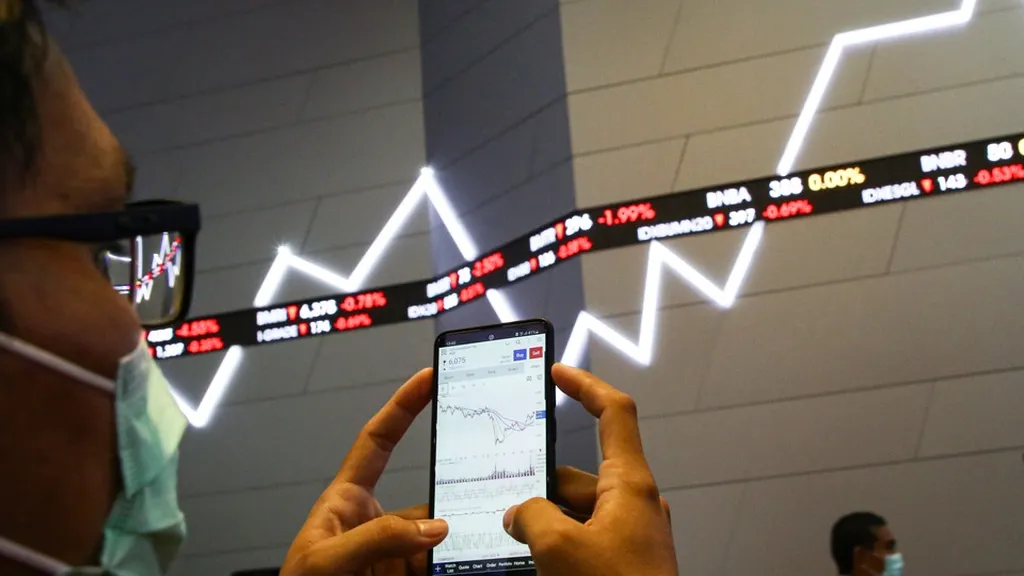
Indonesia is joining the gold ETF trend by preparing to launch the product on the Indonesia Stock Exchange. Investment products in the capital market, such as gold-based exchange-traded funds (ETFs), have seen a surge in popularity worldwide over the past decade, with the market continuing to grow across Asia. Asia has now firmly established itself as a key driver of the global gold ETF trend, with Indonesia keen to keep pace. ETFs are collective investment contracts comprising a pool of assets such as stocks, bonds, commodities, or a mix of these, designed to track specific indices. They function like mutual funds but are traded on exchanges with the flexibility of stocks. Gold ETFs are investment products whose underlying asset is gold, allowing investors to profit from price fluctuations without physically holding the metal. According to long-term historical data compiled by the World Gold Council (WGC) and market analysis, gold ETFs have been traded since 2003, initially gaining traction in North American and European exchanges. Over the past decade (2016-2026), global gold ETF trading growth remained relatively stable, peaking in 2020 during the Covid-19 pandemic. North American and European investors massively bought gold ETFs as safe-haven assets, pushing global physical holdings to record highs. Demand for gold ETFs correlates with global economic trends. Between 2021 and 2023, Western central banks, notably the US Federal Reserve, aggressively raised interest rates to combat inflation. In this environment, Western investors began selling off large quantities as bond yields became more attractive than gold. However, when Western investors sold, gold prices did not collapse due to new support from other regions. Since 2024, structural changes have seen consistent Asian capital inflows balancing global liquidity. This trend propelled global gold prices to historic highs. In early 2026, prices breached $5,500 per troy ounce before stabilising around $4,500 by mid-2026. According to WGC and State Street Global Advisors reports, demand for Asian gold ETFs surged to 533.7 tonnes from January to 15 May 2026, representing over 10% of the global total of 4,029 tonnes. In 2019, Asia held just 77 tonnes or 2.67% of the global total of 2,875 tonnes. Asian gold ETFs recorded a historical monthly assets under management (AUM) high of $86.4 billion in February 2026. This momentum continued, with AUM reaching $80.7 billion by mid-May 2026 for Q2. Shaokai Fan, Head of Asia Pacific (ex-China) and Global Head of Central Banks at the World Gold Council, told Kompas on 24 May 2026 that Asian investors have become a stabilising force in global gold ETF demand. ‘While Western investors took profits or rotated positions during the higher US interest rate period, Asian investors have set consecutive buying records over the past eight months until April 2026,’ he said. ‘This region remains critical to monitor, with year-to-date inflows nearly matching last year’s record total,’ he added. Retail and institutional investors in China have been the dominant buyers in the gold ETF market over the past two years. This regional surge is driven aggressively by Asia’s three major economies: China, Japan, and India. Investors there have massively shifted funds to gold-based instruments, spurred by domestic property market volatility, sluggish local risk assets, and a weakening yuan. Products such as China’s Huaan Yifu Gold ETF attracted $1.9 billion in a single month early this year, setting new AUM records. In India, the world’s second-largest gold consumer, investor behaviour has evolved to actively using ETFs. Dozens of gold ETF products have been launched to meet domestic demand for diversification and inflation hedging. A unique phenomenon has occurred in Japan in recent years as the yen’s chronic weakness against the dollar has driven people into gold ETFs, with local gold prices in yen repeatedly hitting historic highs. ‘Macro trends indicate Asia is shifting from physical gold ownership to financial gold holdings,’ Shaokai said. Historically, gold ownership across Asia was dominated by jewellery, wedding purchases, gifts, and physical savings. However, gold is now increasingly viewed as an investment allocation rather than just a store of wealth. Shaokai said the shift to gold ETFs aligns with an investment mindset that offers efficient and accessible gold exposure without the costs and complexities of physical bullion storage. Given Indonesia’s gold investment growth trend, I believe gold ETFs have