
Gold ETFs Set to Launch on the Indonesian Stock Exchange, Marking a New Investment Era
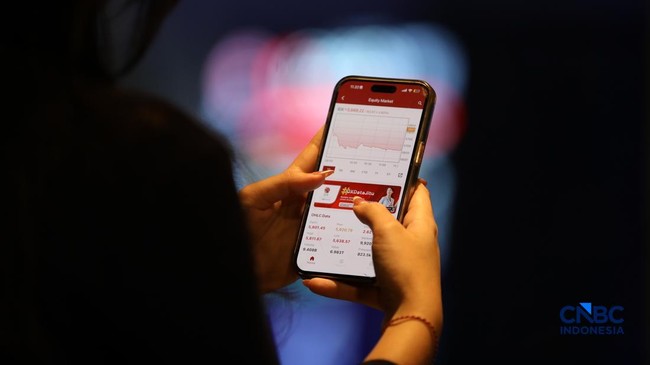
The Indonesian capital market is preparing to enter a new era of gold-based investment with the upcoming launch of Exchange-Traded Funds (ETFs) backed by physical gold. This instrument is projected to become a significant innovation in the national financial industry by merging the advantages of gold investment with the transactional flexibility of the Indonesia Stock Exchange (BEI). The development of Gold ETFs is part of an ETF reform programme being pushed by the BEI to expand the variety of investment products available, aiming to provide easier, modern, liquid, and affordable access to gold investment for both retail and institutional investors. Amid persistent global economic uncertainty, gold has once again become a sought-after investment instrument. The weakening of the US dollar, shifts in global interest rate policy, and international geopolitical tensions have prompted investors to seek safe-haven assets. Gold’s characteristics as a hedging instrument make gold-based products increasingly relevant as an alternative for portfolio diversification. BEI data shows that throughout 2025, gold was one of the highest-growth assets. Over the average performance of the last 10 years, gold has recorded competitive returns and has a relatively low correlation with equities and bonds, reinforcing its relevance for portfolio diversification. Indonesia holds a strategic position in the global gold industry. As one of the world’s largest gold producers with substantial reserves, the country has a strong opportunity to develop a bullion ecosystem. The presence of Gold ETFs on the stock exchange is expected to bridge national gold production with the investment needs of domestic and global investors. The number of Indonesian capital market investors continues to grow rapidly, surpassing 27 million by the end of May 2026. With a large market capitalisation and increasing daily transactions, the capital market is deemed ready to become a more efficient and transparent distribution channel for gold investment. Gold ETFs will take the form of collective investment contract mutual funds whose units are traded on the BEI like stocks. Investors can purchase these products through online trading applications with an easy and real-time transaction mechanism. Unlike purchasing physical gold, which requires storage and carries the risk of loss, Gold ETFs provide exposure to gold prices through an exchange trading system with underlying physical gold stored securely in licensed custodian and depository institutions. The underlying assets for Gold ETFs must meet a minimum purity standard of 99.5% according to the global London Bullion Market Association (LBMA) standard or 99.9% according to the Indonesian National Standard (SNI). The majority of the fund’s investments will be placed in gold assets, while a small portion may be placed in money market instruments and cash. Notably, Gold ETFs in Indonesia can also be issued under sharia principles, having obtained a Fatwa from the National Sharia Board of the Indonesian Ulema Council (DSN-MUI) Number 163/DSN-MUI/VIII/2025 concerning Sharia Gold ETFs. This fatwa stipulates that the product must be free from usury, uncertainty, gambling, and harm, and each unit issued must have a physical gold underlying stored in an allocated account. From a regulatory perspective, the Financial Services Authority (OJK) has issued POJK Number 2 of 2026 concerning Mutual Funds in the Form of Collective Investment Contracts with Underlying Assets in the Form of Gold Traded on the Stock Exchange. The BEI has also adjusted several listing and trading rules to accommodate the new instrument. BEI President Director Jeffrey Hendrik stated that industry interest in issuing Gold ETFs is quite high, with seven Investment Managers having submitted preliminary listing agreement applications to the BEI. A BEI survey of individual and institutional investors also indicated that gold-based ETFs are among the most desired products for development. Investors must still understand the associated risks, including the impact of global gold price volatility, trading liquidity risk, and potential tracking error between the ETF’s performance and the reference spot gold price. Nonetheless, this instrument represents a new step for Indonesia in building a more inclusive, innovative, and internationally competitive financial ecosystem.