
Gold ETF to Launch on Indonesia Stock Exchange on 10 August 2026
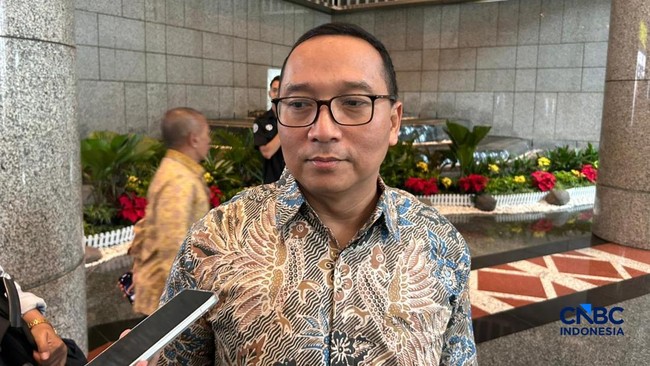
Jakarta, CNBC Indonesia – Indonesia’s capital market is preparing to enter a new era of gold-based investment through the presence of an Exchange-Traded Fund underpinned by physical gold. The Indonesia Stock Exchange (BEI) will launch the asset on 10 August 2026. BEI Development Director Iding Pardi said the launch date coincides with the exchange’s anniversary.
“Later, God willing, it will be launched on the capital market’s anniversary on 10 August,” he said at the BEI building in Jakarta on Thursday (23/7/2026).
Iding revealed that several exchange members (AB) have already expressed interest in issuing the gold ETF, although he could not yet provide details.
“There are already several exchange members that will issue gold ETFs,” he said.
The instrument is projected to become one of the most important innovations in the national financial industry, as it combines the advantages of gold investment with the transaction flexibility offered by the Indonesia Stock Exchange.
The development of the Gold ETF forms part of the ETF reform programme currently being pushed by BEI to broaden the variety of investment products in the capital market. The presence of this product is expected to open up access to gold investment that is easier, more modern, liquid and affordable for both retail and institutional investors.
Amid ongoing global economic uncertainty, gold has once again become one of the investment instruments attracting attention. The weakening of the US dollar, shifts in global interest rate policy and international geopolitical tensions have led investors back to safe-haven assets. Gold’s characteristics as a hedge make gold-based instruments increasingly relevant as an alternative for portfolio diversification.
Data from BEI shows that throughout 2025, gold was one of the highest-growth assets. Even based on average performance over the past ten years, gold has recorded competitive returns and has relatively low correlation with both equities and bonds. These characteristics make gold relevant as a portfolio diversification instrument.
Indonesia holds a strategic position in the global gold industry. As one of the world’s largest gold producers with substantial reserves, Indonesia has a strong opportunity to develop a bullion ecosystem. The presence of the Gold ETF in the capital market is expected to bridge national gold production with the investment needs of domestic and global investors.
The number of Indonesian capital market investors continues to grow rapidly. As of the end of May 2026, the number of investors had surpassed 27 million. With a large market capitalisation and continuously rising daily transactions, the capital market is considered ready to serve as a more efficient and transparent channel for gold investment distribution.
The Gold ETF will take the form of a collective investment contract mutual fund whose units are traded on BEI, just like shares. Investors will be able to buy the product through online trading applications with an easy, real-time transaction mechanism.
The Gold ETF will provide a more effective investment mechanism for the public. Unlike physical gold purchases, which require storage and carry the risk of loss, the Gold ETF offers exposure to the gold price through an exchange trading system, with underlying physical gold held securely at licensed custodian institutions and gold depositories.
Through the Gold ETF, investors can gain exposure to the gold price via a more practical, transparent investment mechanism integrated with the capital market ecosystem. The underlying asset of the Gold ETF must meet a minimum purity standard of 99.5% under the global London Bullion Market Association (LBMA) standard, or 99.9% under the Indonesian National Standard (SNI). The majority of investment funds will be placed in gold assets, whilst a small portion may be allocated to money market instruments and cash.
Interestingly, the Gold ETF in Indonesia can also be issued under sharia principles. The product has received DSN-MUI Fatwa No. 163/DSN-MUI/VIII/2025 on the Sharia Gold ETF. With this fatwa, the Gold ETF is expected to reach sharia investors who have long been seeking gold investment instruments compliant with Islamic principles.
Under its provisions, the Sharia Gold ETF must be free from elements of riba (usury), gharar (excessive uncertainty), maysir (gambling) and dharar (harm). In addition, every unit issued must have physically available underlying gold stored in an allocated account.
From a regulatory standpoint, the development of the Gold ETF also has the full support of the regulator. The Financial Services Authority (OJK) has issued POJK No. 2 of 2026 concerning Collective Investment Contract Mutual Funds whose Units are Traded on the Stock Exchange with Gold as the Underlying Asset.
Meanwhile, BEI has also adjusted a number of rules on the listing and trading of ETFs to accommodate the arrival of the Gold ETF in the Indonesian capital market. This step demonstrates the seriousness of regulators and industry players in building a capital market-based gold investment ecosystem.
BEI Chief Executive Officer Jeffrey Hendrik said industry interest in issuing Gold ETFs is fairly high. To date, seven investment managers (MI) have submitted preliminary listing agreement applications for the Gold ETF to BEI.
“Regarding issuance, there are currently seven investment managers that have submitted preliminary listing agreement applications for the Gold ETF to BEI,” he said at the BEI Annual General Meeting of Shareholders press conference, quoted on Friday (3/7/2026).
In addition, a survey conducted by BEI among individual and institutional investors shows that gold-based ETFs are among the most sought-after products for development in the capital market. Nevertheless, investors still need to understand the risks of investing in the Gold ETF.
The Gold ETF carries risks that investors must understand, including the influence of global gold price volatility, trading liquidity risk, and potential tracking error between the ETF’s performance and its benchmark spot gold price. Even so, the instrument marks a new step for Indonesia in building a financial ecosystem that is more inclusive, innovative and competitive at the international level.