
Gold ETF Becomes New Alternative for Gold Investment Without Bullion
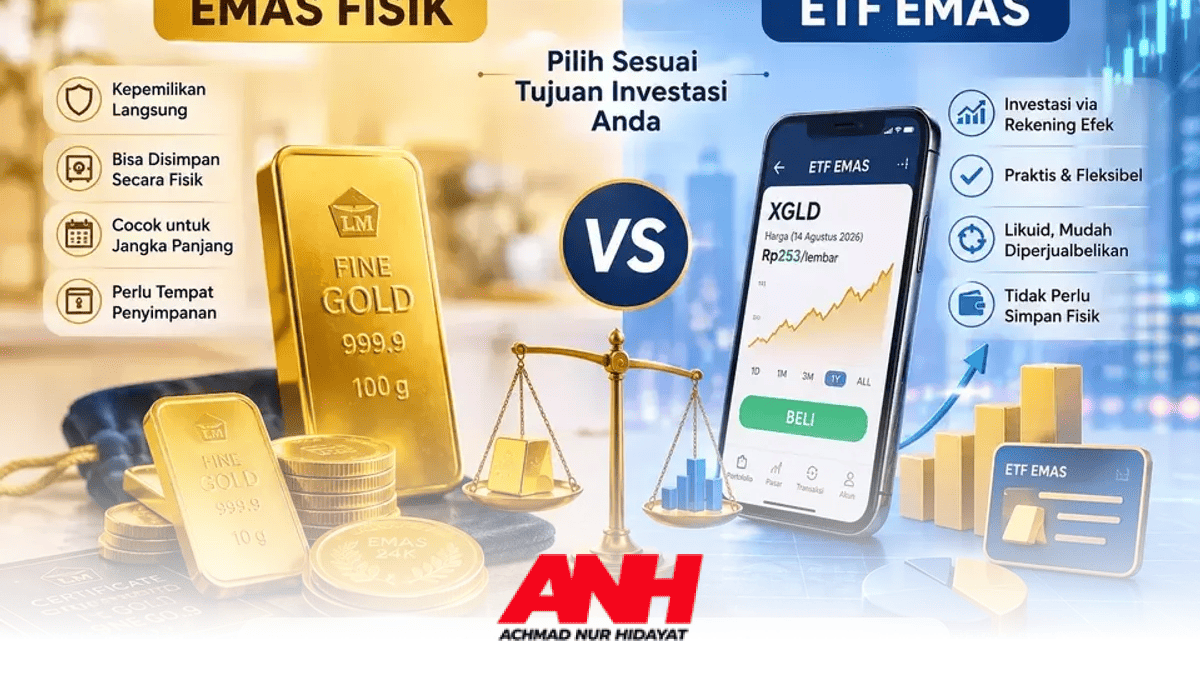
Gold investment is no longer synonymous with owning bullion. Since the Financial Services Authority (OJK) issued POJK Number 2 of 2026, investors have an alternative through gold-based mutual funds traded on the exchange, or gold ETFs.
Compliance Officer of PT Infovesta Kapital Advisori, Adinda Ramadhanty, assesses that the presence of gold ETFs provides a new option for investors to gain exposure to gold prices without having to store gold directly.
“The question then is, if what is sought is only profit from the rise in gold prices, is it still necessary to buy the physical form?” Adinda wrote in her analysis.
According to Adinda, a gold ETF is a mutual fund traded on the exchange with gold as its underlying asset. Investors can obtain exposure to gold price movements through a securities account, while the physical gold underlying the product is stored and managed by an appointed party.
In this scheme, gold ownership is recorded electronically through an Electronic Gold Receipt (EGR). Through cooperation between the Indonesian Central Securities Depository (KSEI) and Pegadaian, ownership is recorded in the KSEI system, while the physical gold is stored and managed by Pegadaian.
The main difference from bullion lies in the form of ownership. Buying physical gold means the investor directly controls the metal. Meanwhile, in an ETF, the investor owns participation units whose value follows the gold price.
“Investors who only want profit from price movements do not necessarily need the physical form. Conversely, for investors who view gold as a store of wealth that can be directly controlled, physical ownership remains valuable,” Adinda wrote.
Adinda noted that one cost to consider in physical gold is the difference between the selling price and the buyback price. As of 31 July 2026, the selling price of Antam gold was recorded at Rp2.62 million per gram, while the buyback price was Rp2.39 million per gram.
This spread of around 8.8% means the buyback price needs to rise by about 9.6% for investors to return to their initial capital. Besides the spread, owning large amounts of gold also requires secure storage.
Gold ETFs can reduce this storage need. However, this instrument also has costs, such as management fees, transaction fees through securities firms, and the bid-offer spread on the exchange.
Liquidity is also a factor to consider because gold ETFs are still relatively new in the domestic market. Low transaction volumes can widen the bid-offer spread.
“The most decisive difference is not actually the size of the costs, but when those costs are charged,” Adinda wrote.
According to Adinda, physical gold tends to suit investors who use gold as a long-term store of wealth, prioritise direct ownership, or have the goal of passing on assets as inheritance.
Meanwhile, gold ETFs can be an alternative for investors who place gold as part of a portfolio and need flexibility to increase or reduce allocation.
ETFs also offer access with a relatively low investment value. For example, on 14 August 2026, the XGLD price was recorded at Rp253 per unit. With a minimum purchase of one lot or 100 units, investors need around Rp25,300, excluding transaction fees.
However, investors need to note that the disbursement of funds from ETF sales follows the exchange settlement mechanism, namely T+2 exchange days.
Adinda assesses that the presence of gold ETFs does not make bullion lose its relevance. The two instruments answer different investor needs.
“The more appropriate question is not which is better, but what role gold actually plays in the portfolio,” Adinda wrote.
If gold is needed as an asset that is easily adjusted within a portfolio, an ETF can be an alternative. However, if the main goal is to own and control gold directly, physical gold still has its own advantages.