
Gold Dreams in Sangihe: Building Prosperity Beyond Mining
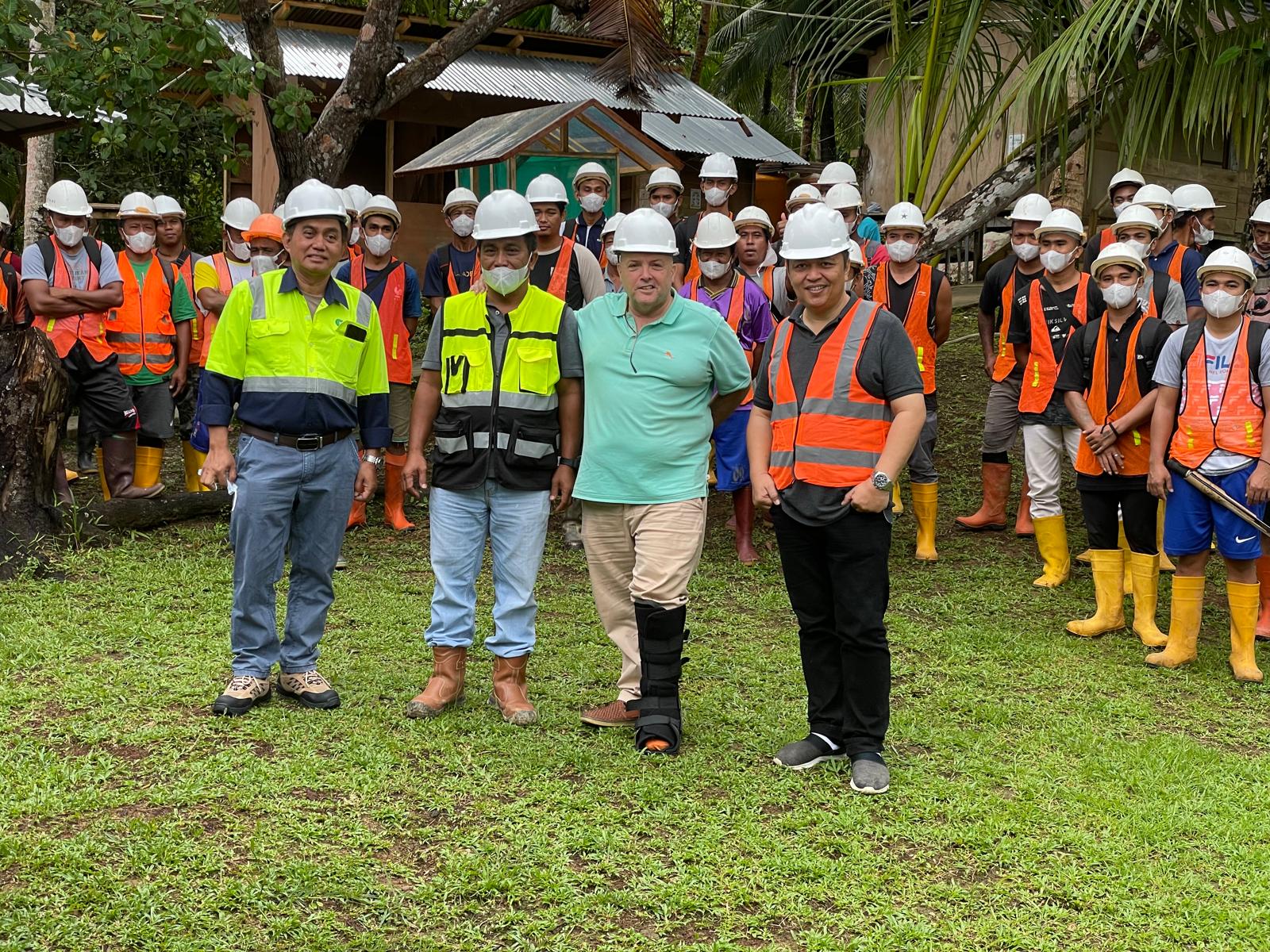
On Sangihe Island, North Sulawesi, gold is nothing new. The precious metal has long been part of the story of this island on Indonesia’s northern fringe. Yet amid such wealth, the community still grapples with classic problems: limited employment, an unreliable electricity supply, and economic opportunities that have not developed as quickly as the island’s natural potential.
In recent years, another problem has cast a shadow. Illegal mining activity has grown and left environmental damage in several areas. The economic value generated flows outwards, whilst the benefits for local communities remain limited.
Amid this situation, PT Tambang Mas Sangihe (TMS) offers a different narrative. The company, still awaiting operational certainty, says it wants mining to serve as a gateway to broader economic development — not merely mining gold, but planting the seeds of prosperity.
“If the people of Sangihe prosper, then we will prosper too. We expect to be in Sangihe for around 20 years. That is why it is in our interest to help this island develop,” said the Chief Executive Officer of PT TMS, Terrence Filbert.
For Filbert, a mine’s success should not be measured by gold production alone, but also by the economic impact created beyond the concession fence. He envisages workers’ wages circulating through traditional markets, food stalls, transport services, and the micro-enterprises that have long sustained the local economy.
EMPLOYMENT
The company expects to recruit around 100 workers in the initial stage of operations, a figure targeted to rise to nearly 1,000 once the mine operates at full capacity. PT TMS also says it will prioritise local workers and provide training for residents without prior mining experience.
“We are not only creating direct employment. There will also be indirect jobs arising through the services, trade, and the company’s operational supply chain,” he said.
Unlike many mining projects that rely on workers from outside the region, PT TMS says it will prioritise the recruitment of local residents.
According to Filbert, many Sangihe residents already have experience in the mining industry, having previously worked on projects across Sulawesi and Papua. The availability of experienced labour is an advantage in itself, as it reduces the company’s need to bring in workers from outside the island.
COMMUNITY MINERS
However, the company’s plans do not stop at the mining sector. Filbert said TMS is studying the possibility of supporting the establishment of People’s Mining Permit (IPR) zones in parts of its concession that the company will not use. Through this scheme, communities would be able to mine legally, with technical guidance and access to gold processing facilities.
“Once TMS enters the production stage and completes all the necessary regulatory processes with the Ministry of Energy and Mineral Resources (ESDM), the company intends to establish suitable zones so that local miners can operate legally under the IPR scheme,” Filbert said.
The move is expected to address illegal mining whilst empowering local communities through a measured and environmentally friendly approach.
ENERGY AND TOURISM
Meanwhile, the company also sees Sangihe’s economic potential as lying beyond its mineral deposits. The island cluster, located in the Coral Triangle, is considered to have diving tourism appeal that has yet to be optimally exploited.
According to Filbert, the main obstacle is not the quality of the destination but the still-limited transport access. The company is therefore open to cooperating with tourism operators and airlines to improve connectivity to Sangihe. “Sangihe has extraordinary dive tourism potential. The challenge is making it easier for people to come here,” he said.
POWER GENERATION
Another plan revealed by the company is the development of a geothermal power plant around Mount Awu. According to Filbert, a cheaper and more stable electricity supply would form the foundation for growth in other sectors, from fisheries and processing industries to cold-chain businesses. “Affordable electricity is not only an operational necessity, it is an investment in long-term economic competitiveness,” he said.
For the people of Sangihe, all these plans remain on paper. Their realisation depends on permitting processes, investment, government support, and the company’s ability to build trust with the community.
Sangihe Island today stands at a crossroads. On one side, its gold wealth continues to be a source of debate. On the other, there is hope that natural resources can become the starting point for a more diverse economy, rather than merely producing precious metal.
Filbert believes this vision will be realised within the next 20 years. Meanwhile, for the people of this border island, success will be measured not by how much gold is lifted from the bowels of the earth, but by how much of its benefit genuinely remains and is felt in the land from which that gold comes.
“The true measure of success is the extent to which PT TMS can make a real contribution to increasing employment, infrastructure development, energy provision, tourism development, local business growth, and the overall improvement of the quality of life for the people of Sangihe,” he concluded.
Source: jawawa.id (https://jawawa.id/newsitem/gold-dreams-in-sangihe-building-prosperity-beyond-mining-1785829829)
Originally published by Media Indonesia (https://mediaindonesia.com/nusantara/918048/mimpi-emas-di-sangihe-membangun-kesejahteraan-hingga-pariwisata), translated from Indonesian