
Gold and Silver Take a Beating as Tough Tests Loom
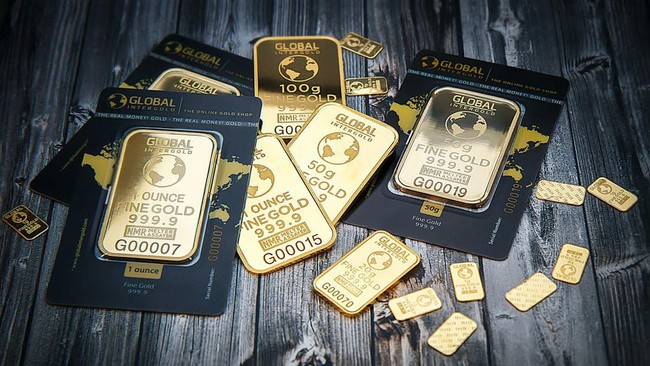
Gold and silver prices weakened amid a surge in oil prices and the US dollar.
Investors were also focused on the dollar’s strength and rising oil prices, while awaiting US inflation data for clues about the Federal Reserve’s interest-rate policy.
According to Refinitiv, gold closed at US$4,171.09 per troy ounce on Monday (12 October 2026), down 0.54%. The decline ended a two-day rally.
Gold began to recover on Tuesday (13 October 2026), rising 0.03% to US$4,172.27 per troy ounce at 6.23 am Western Indonesia Time.
One factor behind gold’s decline was the sharp rise in the US dollar. The dollar index climbed to 102.589, its highest level since April 2025, when the world was shaken by a trade war.
Gold purchases are priced in US dollars, so a stronger dollar tends to reduce demand.
“We are seeing selling pressure on gold as the dollar is near a one-and-a-half-year high,” said Jim Wyckoff, a market analyst at American Gold Exchange, as quoted by Refinitiv.
Escalating conflict in the Middle East has also kept investors cautious.
Investors will be watching remarks by Federal Reserve Chair Kevin Warsh, as well as several key inflation figures due this week, to assess the future direction of US monetary policy.
The US Consumer Price Index (CPI) is scheduled for release on Wednesday, followed by the Producer Price Index (PPI) and retail sales data on Thursday.
“I don’t think those reports will show signs of inflation easing. The data are likely to be a negative sentiment for the metals market,” Wyckoff added.
The market broadly expects the Fed to hold interest rates at its meeting later this month. However, CME’s FedWatch tool puts the probability of a rate increase in December at 87.7%.
In a high-interest-rate environment, investors tend to favour assets that generate returns over gold, which pays no interest.
Meanwhile, oil prices rose on Monday to near their highest level in almost two weeks. Attacks on Saudi Arabia outweighed the prospect of additional supplies entering the market after US President Donald Trump welcomed new Russian diesel exports and a Russia-Ukraine ceasefire agreement covering energy infrastructure.