
Going Public Is Not a Measure of Startup Success
“Start-ups” that only pursue growth without a clear path to profitability will find it increasingly difficult to attract the interest of public investors.
23 Okt 2026 14:48 WIB · Ekonomi & Bisnis
GETTY IMAGES NORTH AMERICA/AFP/DREW ANGE
DENPASAR, KOMPAS—Going public on the stock exchange and becoming a public company is not necessarily a measure of success for a technology startup. While it offers the opportunity to secure funding and provide a way out for early investors, this corporate action also carries the risk of losses for public investors if the startup’s performance and share price fall short of market expectations.
The Chairman of the Indonesian Venture Capital and Start-Up Association (Amvesindo), Eddi Danusaputro, said that the success of a start-up’s initial public offering (IPO) can be viewed differently by the start-up company itself, early investors, and public investors. For internal start-ups, an IPO can be considered successful when it is able to raise funding.
Meanwhile, for early investors, an IPO provides an opportunity to cash in their investments. Public investors who purchase start-up shares during or after the IPO expect to profit, though this isn’t guaranteed and could even result in losses.
Most retail investors in the domestic stock market are not long-term investors. When a startup launches an IPO, whether on the main board, development board, or acceleration board, and its shares are purchased by retail investors, their expectations are very different from those in other countries. They expect dividends.
In fact, most startups won’t distribute dividends. They generally also hope for continued growth in valuation, while the price-earnings ratio of a startup listed on the stock exchange will be very different from that of a traditional company.
“Again, such a situation is debatable. From our understanding as investors, the level of understanding of the retail (stock) market in Indonesia has not yet reached that level. Therefore, it is necessary to manage expectations,” he said while attending a discussion session on “The Exit Problem” in Denpasar, Bali, Thursday (October 22, 2026).
The discussion is part of the Bali Tech Week 2026, Indonesia’s national technology week that serves as an umbrella for 13 events within the digital industry ecosystem, with the Bali Tech Week Conference as the main conference. Bali Tech Week 2026 will take place from October 19 to 23, 2026.
Furthermore, according to Eddi, there are several exit strategy options available in the startup space. IPOs are often difficult to execute, and startup share prices are prone to plummeting after the initial enthusiasm subsides.
Other exit options, namely mergers and acquisitions, as well as secondary sales (selling a portion of shares to other investors), are becoming increasingly common alternatives, although their frequency is considered to still need to be increased.
For startups that have successfully generated profits, distributed dividends, and maintained business sustainability, there’s no rush to exit. This perspective encourages self-criticism among investors.
“While previously, investor success metrics were solely measured by multiple returns and the number of unicorns in a portfolio, the focus has now shifted toward business maturity,” Eddi said.
Listyorini Dian Pratiwi, Head of the Listed Company Development Division at the Indonesia Stock Exchange (IDX), who also attended the same discussion, emphasized that business fundamentals are a crucial factor for startups seeking to go public. High valuation growth alone is not enough to guarantee business sustainability.
Financial conditions, business model advantages, and the implementation of good corporate governance need to be taken into consideration before a start-up conducts an IPO.
When discussing exit strategies in the startup space, an IPO is not the end of the funding journey. He emphasized that an IPO is the beginning of a startup’s funding journey. After the IPO, there are many other funding avenues, such as bond and sukuk issuances.
“An IPO has indeed become a strategic exit option. The obstacle sometimes lies in the startup’s own readiness. An IPO requires both company readiness and the right momentum,” said Listyorini.
Therefore, the first thing a startup planning an IPO should consider is internal readiness, such as its business model, competitive advantage, and business plan. The second thing relates to momentum.
The momentum he refers to relates to market appeal. To secure funding from investors, whether private equity (PE), venture capital (VC), or public investors, valuation is a key consideration.
The valuation must align with investor expectations, particularly those of public investors during the IPO. The valuation anticipated by previous investors or fund holders should correspond with the valuation set by the market, which includes not only retail investors but also other stakeholders such as institutional investors, pension funds, and asset managers.
“For us at the Indonesia Stock Exchange, fundamentals are the key. No matter what your business is, if it is growing but still recording losses, we say that stocks without strong fundamentals will not last forever,” he stated.
Financial conditions will always be a primary consideration for investors when deciding where to allocate their capital. The uniqueness of a business model is equally important; if your business model closely resembles that of another company, achieving sustainable long-term growth will be challenging.
Non-financial aspects, such as governance, are also crucial. Becoming a public company represents a transformation, and according to Listyorini, it is not merely about funding rounds.
A number of startups around the world have reportedly failed after their IPOs. For example, Pets.com (IPO 2000) went bankrupt within nine months of its IPO.
The cause is implementing a loss-making sales strategy and being too aggressive in using the burn rate (the speed at which a company spends its cash reserves) for advertising costs.
Another example is Zynga, which went public in 2011. This startup experienced a sharp 74 percent stock decline in its first year. Zynga was quite dependent on Facebook’s platform ecosystem and its inability to retain and maintain casual gamers.
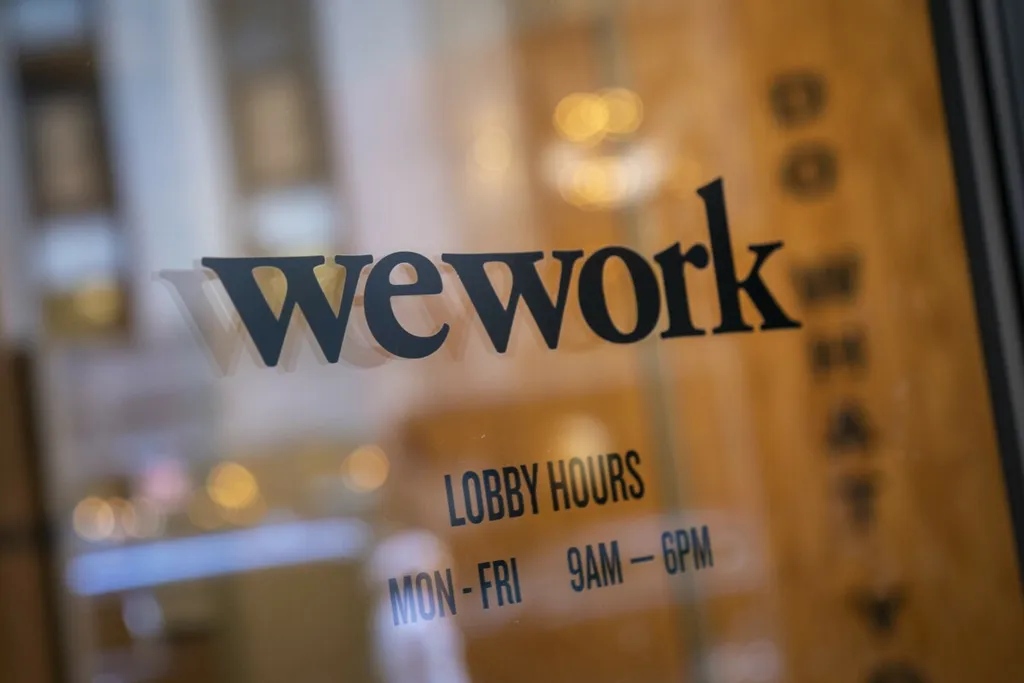
Another example is WeWork, which entered the capital market in 2021 through a SPAC, or special purpose acquisition company. The company’s valuation plummeted from $47 billion to below $10 billion, ultimately leading to its bankruptcy in 2023.
The main causes are poor internal management governance, overly risky property lease expansions, and massive operational losses.
Quoting Business Insider on December 29, 2019, LionTree founder Aryeh Bourkoff (an investment advisory firm in the technology, media, and telecommunications sectors) argued that startups need to understand the increasingly high valuation standards of investors in the capital market. Startups that only pursue growth without a clear path to profitability will find it increasingly difficult to attract public investors.
“The situation is reflected in the decline of Uber and Lyft’s stock prices following their IPOs, as well as the failure of WeWork’s IPO,” said Aryeh.
Bourkoff also mentioned a cultural clash between the aggressive growth ambitions of start-ups and the demands of public market investors who place greater emphasis on business fundamentals and long-term profitability prospects.
Writer:
Caecilia MedianaEditor:
FX Laksana Agung Saputra
Source: jawawa.id (https://jawawa.id/newsitem/going-public-is-not-a-measure-of-startup-success-1792752612)
Originally published by kompas.id (https://www.kompas.id/artikel/ipo-is-not-the-main-guarantee-of-start-up-success?open_from=English_Page)