
GMF Aero Asia targets net profit of 34.47 million US dollars for 2026
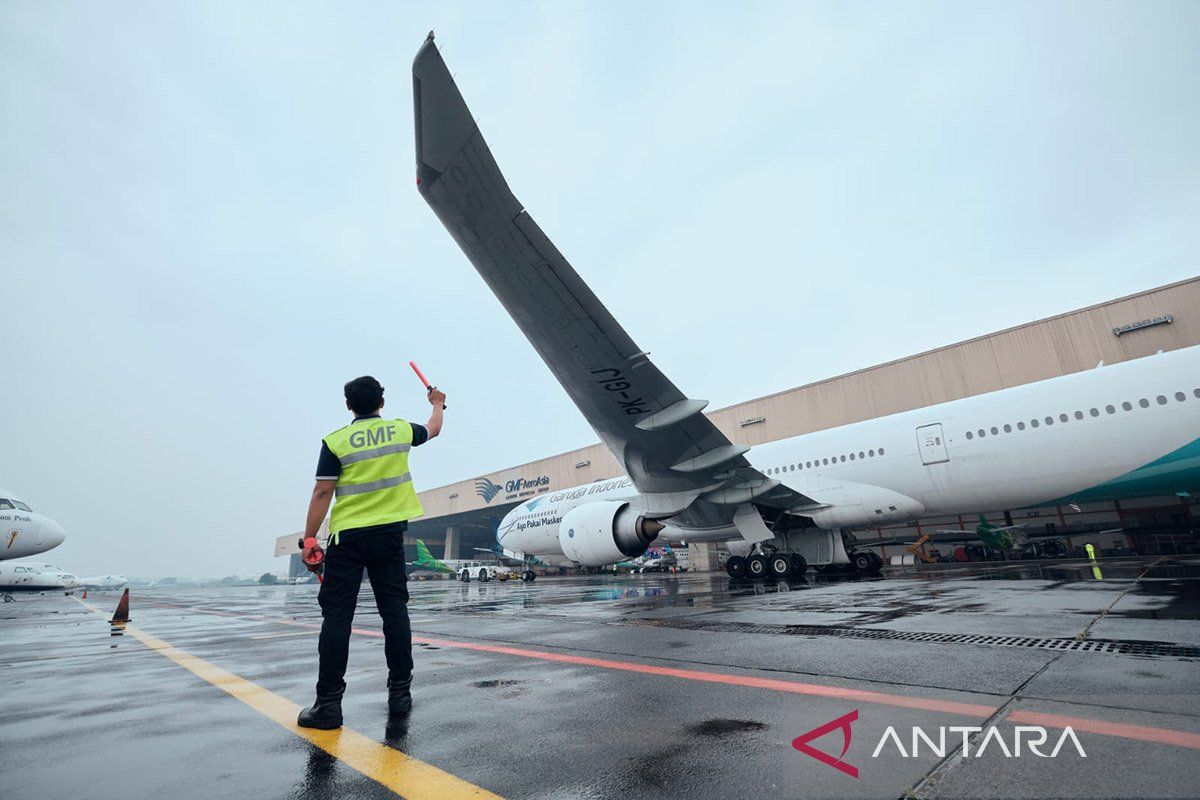
PT Garuda Maintenance Facility Aero Asia Tbk (GMFI) is targeting net profit to grow to 34.47 million US dollars in 2026, with revenue targeted to increase to 542.79 million US dollars. “In 2026, we are targeting revenue of 542.79 million US dollars. EBITDA of 81.82 million US dollars, and net profit of 34.47 million US dollars,” said GMF Finance Director Tri Hartono during the Public Expose Live 2026 in Jakarta on Wednesday. For 2026, the company is optimistic it can maintain its growth momentum by strengthening its maintenance service capabilities and capacity, expanding international markets, and increasing contributions from customers outside the group and its affiliates. It will also focus on developing non-commercial aircraft business, diversifying its aerostructure business, and improving company efficiency and financial resilience. “With a positive industry outlook, various strategic expansion projects, and disciplined risk and liquidity management, GMFI is committed to continuing to create healthy, sustainable growth and delivering added value to all stakeholders,” Tri stated. The company will also continue the stages of the Airspace Park development project in collaboration with the Ministry of National Development Planning (Bappenas) and West Java International Airport (BIJB). It is also capturing opportunities from the government’s plan to modernise defence equipment, including utilising offset schemes from the purchase of new military aircraft to enhance the maintenance capabilities of the domestic defence fleet. For overseas expansion, the company stated it will operate new hangar facilities under a joint venture scheme for business in the Middle East region. In the first quarter of 2026, GMF Aero Asia recorded revenue of 114.94 million US dollars, growing 20.53 per cent year-on-year compared to the same period the previous year. Alongside this, the company posted a profit for the period of 6.76 million US dollars, representing 78.28 per cent year-on-year growth. “This growth is the result of the market expansion strategy, improvement in service quality and capacity, as well as operational optimisation supported by the implementation of continuous improvement programmes,” Tri said.