
Glorification of the Letter of Credit: Protector or Hindrance to Exports?
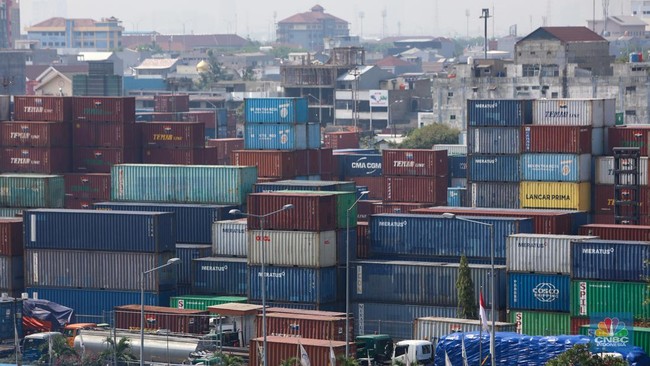
Trade transactions form the backbone of a nation’s economic growth. However, numerous risks arise in every process. One of the greatest fears for exporters, particularly novice ones, is the scenario where goods have been shipped but payment is never received.
One payment method widely promoted by exporters both domestically and internationally for years is the use of Letter of Credit (L/C), the glorified instrument considered the safest for sellers, especially exporters.
However, in the modern trade era that demands speed, flexibility, and cost efficiency, the excessive glorification of L/C payments is revealing a dark side often overlooked. What has long been seen as the primary protector frequently becomes a major barrier to global market penetration due to its rigid and expensive nature.
Payments via L/C are indeed hard to refuse because they promise payment certainty by transferring credit risk from the buyer to the banking institution. As long as the exporter submits documents matching the stated terms, funds are guaranteed to be disbursed without relying on the buyer’s good faith.
Additionally, L/C serves as a financing instrument that facilitates exporters in obtaining working capital and provides full control over goods ownership documents. Behind this psychological sense of security lies a very real efficiency trap.
L/C is the most expensive payment method, involving various additional costs from opening fees, advisory fees, discounts, to amendment fees, which gradually erode profit margins, especially in industries with tight price competition today.
The rigidity of L/C is further evident in the strict compliance principle that tolerates no errors, no matter how small. A single misspelled letter or a one-day difference in loading date can lead to payment rejection by the bank. Ironically, when document discrepancies occur, the promised security of L/C vanishes instantly, leaving the exporter in a weak bargaining position against the buyer.
This is exacerbated by the lengthy banking bureaucracy, whereas the modern business world moves very quickly. When an exporter insists on using L/C, they are essentially building a high wall for potential buyers by requiring them to lock up liquidity or use credit lines to open the guarantee.
Imagine if the glorification of L/C usage continues; Indonesian exporters will lose competitiveness to those from other countries whose governments regulate easier payment mechanisms (for example, open account) and even encourage their exporting SMEs to venture boldly while the state fully guarantees against payment defaults on all export transactions.
Negotiations between Indonesian exporters and those from other countries to enter foreign markets will falter and become uncompetitive if Indonesian exporters continue to impose L/C, even for established transactions; if they fail to competitively offer alternative payment patterns that ease buyers from other countries, Indonesia’s export market will increasingly be eroded by this.
Ultimately, export competitiveness is not solely determined by product quality but also by transaction ease. Currently, competitors from neighbouring countries have largely shifted to open account methods supported by export insurance, a far more attractive step for buyers as it offers deferred payment schemes. Dependence on L/C makes our export ecosystem appear outdated and lacking innovation in the international eye.
Therefore, the glorification of L/C as the only safe way out must be urgently reviewed. Several payment patterns need to be tried, and if necessary, the state should guarantee exporters against payment failures so that Indonesian exports regain vitality, while still prioritising that security is paramount.
However, if that security comes at the cost of lost market opportunities, it is merely a pyrrhic victory. Exporters need to dare to shift to more modern risk management to enhance Indonesia’s bargaining position on the global stage.