
Global Warming Becoming Uncontrollable, UN: These are the Risks
The United Nations (UN) has stated that the world will exceed the 1.5-degree Celsius global warming threshold in the coming years, meaning nations must now prepare themselves to face a period of warming that surpasses this limit before attempting to reduce it again.
The first report from the UN Environment Programme (UNEP), released on Wednesday (2/9), notes that while efforts to bring temperature rises back below 1.5 degrees Celsius are still possible, they remain highly uncertain. Such a move would require rapid emission reductions alongside efforts to remove accumulated carbon dioxide from the atmosphere.
UN Secretary-General António Guterres stated that the world is moving too quickly towards more dangerous warming conditions. “Humanity is racing past the limit to avoid climate catastrophe,” said Guterres.
The world prepares to cross the 1.5-degree threshold
The 1.5-degree Celsius limit above pre-industrial levels became a primary target following the 2015 Paris Agreement. Governments agreed to strive to keep global temperature rises within this limit to restrict the impact of extreme weather.
According to the UNEP report, an ‘overshoot’ condition is now highly likely. Consequently, attention is no longer solely directed at preventing temperatures from exceeding 1.5 degrees, but also at limiting how high temperatures will rise and how long the Earth remains above that threshold.
“Every year of delay and every fraction of a degree above 1.5 increases the risk and makes recovery more difficult, with the possibility of irreversible loss even if temperatures subsequently fall,” UNEP stated in its report, according to Reuters.
Global temperatures have currently reached approximately 1.4 degrees Celsius above pre-industrial levels, according to calculations by several scientists. However, the measurement of this threshold uses a 20-year average, rather than temperatures from a single specific year.
The UNEP report estimates that in the most optimistic scenario, if all existing national commitments are implemented, global warming would peak at around 1.8 degrees Celsius by the middle of the century. However, based on current policies, warming is projected to reach approximately 2.6 degrees Celsius by 2100.
“The 1.5-degree target remains the goal. However, we now need to achieve it from above,” said UNEP Executive Director Inger Andersen.
Climate risks threaten the Himalayan region
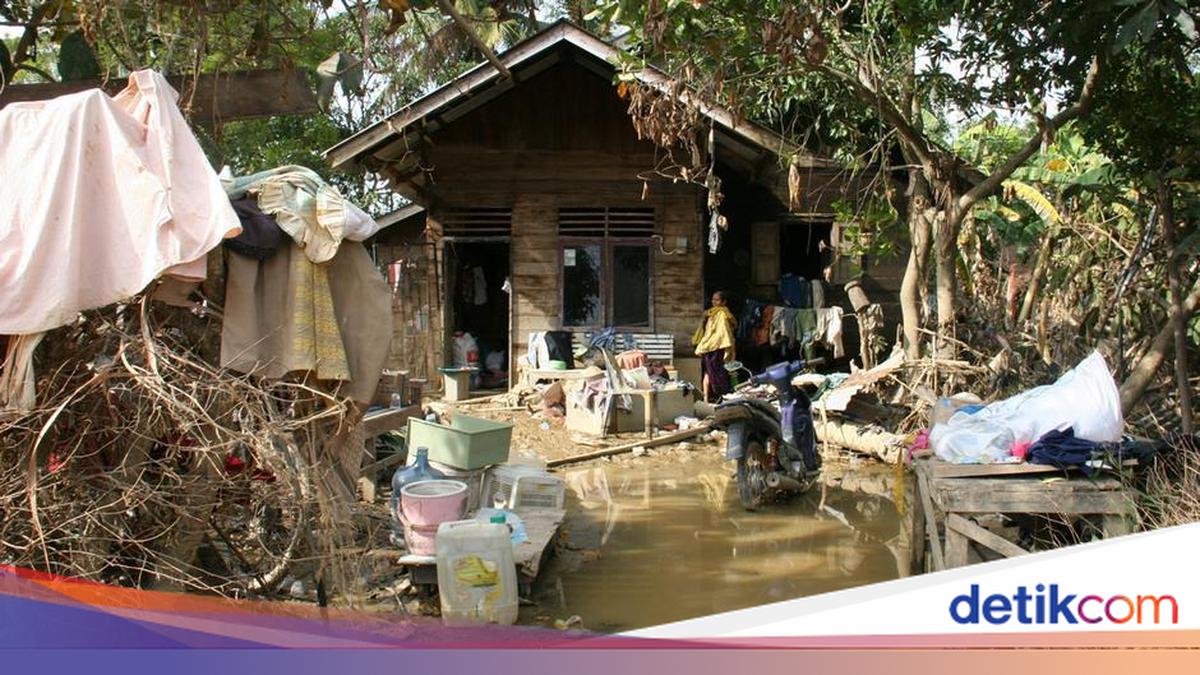
This change in strategy occurs as several regions face increasingly complex disasters. Floods on 26 August in Nepal and China killed more than 1,000 people and left thousands more missing, including hundreds feared trapped in a hydroelectric project tunnel.
According to the Associated Press (AP), the disaster was triggered by the collapse of bedrock and glaciers, which sent massive amounts of material and water into several Himalayan rivers.
Scientists say it is still too early to directly link the disaster to global warming. However, rising Earth temperatures increase the likelihood of such disasters, particularly in the Himalayan region, which is warming much faster than many other areas.
“Climate change has played a major role in the Hindu Kush Himalaya region, causing various complex disasters that truly impact communities and investments in downstream areas,” Saswata Sanyal, a disaster risk resilience expert from the International Centre for Integrated Mountain Development in Kathmandu, told AP.
Sanyal noted that the region is increasingly facing a series of hazards that can trigger one another. Warmer temperatures melt mountain ice and increase the risk of rockslides, avalanches, and floods. Landslides can dam rivers before triggering flash floods, while heavy rain can exacerbate the destruction.
“People in Nepal are still recovering from last year’s floods,” said Sanyal. “Before they could fully adapt, the next disaster arrived.”
Amidst the floods, Pema Tamang and her fellow villagers fled to a Buddhist stupa that had been rebuilt following the 2015 earthquake.
“We were only able to rebuild the stupa last year after it was destroyed by the earthquake,” Tamang told AP. “Taking shelter there was our way of saving our lives from the floods.”
The world faces a long period of warming
According to UNEP, the period during which temperatures remain above 1.5 degrees Celsius could last for several decades. During this period, the impacts of climate change will continue to intensify, including extreme weather, rising sea levels, species extinction, and the melting of ice and glaciers.
“This is a reality check. We must live with a warmer world,” said Richard Betts, a climate scientist from the University of Exeter and one of the authors of the UNEP report. “However, there is still much we can do to limit warming.”
UNEP stated that countries need to increase adaptation efforts as some impacts of climate change are unavoidable. The report describes this stage as “coping and containment.”
The report also warns of the possibility of tipping points with irreversible impacts that could trigger chain reactions, including the loss of the West Antarctic and Greenland ice sheets, the destruction of the Amazon rainforest, and the disruption of the Atlantic ocean circulation system that helps keep Europe warm.
To lower temperatures after an overshoot period, the world needs to reduce fossil fuel use while simultaneously removing carbon dioxide from the atmosphere. Afforestation is one method mentioned, but UNEP estimates that such methods could, at most, lower temperatures by about one-tenth of a degree Celsius.
“The overshoot target requires us to stop the train quickly and then reverse it,” said Rob Jackson, a climate scientist from Stanford University.