
Global Uncertainty Rises, B57+ Promotes Cross-Border Islamic Economy
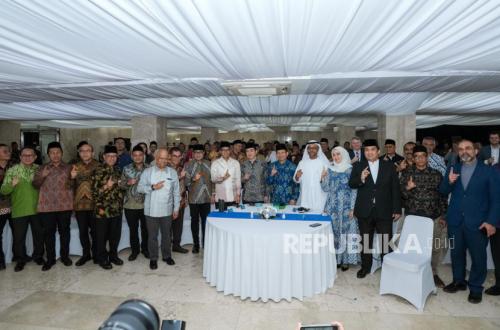
Global geopolitical tensions are beginning to impact distribution channels and inter-country trade relations. Amid these conditions, strengthening Islamic economic cooperation is seen as one alternative to maintain business stability, particularly in the Asia-Pacific region.
The B57+ Asia Pacific collaboration platform is said to have the potential to strengthen economic connectivity among member countries of the Organisation of Islamic Cooperation, with a more neutral business approach based on shared interests. This scheme is considered relevant amid the increasingly felt global fragmentation.
Head of Research at Kiwoom Sekuritas Indonesia, Liza Camelia Suryanata, stated that business actors need clear direction to respond to the uncertain global situation. Strategic certainty, both short-term and medium-term, is deemed important to ensure cross-country cooperation continues to run smoothly.
“By prioritising mutually beneficial collaboration without intervention from political or religious interests, business activities are expected to be more stable,” she said, quoted on Sunday (26/4/2026).
She assessed that the presence of B57+ Asia Pacific could serve as a space to strengthen economic relations among OIC countries, while also mitigating risks from geopolitical disruptions. Through this approach, economic stability is hoped to be maintained even as global pressures increase.
General Chairman of B57+ Asia Pacific, Arsjad Rasjid, mentioned that the formation of a regional chapter in 2026 is a concrete effort to promote trade and investment based on a structured business network.
“In a world that is becoming increasingly fragmented, we want to encourage inter-country trade, strengthen cross-border investment, and bridge the interests of the private sector and government agendas,” he said.
Within the framework of the Islamic economy, strengthening this network is also aimed at expanding the role of Sharia-based financing as an alternative source of funding. In addition, cross-country cooperation is expected to open up wider market access for business actors in member countries.
Indonesia is seen to have a strategic position in this initiative, both from a demographic perspective as the country with the largest Muslim population and its influence in the global Islamic economy. This position is reinforced by Indonesia’s consistent ranking in the top three of the Global Islamic Economy Indicator (GIEI).
Looking ahead, B57+ Asia Pacific is prioritising several areas, from strengthening cross-border supply chains, evidence-based regulatory reforms, to expanding access to financing and markets. These steps are expected to strengthen the Islamic economic ecosystem while ensuring the continuity of growth amid global pressures.