
Global Turmoil: Bank Indonesia to be the Deciding Factor!
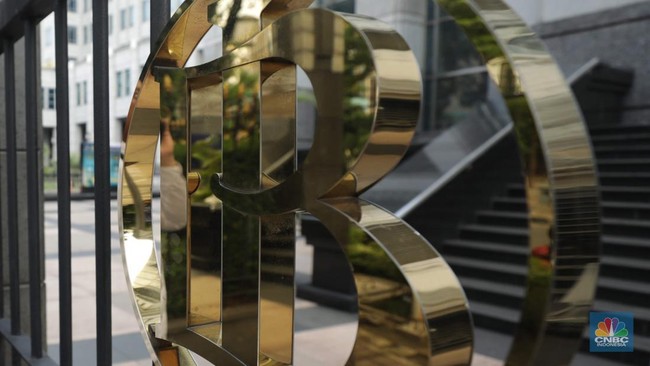
Domestic financial market movements next week will be influenced by the release of several economic data points, such as Bank Indonesia’s (BI) interest rate decision and the impact of the US central bank’s benchmark interest rate hike.
Furthermore, the release of preliminary Purchasing Managers’ Index (PMI) manufacturing data from several countries and developments in Middle East tensions—particularly following the heightened escalation between Houthi groups and Saudi Arabia—will also be key market focuses next week.
Here are the key sentiments for next week:
- Bank Indonesia Interest Rate Decision (BI Rate)
This week, specifically on Wednesday, BI will decide on the interest rate policy (BI Rate) during the September meeting of the BI Board of Governors. This announcement will also mark the first meeting for Destry Damayanti since she was officially inaugurated as the definitive Governor of BI on 2 September.
According to market consensus, BI is expected to maintain its benchmark interest rate at 5.75%. Meanwhile, the deposit facility and lending facility are also expected to remain at levels of 4.75% and 6.5%, respectively.
During the August meeting, while Destry was still serving as the Acting Governor of BI, she stated that this decision remains consistent with efforts to strengthen the stability of the Rupiah exchange rate against the impact of high global volatility caused by the war in the Middle East, maintaining the inflation target of 2.5±1% for 2026 and 2027, and supporting sustainable economic growth.
Alongside maintaining the benchmark rate at 5.75%, the BI Board of Governors has decided to continue expanding incentive policies and other measures to increase foreign capital inflows and strengthen the stability of the Rupiah exchange rate, increase liquidity, and reduce liquidity segmentation in the money and banking markets, as well as accelerate the deepening of the money and foreign exchange markets (PUVA).
Meanwhile, macroprudential and payment system policies remain directed towards encouraging economic growth. Loose macroprudential policies continue to be strengthened to drive economic growth through increased credit/financing to the real sector while maintaining financial system stability. Payment system policies are also directed towards supporting economic activities through the expansion of digital payment acceptance, strengthening the payment system industry structure, and increasing the reliability and resilience of payment system infrastructure.
- The Fed’s Federal Funds Rate (FFR) Increase
Next week, the market will also continue to monitor the impact of the US central bank’s (Federal Reserve/The Fed) benchmark interest rate hike announced at the Federal Open Market Committee (FOMC) on 15-16 September.
Previously, The Fed decided to raise the Federal Funds Rate (FFR) by 25 basis points (bps) to 3.75%-4.00%. All FOMC members agreed with the decision, with a 12-0 vote and no opposing members.
The Fed took this step because US inflation remains high and has not moved quickly towards The Fed’s 2% target. “Inflation remains high. Today’s policy will support the return of inflation more quickly towards the Committee’s 2% target,” The Fed wrote in its official statement.
This decision simultaneously changed the direction of US monetary policy. Throughout 2024 and 2025, The Fed had been actively cutting rates until the upper limit dropped from 5.50% to 3.75%. However, persistent inflationary pressures have forced The Fed to apply the brakes again. Interest rates have been raised for the first time under the leadership of Kevin Warsh.
- Houthi vs Saudi Arabia Conflict
Tensions in the Middle East have not ended and will remain a market focus next week. Previously, Houthi groups in Yemen claimed to have launched missile and drone attacks on several locations described as “sensitive areas” in the Saudi Arabian capital, Riyadh, on Saturday (19/9/2026).
According to Reuters and CNA, the attack occurred hours after flames and thick black smoke were seen near the main airport in Riyadh. Saudi Arabia subsequently confirmed that the Houthis attempted to attack Riyadh using ballistic missiles. This marks the first attack targeting the Saudi capital since the escalation of the conflict with the Iran-backed Houthi group increased in July.
The Saudi-led military coalition stated that the missiles were successfully intercepted and destroyed by air defence systems before reaching their targets. There were no reports of casualties or damage resulting from the attack. However, several residents reported hearing explosions and seeing plumes of smoke around the airport area.
Video and photo footage from Reuters shows massive columns of black smoke rising high from the area near King Khalid International Airport in Riyadh. In one recording, flames were visible in an area suspected to be a fuel storage tank.
The Houthis did not specify the targets they attacked in Riyadh. However, the group claimed to have also attacked facilities belonging to the Saudi energy giant Aramco in the city of Yanbu, one of Saudi Arabia’s main oil export hubs on the Red Sea coast. The Houthis stated the operation was carried out in retaliation for attacks on the Yemeni capital, Sanaa.
In addition to Riyadh, Saudi Arabia claims to have thwarted other attacks targeting the regions of Bish, Farasan, Taif, and Yanbu.
These tensions could prolong market fears regarding the end of the Middle East conflict, which could make energy commodity prices, such as crude oil, difficult to decline and potentially lead to higher inflation.