
Global Trade Holds Steady Amid Trump's Tariff Onslaught
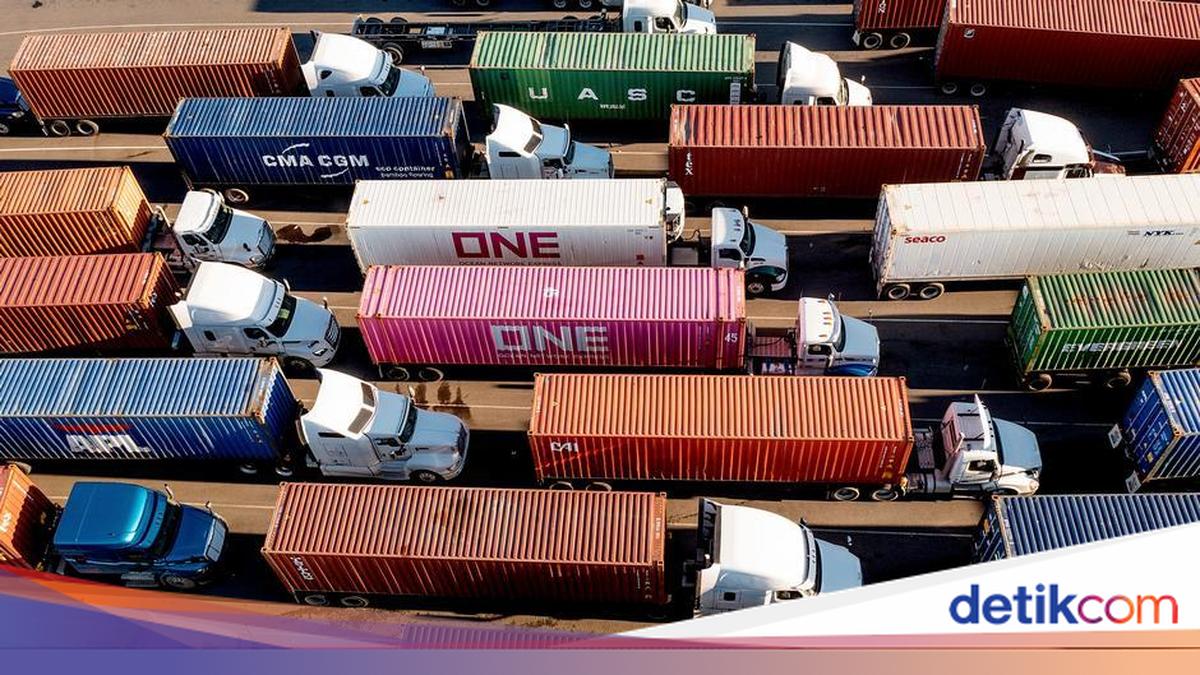
From COVID-19 and the wars in Ukraine and the Middle East to Trump’s tariffs, trade policies have become increasingly unpredictable. The pandemic caused many factories worldwide to close and prompted many nations to seek to reduce their dependency on China, the world’s largest manufacturing hub. The Russia-Ukraine and Iran conflicts have also disrupted the supply chains for oil, gas, food, and fertilisers.
Meanwhile, tariffs imposed by the US President have pushed US import duties to their highest levels in decades, forcing companies to seek new suppliers and markets. Robert Staiger, chief economist at the World Trade Organization (WTO), described these upheavals as the most serious and prolonged disruptions since the global trading system was established 80 years ago.
Despite these shocks, global trade has shown surprising resilience across various sectors. According to the WTO annual report published last week, the volume of goods trade rose by 4.6% last year, driven by high demand for advanced technologies for the development of Artificial Intelligence (AI). The volume of services trade grew by 5.3%.
China remains the world’s largest exporter of goods, while the US has returned to being the world’s largest importer. The European Union holds the second position in both categories. However, Staiger told AFP news agency last week that significant AI technology exports may have “partially masked the decline in world trade.”
The WTO noted in its trade outlook last March that Asian nations dominate the trade of AI goods, while Africa, Latin America, the Middle East, and much of Europe are barely visible. AI-supporting technologies account for approximately one-sixth of global goods trade, yet they contributed nearly 50% of global trade growth.
Since returning to office last year, Trump has continued to deviate from WTO rules regarding global trade. The US President has established specific tariffs per country, violating WTO rules on equal treatment. Since then, Trump has negotiated exemptions and “reciprocal” tariffs with certain nations. Nevertheless, globally, approximately 72% of goods are still traded under WTO provisions, down from 80% in 2022.
In the long term, globalisation appears to be stagnating. WTO data shows that since around 2015, world trade has only grown at the same pace as global economic growth. Despite recent geopolitical upheavals, globalisation has not yet reversed course. Policymakers and economists say it is still too early to know whether the ongoing wars, combined with the shift towards protectionism in the US, China, the EU, and the UK post-Brexit, mark the end of an increasingly interconnected world.
“The world is certainly not becoming more globalised,” Thomas Sampson, a professor at the London School of Economics, told DW. “However, it remains an open question whether we are truly in a phase of deglobalisation or merely shifting in terms of whom we trade with.”
Since the Russian invasion of Ukraine in February 2022, the EU has drastically reduced its dependence on Russian pipeline gas from 37% at the end of 2021 to around 10%, according to Eurostat, the EU statistical office. EU imports of oil and coal from Russia are now negligible. These measures have triggered new EU energy deals with the US, Norway, Australia, and Kazakhstan, where liquefied natural gas (LNG) is intended to replace Russian pipeline gas.
Moscow has indeed found new energy buyers, particularly China and India, which purchase Russian oil at significant discounts compared to global benchmarks. Camille Reverdy, an associate researcher at the Brussels-based think tank Bruegel, doubts whether the EU will revive its energy trade with Moscow after the war ends. “If alternatives become reliable sources, I do not see EU-Russia energy trade returning,” Reverdy explained to DW.
When the conflict in the Middle East escalated in late February, Tehran effectively closed the Strait of Hormuz, one of the world’s most crucial energy transit points. Saudi Arabia and the United Arab Emirates have sent some oil via pipelines to alternative ports. According to the International Energy Agency (IEA), the world is also replacing millions of lost barrels of oil with increased production from the US, Kazakhstan, Brazil, and Venezuela. Some countries have also withdrawn approximately 300 million barrels from their strategic oil reserves, as reported by Reuters in August.
Nearly seven months since the conflict began, energy prices remain high, with Brent crude oil trading above $100 per barrel for much of the war period. Some analysts are now warning of very tight supplies during the autumn and winter.
Pressure from Trump’s tariffs has also burdened trade. US imports from China, for example, fell by about 28% last year, according to the Washington-based Peterson Institute for International Economics. At the same time, US imports from other countries worldwide rose by nearly a tenth, largely originating from Vietnam, Taiwan, and Mexico, as part of efforts to reroute supply chains and reduce dependency on Chinese suppliers.
Source: jawawa.id (https://jawawa.id/newsitem/global-trade-holds-steady-amid-trumps-tariff-onslaught-1790855919)
Originally published by detikcom (https://news.detik.com/dw/d-8688148/perdagangan-global-bertahan-di-tengah-gempuran-perang-tarif-trump), translated from Indonesian