
Global Sharia Economic Diplomacy
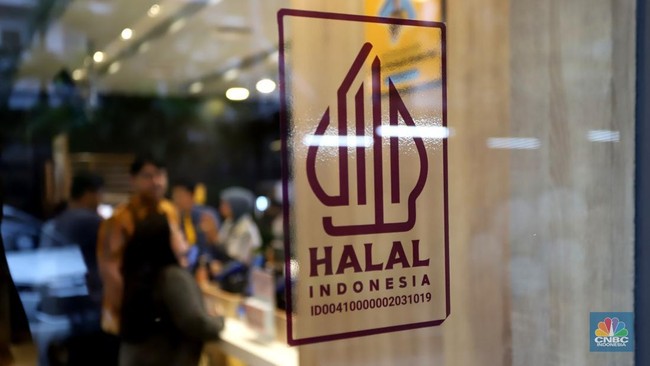
Indonesia’s Sharia economy is becoming increasingly global. Its development is no longer confined to the domestic market. Indonesian halal products require broader market access, investment, financing, standard recognition, and cross-border business networks. Therefore, Sharia economic diplomacy is becoming increasingly vital as part of the national economic strategy.
This global direction has been incorporated into the 2025-2029 National Medium-Term Development Plan (RPJMN) through the priority activity ‘Halal Export and International Sharia Economic Cooperation’. The objective is to increase the competitiveness of halal product exports while strengthening international Sharia economic cooperation. The target ratio of halal export value to GDP is set to increase from 3.69% to 3.92% by 2029.
In recent years, at least three pathways have been developed: regulatory and market access diplomacy, trade diplomacy, and knowledge and ecosystem partnership diplomacy.
Regulatory and Market Access Diplomacy
One of the early milestones was the Indonesia-United Arab Emirates Comprehensive Economic Partnership Agreement (I-UAE CEPA). Negotiations began in September 2021, were signed on 1 July 2022, and were ratified through Presidential Regulation Number 43 of 2023 on 12 July 2023. For the first time, Indonesia included a specific chapter on the Sharia Economy within a comprehensive economic partnership agreement.
The scope is quite broad, covering halal cooperation, SMEs, the digital economy, research, food and beverages, pharmaceuticals and cosmetics, Muslim fashion, tourism, media, and Sharia finance. The Sharia economy is beginning to enter Indonesia’s international trade architecture.
This experience continued in the negotiations for the Indonesia-Gulf Cooperation Council Free Trade Agreement (Indonesia-GCC FTA). The GCC consists of Saudi Arabia, the United Arab Emirates, Qatar, Kuwait, Bahrain, and Oman.
Indonesia’s role in Sharia economic negotiations continues through the General Collaboration in Islamic Economy working group, which discusses, among other things, the development of the halal industry, investment, and Sharia finance. During the fourth round in Riyadh, 18-22 January 2026, discussions on the Sharia economy chapter were finalised at the working group level, while negotiations for the overall FTA are still ongoing.
The I-UAE CEPA and Indonesia-GCC FTA demonstrate that Sharia economic diplomacy is moving from mere product promotion towards negotiating market access, investment, and industrial cooperation. In both agreements, KNEKS has been entrusted as Indonesia’s Lead Negotiator for the Islamic Economy Chapter.
From Negotiation to Transaction
However, agreements alone are not enough. Economic diplomacy must reach business players. This opportunity is available as Indonesia serves as the Chair of the Developing-Eight (D-8) for the 2026-2027 period. Its members include Azerbaijan, Bangladesh, Indonesia, Iran, Malaysia, Egypt, Nigeria, Pakistan, and Turkey. A concrete example is the D-8 Halal Expo Indonesia (HEI) 2026, held from 8-12 July 2026 in Jakarta.
The D-8 HEI is not merely an exhibition, but a forum connecting international cooperation with trade, investment, and business meetings.
Initial results are quite promising. The D-8 HEI recorded transaction commitments of approximately US$13.4 million, attended by over 5,000 visitors, and generated 29 business meeting sessions. Buyers also arrived from countries outside the D-8 membership.
While this value is not yet large compared to Indonesia’s overall trade, diplomacy is beginning to be directly linked to transactions. Moving forward, the measure of success will not just be the number of exhibitions, but how many commitments turn into contracts, repeat exports, investments, and long-term business relationships.
Knowledge Diplomacy and Ecosystem Partnership
A third layer is developing through BARAKAH (Building Alliance for Resilient and Advanced Knowledge in the Halal Economy), which is prepared for implementation in October 2026. This programme is aimed at capacity building, knowledge exchange, and international cooperation in building halal value chains.
The curriculum covers regulations, the halal ecosystem, fatwas, industry, logistics, traceability, SME empowerment, certification, and the mutual recognition of halal standards. The goal does not stop at sharing experiences; BARAKAH is expected to help strengthen standard harmonisation, mutual recognition, and trade partnerships among D-8 nations.
A similar approach is developing bilaterally. KNEKS is also preparing a memorandum of understanding with the Nigeria Halal Economy Strategy Implementation Committee (NHESIC) for broader cooperation in the halal economy field.
This cooperation is relevant as Nigeria recently launched its National Halal Economy Strategy in February 2026. The strategy includes the development of halal food exports, pharmaceuticals and cosmetics, Muslim-friendly tourism, financing, investment, and SME strengthening.
For Indonesia, Nigeria is not only an important bilateral partner but also a gateway to the African market. Therefore, halal economic cooperation can evolve from knowledge exchange to trade, investment, industrial development, and business relationships.
This is where knowledge diplomacy meets economic diplomacy. Indonesia is not only offering products but also experience and partnership in building a halal ecosystem.
Building a Single Chain
The I-UAE CEPA, Indonesia-GCC FTA, D-8 HEI, BARAKAH, and cooperation with Nigeria are not isolated activities. These five instruments can serve as a pilot project for Indonesia’s integrated Sharia economic diplomacy chain.
Agreements open market access. Market access enables trade. Trade requires investment and financing. Knowledge exchange helps align standards and build trust. International partnerships then open wider business relationships.