
Global Response Following Hamas Ceasefire in Gaza, Israel's Stance Under Scrutiny
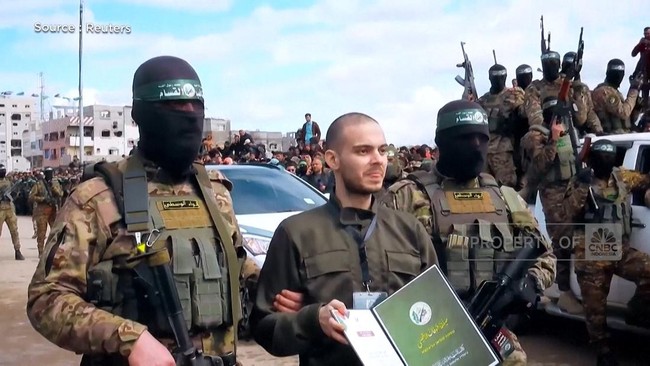
The Palestinian group Hamas has announced its approval of a deal aimed at a total end to the war with Israel in the Gaza Strip. This agreement follows a conflict lasting nearly three years, which has resulted in significant casualties and widespread destruction across the Palestinian enclave.
According to Al Jazeera, the agreement was confirmed between Thursday and Friday by the United States alongside international mediators. Under the framework of the agreement, Hamas will undergo a process of disarmament and gradually surrender its weapons, while Israel will withdraw all its forces from Gaza.
An official announcement was made by US President Donald Trump on Thursday evening, following a statement from the US-backed Board of Peace and International Stabilisation Force for Gaza. Mediators from Egypt, Qatar, Turkey, and the US have reportedly finalised the roadmap for the next phase of the ceasefire.
While a ceasefire was previously agreed upon last October, that arrangement failed to fully halt the conflict, despite reports of decreased violence. Trump described the latest deal as a “historic agreement for the full disarmament of Hamas and all other armed groups in Gaza,” calling it a “monumental step towards lasting peace and security.”
However, the implementation of the deal remains fraught with challenges. The failure of the first phase of the previous ceasefire and the lack of trust between Israel and Palestine have raised doubts regarding whether this agreement can truly end the conflict.
Under the announced framework, Hamas stated that disarmament can only occur if Israel genuinely ceases its military operations and withdraws all troops from Gaza. Furthermore, Hamas has stipulated the formation of a National Committee for the Administration of Gaza, the deployment of international stabilisation forces, and the dissolution of Israel-backed militia groups.
Hamas negotiator Ghazi Hamad stated that the deal is not merely about surrendering weapons, but is a comprehensive package encompassing the cessation of Israeli offensives, full troop withdrawal, the establishment of a new civilian government, the presence of international forces, and the reconstruction of Gaza. Hamad noted that Hamas has made several concessions to protect the Palestinian people from the ongoing conflict.
Not all Palestinian groups have accepted the framework. Palestinian Islamic Jihad stated that reports regarding a joint agreement with Israel are not entirely accurate and expressed several objections to the circulating draft.
The Israeli government has yet to issue an official statement regarding the deal. However, Israel’s National Security Minister from the far-right faction, Itamar Ben-Gvir, openly rejected the draft agreement. He described the cessation of targeted operations against Hamas members as “unacceptable,” arguing it would provide Hamas with an opportunity to rebuild its strength. Ben-Gvir insisted that Israeli military operations in Gaza should continue.
Similarly, former Israeli Chief of Staff Gadi Eisenkot criticised the plan, asserting that Israel must not accept a situation where Hamas remains, rearms, and potentially launches future attacks.
Beyond the US, mediators from Egypt, Qatar, and Turkey have welcomed the finalised agreement framework. Egypt is reportedly preparing follow-up meetings with the US, Qatar, and Turkey to secure commitments for the second phase of implementation.
The National Committee for the Administration of Gaza, intended to serve as a post-war technocratic government, has expressed readiness to take over the management of Gaza and restore essential services to the population.
Nickolay Mladenov, Director General of the Board of Peace, acknowledged that negotiations nearly failed several times in recent months. He noted that the greatest challenges lie in the implementation phase and the verification mechanisms to ensure Hamas’s disarmament proceeds in tandem with the Israeli withdrawal.
Pakistani Prime Minister Shehbaz Sharif expressed hope that all commitments within the Gaza peace plan would be implemented, paving the way for an independent Palestinian state based on pre-1967 borders. From Europe, EU Foreign Policy Chief Kaja Kallas described the plan as a constructive step towards peace, provided all parties honour their commitments.
UK Foreign Secretary Ed Miliband emphasised that full implementation of the roadmap must include the withdrawal of Israeli troops from Gaza and respect for the ceasefire by all parties. He also urged Israel to immediately lift restrictions on humanitarian aid to ensure food, medicine, and other essential supplies can enter Gaza.
German Foreign Minister Johann Wadephul supported the roadmap, asserting that Hamas must no longer pose a threat to Israel. Belgium also welcomed the draft agreement, hoping it would facilitate broader humanitarian access and revitalise the two-state solution process for both Israel and Palestine.