
Global Rating Agencies and Index Providers Scrutinise Indonesia: What Is Really Happening?
Indonesia’s financial markets are entering a crucial period through to the end of 2026. Beyond the direction of interest rates, the rupiah, and foreign capital flows, investors must also closely watch the agendas of global debt rating agencies and index providers.
In the bond market, attention is focused on S&P Global Ratings, Moody’s, Fitch Ratings, Japan Credit Rating Agency (JCR), and Rating and Investment Information Inc. (R&I). Meanwhile, in the equity market, scrutiny is coming from MSCI, FTSE Russell, and S&P Dow Jones Indices.
The combination of these two issues makes the second half of 2026 a particularly sensitive period. On the rating front, Indonesia remains at investment grade. However, cautionary signals have intensified after both Moody’s and Fitch revised Indonesia’s outlook to negative in early 2026.
From the equity index side, unresolved issues remain regarding ownership transparency, free float, and the treatment of Indonesian shares in global benchmarks. MSCI, FTSE Russell, and S&P Dow Jones Indices are continuing to monitor the progress of Indonesia’s capital market reforms.
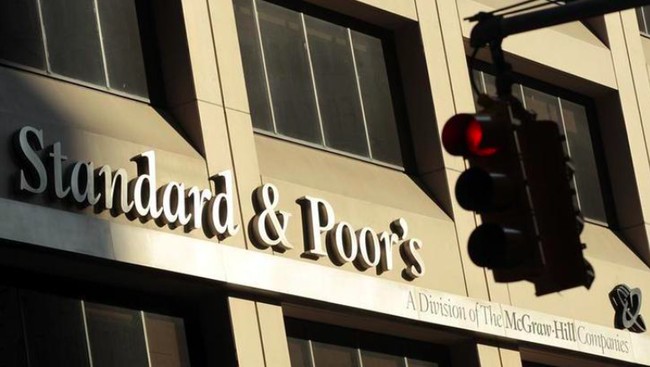
In the bond market, the nearest agenda under close watch is a potential update from S&P Global Ratings. Indonesia’s latest position with S&P is BBB/A-2 with a stable outlook. Bank Indonesia noted that S&P affirmed this rating on 29 July 2025. Historically, S&P has released its rating decisions on Indonesia around July, making July 2026 a potential period for the next announcement, though no official date has been confirmed.
S&P’s stance is critical because the other two major agencies have already signalled caution. Moody’s maintained Indonesia’s rating at Baa2 on 5 February 2026 but changed the outlook to negative. Fitch also kept Indonesia’s rating at BBB on 4 March 2026 but revised the outlook to negative. The market will therefore scrutinise whether S&P maintains its stable outlook or adjusts its assessment tone. A stable outlook from S&P could ease sentiment pressure, but a change could heighten perceived risks for government bonds and the rupiah.
Beyond the big three, Japanese agencies JCR and R&I remain relevant, particularly for Japanese investor perception and Indonesia’s access to yen-denominated or samurai bonds. Bank Indonesia records show JCR last maintained Indonesia’s rating at BBB+ with a stable outlook in September 2025, while R&I affirmed Indonesia at BBB+ with a stable outlook in October 2025.
On the equity side, a significant issue stems from global index providers. Since early 2026, MSCI has implemented a freeze on certain index changes for Indonesian stocks. This move is linked to concerns over transparency of ownership structures, free float, and indications of coordinated trading that could disrupt price formation. In June 2026, MSCI stated that if Indonesia’s progress remains insufficient by November 2026, further options could be considered, including a consultation on reclassifying Indonesia from Emerging Market to Frontier Market status. This represents a major risk for the stock market, as a change in index status could affect Indonesia’s weight in global investor portfolios.
FTSE Russell is also maintaining special treatment. In June 2026, FTSE stated that full index re-ranking, free float increases, and additions for Indonesian stocks remain postponed until at least September 2026. Consequently, the FTSE review in September becomes a critical juncture. If conditions do not normalise, a December review will serve as the next follow-up. S&P Dow Jones Indices has also placed Indonesia on its 2027 Watchlist for potential special measures or Frontier market status.
Thus, the Indonesian market faces two simultaneous tests: maintaining the perception of its sovereign bond ratings and preserving its status and weight in global equity indices.