
Global Prospects Worsen, Bank Indonesia Reveals Limited Room for Interest Rate Cuts
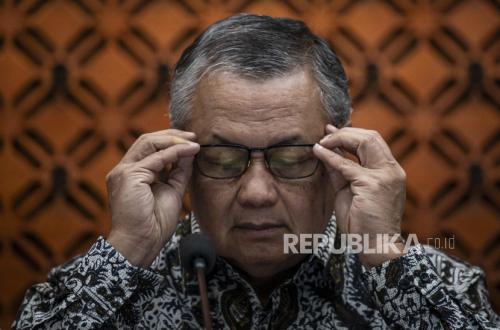
Bank Indonesia (BI) has stated that the global economy in 2026 is shaken, influenced by various factors from the United States’ (US) reciprocal tariff policies to the war in the Middle East. This situation is prompting BI to focus more on its pro-stability function. One possible BI policy is to close the room for reducing the policy interest rate or BI Rate this year.
“We want to convey some recent developments that we need to report because global conditions are worsening. Amid reciprocal tariff policies, there is also the war between the US-Israel and Iran, which impacts the global economy and finance through commodities, financial, and trade channels,” said BI Governor Perry Warjiyo during a Working Meeting with Commission XI of the House of Representatives (DPR RI) at the DPR RI complex on Wednesday (8/4/2026).
Perry explained that world oil prices are experiencing a sharp surge, disrupting trade supply chains, lowering Gross Domestic Product (GDP) prospects, and raising global inflation.
“Oil prices have skyrocketed since February to March, even reaching $122.95 per barrel at one point, and are moving fluctuatively. Gold prices also rose during 2025 and remain at high levels,” he said.
The subsequent impact is the increase in interest rates or yields on US government bonds (US Treasury), both for two-year and 10-year tenors. Perry noted that in 2025, yields on two-year and 10-year bonds tended to decline, though not significantly.
“However, with the war in the Middle East, both have risen rapidly. This is influenced by the increase in the US fiscal deficit, including for war budgets, which will impact Indonesia,” he explained.
“Oil prices will affect the fiscal and other sectors. Then, the rise in US government bond yields also impacts portfolio inflows and other aspects,” he continued.
Perry went on to say that portfolio inflows in 2025, although volatile, showed an upward trend. However, entering 2026, there has been a large outflow from emerging markets to global financial markets, both in bonds, stocks, and other instruments.
In addition, there has been a strengthening of the US dollar index, prompting BI to recalibrate various policies.
“First, regarding interest rates. Although we have maintained the BI Rate at 4.75%, going forward, the room for reduction is likely to be increasingly limited,” Perry revealed.
Throughout 2025, BI has cut the BI Rate five times from the initial 6% to 4.75% by the end of the year. Meanwhile, from January to March 2026, BI decided to maintain the BI Rate amid high global uncertainty due to the Middle East conflict.
“We must address it to maintain stability,” he emphasised.
Therefore, Perry continued, in 2026, the Bank Indonesia Rupiah Securities (SRBI) instrument is starting to be raised as an effort to stabilise the rupiah exchange rate, conduct interventions, and stem capital outflows.
“In 2025, we could lower SRBI quickly. Now, recalibration is needed to keep attracting capital inflows, while still ensuring banking liquidity adequacy,” he said.
Recorded, the SRBI position decreased from Rp 916.97 trillion at the beginning of 2025 to Rp 730.90 trillion at the end of 2025. It then fell to Rp 694.04 trillion on 20 January 2026, increased to Rp 819.50 trillion on 18 February 2026, and rose again to Rp 831.55 trillion on 13 March 2026.
BI is also continuing to purchase Government Securities (SBN) in the secondary market. Throughout 2026, BI has purchased SBN amounting to Rp 90.05 trillion year to date (ytd).
“These are some recalibration steps, where the current monetary policy is more focused on pro-stability,” he clarified.
Perry continued that macroprudential policies are directed towards pro-growth. Up to March 2026, BI has provided liquidity incentives of Rp 427.1 trillion to encourage credit.
This figure includes state-owned banks at Rp 225.6 trillion, national private general banks (BUSN) at Rp 165.8 trillion, regional development banks (BPD) around Rp 28 trillion, and foreign bank branches (KCBA) at Rp 7.7 trillion.
Not only to encourage credit, incentives are also given for interest rate reductions. Credit interest rate reductions are starting to show acceleration. Credit is directed to support government priority programmes or Asta Cita, such as Free Nutritious Meals (MBG), Red and White Village Cooperatives (KDMP), food self-sufficiency, downstreaming, and the three million houses programme.
Source: jawawa.id (https://jawawa.id/newsitem/global-prospects-worsen-bank-indonesia-reveals-limited-room-for-interest-rate-cuts-1775641925)
Originally published by Republika (https://ekonomi.republika.co.id/berita/td64um490/prospek-global-memburuk-bank-indonesia-ungkap-ruang-penurunan-suku-bunga-makin-tertutup), translated from Indonesian