
Global Oil Supply Slashed, World on the Brink of Crisis
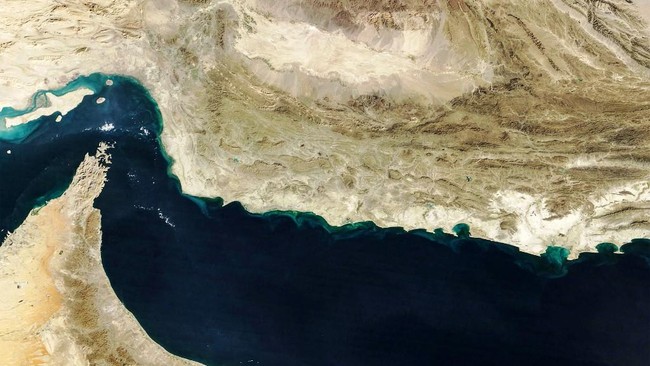
Jakarta, CNBC Indonesia — The world faces the potential of a new oil crisis after more than 10% of global supply has been disrupted due to the closure of the Strait of Hormuz. With stocks continually eroding and alternative supplies limited, pressure on energy prices is expected to intensify in the near term.
Most energy traders had previously assumed Iran would not close the Strait of Hormuz, the narrow waterway through which nearly one-fifth of the world’s oil typically passes.
Doing so would provoke hostility with its Gulf neighbours, starve its customers in Asia, and sever its own vital economic lifeline.
Even if Iran attempted a blockade against the United States (US), traders assumed it would soon end it.
However, two months after the US and Israel began bombing Iran and Iran started targeting commercial ships in retaliation, traffic in the Strait of Hormuz remains almost nil.
Diplomatic efforts to restore oil flows there have been sporadic and fruitless. While a resolution through negotiation remains possible, there is also the chance the strait will stay closed indefinitely.
Yet, judging by oil prices, concerns appear relatively subdued. Even after a sharp rise in recent days, Brent crude futures, above $120 per barrel, are still well below the $150-200 predicted by many analysts in March if the strait remained closed for an extended period.
Parts of Asia face shortages or are scrambling to avoid them, but in most rich countries, daily life is barely affected. Petrol prices have risen and airfares increased, but economic growth forecasts have only been trimmed slightly.
Stock markets are nearing record highs. Contrary to all predictions, the global economy seems to be weathering the largest supply shock in oil market history with relative ease.
Markets always find a balance; the question is at what level? Optimists are relieved by 2022, when most Western countries stopped buying Russian oil after Russia’s invasion of Ukraine, when prices peaked at $129 without triggering a global recession.
But that involved only 3 million barrels per day of Russian oil, 3% of world supply, and most was redirected to Asia. Every day the Strait of Hormuz remains closed, nearly five times that volume is completely lost from global supply.
Even if the strait reopens tomorrow, around 3% of annual world production may have been lost, given the inevitable delays in restoring export volumes to normal. Such a deficit cannot be made up for a long time. The world is just weeks away from stark reckoning.
Rough calculations
The relative calm in the market masks some frightening arithmetic. During March and April last year, 18.3 million barrels per day of crude oil and refined products exited the strait.
Factoring in the slight flows still entering, plus extra oil that can be pumped through two pipelines bypassing the strait—one in the United Arab Emirates and one in Saudi Arabia—the net deficit narrows to about 13 million barrels per day.
Add 2 million barrels per day of supply growth outside the Gulf but subtract 1.3 million barrels per day of extra production the market expected from Gulf countries this year, and the net shortfall over the past two months reaches 12.3 million barrels per day, more than 10% of global consumption.
There are three ways to balance the market: spare production capacity can be activated, stocks can be drawn down to cover the remaining gap, and prices can rise to suppress demand.
But the first option is itself hampered by the strait closure. The spare capacity of Saudi Arabia and the United Arab Emirates, long the market’s main buffer, is blocked by the blockade. US shale oil producers, usually the quickest to respond to price rises, cannot move fast enough.
Ramping up production takes 3-6 months and may yield only 300,000-700,000 barrels per day in the initial phase. It will not be easy for the US to export more; its pipeline network, storage facilities, and export terminals are already saturated.
“We can’t even fit one more ship,” said a trader, quoted from The Economist, Saturday (2/5/2026).
Russia could theoretically pump an additional 300,000 barrels per day, but with its oil infrastructure under constant drone attacks from Ukraine, it struggles to maintain current production.
Therefore, almost all the necessary adjustment must come from consuming stocks or reducing demand, neither of which is easy to measure.
While crude oil inventories, stored in export terminals, on ships, and in refineries, are relatively easy to track, stocks of refined products like petrol, diesel, and kerosene (jet fuel) are scattered among millions of suppliers and consumers, making them hard to monitor.
Meanwhile, demand is usually inferred from production, trade, and storage data rather than measured directly.
Even so, it is clear that higher prices and genuine shortages have significantly curbed consumption. Not only is crude oil more expensive, but shortages of finished fuels, exacerbated by China’s export bans, have caused the price spread between crude and diesel and jet fuel to surge to $50-80 per barrel, from $15-20 before the war.
Both fuels are now twice as expensive in Singapore, Asia’s trading hub, as they were two months ago, and even pricier in Europe. Since the war began, petrol prices at pumps have doubled in Myanmar,