
Global Oil Prices Surge, Increase in Non-Subsidised Fuel Prices Deemed Inevitable
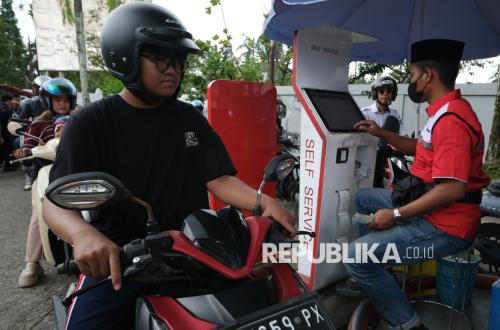
Secretary General of the Indonesian Young Entrepreneurs Association (HIPMI), Anggawira, views the increase in non-subsidised fuel (BBM) prices as a reasonable step amid global pressures from escalating geopolitical conflicts, particularly in the Middle East. This situation, he said, will directly impact the surge in world crude oil prices, which serves as the main benchmark for determining domestic BBM prices.
He stated that the rise in non-subsidised BBM prices cannot be separated from the dynamics of the interconnected global energy market. According to him, Indonesia does not have full control over fluctuations in world oil prices, which are currently facing significant pressure.
“The increase in non-subsidised BBM prices in the current geopolitical situation is indeed reasonable and difficult to avoid. Non-subsidised BBM prices essentially follow world crude oil prices, the rupiah exchange rate, shipping costs, and risk premiums due to conflicts,” said Anggawira when contacted on Tuesday (31/3/2026).
He explained that Brent crude oil prices, which have moved in the range of $100 to $115 per barrel and even higher due to disruptions in the Strait of Hormuz, are placing significant pressure on domestic BBM prices. This condition opens up room for price adjustments if the trend persists.
Currently, non-subsidised BBM prices such as Pertamax are around Rp12,300 per litre, Dexlite Rp14,200 per litre, and Pertamina Dex Rp14,500 per litre. If world oil prices do not fall soon, price adjustments are seen as a rational step to ensure the sustainability of energy supply.
Anggawira assessed that an increase in non-subsidised BBM prices, which remains reasonable, is in the range of 5 to 10 per cent. However, he reminded the government to make adjustments gradually to minimise impacts on inflation and public purchasing power.
“Realistically, an increase that is still considered reasonable for non-subsidised BBM is in the range of 5-10%. This means Pertamax, currently around Rp12,300 per litre, could rise to around Rp12,900–13,500 per litre,” he said.
From the business perspective, he continued, the increase in BBM prices will indeed impact rising operational costs, especially in the transportation and logistics sectors. However, this condition also encourages businesses to carry out efficiency and innovation in energy use.
“For the trucking, logistics, shipping, bus, travel, and goods distribution sectors, the BBM component can reach 30-40% of total operational costs,” said Anggawira.
Meanwhile, public policy expert and lecturer at the Faculty of Social and Political Sciences, Parahyangan University (Unpar), Kristian Widya Wicaksono, views the increase in non-subsidised BBM prices as a logical consequence of the integrated global energy system. According to him, this phenomenon reflects the price transmission from international to domestic markets.
“The increase in non-subsidised BBM prices amid escalating Middle East geopolitics is an unavoidable consequence in the interconnected global energy system,” said Kristian.
He explained that from a public policy perspective, the price increase is not merely an internal government decision, but a response to rising supply risks and global uncertainties. Therefore, price adjustment policies need to be viewed more broadly in the context of national energy stability.
Kristian added that the tolerable limit for price increases must consider the economy’s absorption capacity and potential impacts on inflation. Empirically, increases within a certain range can still be managed without causing major disruptions.
On the other hand, he reminded the public to respond rationally to this situation, including by saving energy consumption and adjusting household spending patterns. “The government is also expected to respond with transparent, gradual policies and strengthen social protection for vulnerable groups,” he stated.
Thus, he said, the increase in non-subsidised BBM prices should not be seen merely as economic pressure, but also as an opportunity to promote energy efficiency and accelerate the transition to a more sustainable energy system in Indonesia.
Source: jawawa.id (https://jawawa.id/newsitem/global-oil-prices-surge-increase-in-non-subsidised-fuel-prices-deemed-inevitable-1774954929)
Originally published by Republika (https://ekonomi.republika.co.id/berita/tcrcrp522/harga-minyak-dunia-melonjak-kenaikan-bbm-nonsubsidi-dinilai-tak-terhindarkan), translated from Indonesian